
Thanya Nathan (Blind Kerala Judge) Age, Family, Biography
Quick Info→
Height: 5' 7"
Age: 24 Years
Hometown: Mangad, Kerala
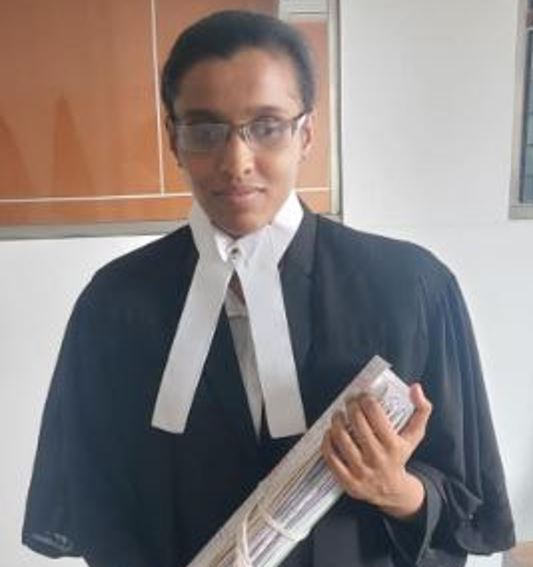
| Bio/Wiki | |
|---|---|
| Full Name | Thanya Nathan C. |
| Profession(s) | • Advocate/Lawyer • Judge |
| Famous for | First visually challenged woman judge in Kerala |
| Physical Stats | |
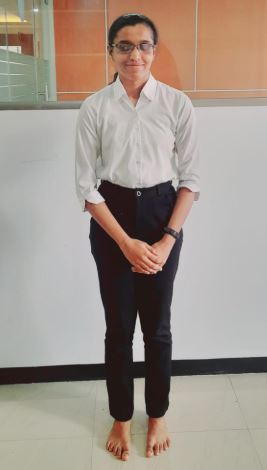
| Height (approx.) | 5' 7" (170 cm) |
| Weight (approx.) | 50 Kg (110 lbs) |
| Figure Measurements (approx.) | 32-30-34 |
| Hair Colour | Black |
| Personal Life | |
| Date of Birth | Year, 2000 |
| Age (as of 2025) | 26 Years |
| Birthplace | Mangad, Kerala, India |
| Nationality | Indian |
| Hometown | Mangad, Kerala |
| School | • Special school in Dharmadom (till class 10) • Parassinikadavu High School • Morazha Government Higher Secondary School |
| College/University | Kannur University |
| Educational Qualification | Bachelor of Laws (LLB) |
| Religion | Christianity |
| Food Habit | Non-vegetarian |
| Social Media | |
| Relationships & More | |
| Marital Status | Unmarried |
Some Lesser Known Facts About Thanya Nathan
- Thanya Nathan was born blind and grew up in Mangad village in Kannur district, Kerala, and studied initially in specialised institutions for visually impaired students.
- She later moved to mainstream schools for higher education and decided to pursue law during her higher secondary education years.
- She joined Kannur University for her LLB degree and was the only visually impaired student in her batch during the course.
- In 2024, she graduated from Kannur University after securing first rank in her LLB examination.
- She studied law using Braille textbooks, digital materials, and screen-reading software, as printed study material was largely inaccessible to her.
- After completing her law degree, she enrolled as an advocate in August 2024.
- Nathan began practising as a junior advocate under K G Sunilkumar at the Taliparamba district court in Kannur.
- During her legal practice, she prepared case notes and argument notes in Braille script and used assistive technology for reading documents.
- In August 2024, she started preparing for the Kerala Judicial Service examination while continuing her regular court practice.
- She prepared for the exam alongside practice, without discontinuing her work as an advocate.
- At the time, a three-year minimum practice rule existed, but she applied when the judicial service notification was issued.
- In 2025, a Supreme Court judgment ruled that visually impaired persons are eligible for judicial service examinations without discrimination.
- The Supreme Court bench stated that disability alone cannot be a reason to deny candidates participation in judicial service recruitment.
- Following this judgment, she was permitted to appear for the Kerala Civil Judge (Junior Division) examination.
- During the examination, recruiting authorities provided her with a scribe who read questions aloud and wrote answers dictated by her.
- The examination environment was arranged to accommodate her visual impairment and ensure fair participation.
- In the Kerala Judicial Service examination 2025, she ranked first in the merit list among persons with benchmark disabilities.
- Joyson Sajan, a candidate with cerebral palsy, secured second rank in the same benchmark disability category.
- Nathan became the first visually challenged woman to clear the judicial service examination in Kerala.
- Judicial sources stated that there were no visually challenged judges serving in Kerala before her selection.
- The Kerala High Court completed the selection process and forwarded the list to the state government for appointment orders.
- She secured 206.5 marks in 4 papers and 29 marks in the viva-voce section of the written exam.
- As of February 2026, she was awaiting her official appointment letter from the Government of Kerala.
- She is expected to be appointed as a Civil Judge (Junior Division) in the Kerala Judicial Service.
- Nathan stated in an interview that courtroom practice helped her understand procedural law and practical application beyond theoretical study.
- She said judicial examinations and courtroom functioning are becoming more accessible due to digitisation and paperless systems.
 Guneet Jolly Age, Height, Family, Biography & More
 Just Sul Age, Wife, Children, Biography & More
 Lucky Oberoi Age, Death, Wife, Children, Family, Biography
 Rohit Benediction Height, Age, Biography
 Navi Brar Height, Age, Family, Biography
 Sib Hashian, Age, Wife, Death Cause, Biography & More
 “The Married Woman” Actors, Cast & Crew: Roles, Salary
 Bala Height, Age, Wife, Family, Biography