
Gholamreza Soleimani Age, Death, Biography
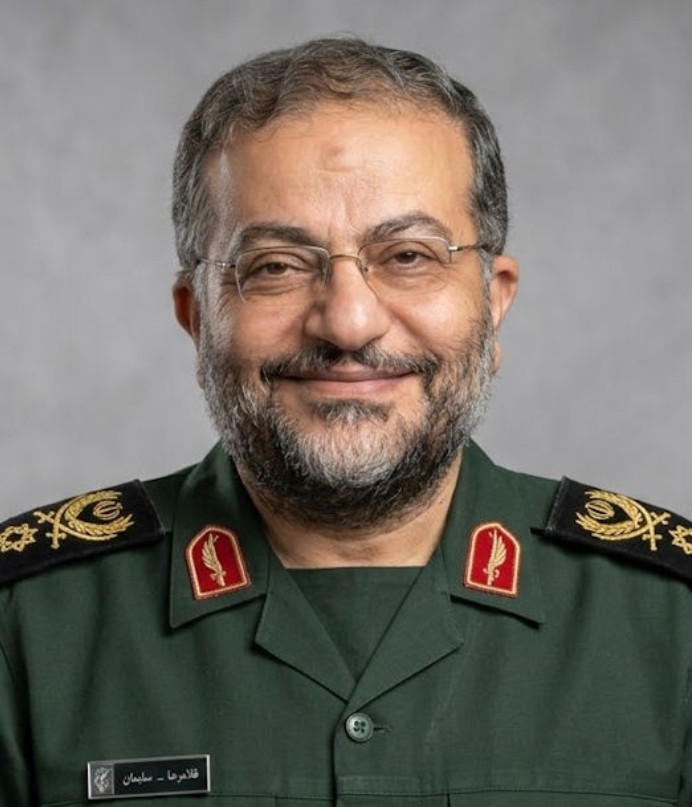
| Bio/Wiki | |
|---|---|
| Other Name | Gholam Reza |
| Profession | Iranian Military Officer |
| Known for | Being the Iranian Islamic Revolutionary Guard Corps (IRGC) brigadier general who commanded the Basij paramilitary force from 2019 until his death in 2026 |
| Physical Stats | |
| Eye Colour | Black |
| Hair Colour | Salt & Pepper |
| Career | |
| Allegiance | Iran |
| Branch | Basij (Islamic Revolutionary Guard Corps) (IRGC) |
| Rank | Brigadier General |
| Service Years | 1982-2026 |
| Commands | • 19th Fajr Division (2001–2004) • 41st Tharallah Division (2004–2006) • 14th Imam Hossein Division (2006–2008) • Isfahan Sahib-az-Zaman Provincial Corps (2008–2019) |
| Conflicts | • Iran-Iraq War • Twelve-Day War • 2026 Iran War |
| Personal Life | |
| Date of Birth | Year, 1964 |
| Birthplace | Farsan, Imperial State of Iran (present-day Iran) |
| Date of Death | 17 March 2026 |
| Place of Death | Tehran, Iran |
| Age (at the time of death) | 62 Years |
| Death Cause | Assassination by Airstrike |
| Nationality | Iranian |
| Hometown | Farsan, Iran |
| College/University | University of Isfahan, Iran |
| Educational Qualification | Graduation in History from the University of Isfahan |
| Religion | Islam |
| Food Habit | Non-vegetarian |
| Relationships & More | |
| Marital Status (at the time of death) | Married |
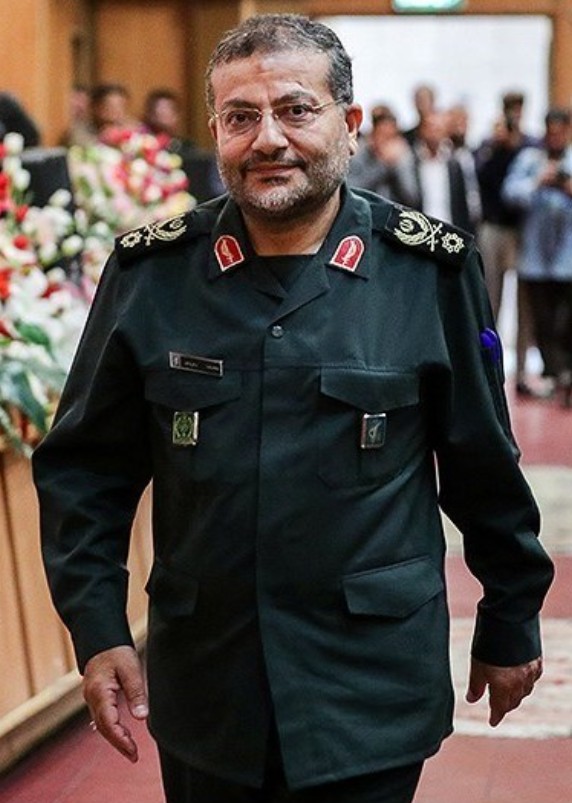
Some Lesser Known Facts About Gholamreza Soleimani
- After graduating, Gholamreza Soleimani pursued command and supervision courses at the IRGC University of Command and Staff (IRGC DAFOS).
-
He was also a doctoral student in Iranian history.
-
In 1982, Gholamreza Soleimani began working as a paramilitary volunteer in the Basij during the Iran-Iraq War.
- During the Iran-Iraq War, he participated in various battles and operations, including Operation Fath ol-Mobin, Operation Beit ol-Moqaddas, the Second Battle of Khorramshahr, Operation Ramadan, the Battle of the Marshes, and the Siege of Basra.
- In July 2017, he was promoted to the rank of Brigadier General.
-
In July 2019, Gholamreza Soleimani was designated as Commander of the Basij Organisation by Iran’s Supreme Leader Ali Khamenei. He was given the authority to enforce the regime’s laws and ideals on civilians. He served in the position till March 2026.
-
During his tenure as a Commander, he reportedly directed the paramilitary force in many high-fatality crackdowns against Iranian civilians.
-
Under his leadership, the Basij was changed from a social organisation to a military force, which used many cruel methods to end the internal unrest in Iran.
- Gholamreza Soleimani was appointed as the commander of the Basij force before the November 2019 protests. The Basij used deadly force against the protestors.
- As reported by many human rights activists, the Basij units, which were operated under his authority, used snipers and heavy machine guns from the roofs of the buildings to scatter the protestors.
- During the Mahshahr massacre in 2020, Gholamreza Soleimani deployed the Basij and IRGC forces, who fired on the protesters with industrial-grade weaponry.
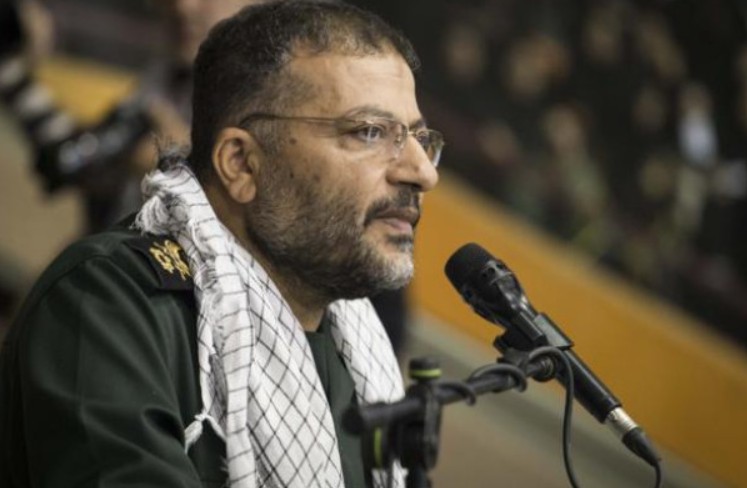
An old picture of Gholamreza Soleimani
-
He faced international sanctions by the United Kingdom, Canada, the United States, Monaco, and the European Union.
-
In October 2020, the UK imposed sanctions on him under the Sanctions and Anti-Money Laundering Act 2018. His assets were frozen, and he was barred from travelling to their country.
-
The UK sanctioned him after he was blamed for taking brutal actions against civilians.
-
In December 2021, the U.S. Treasury added Gholamreza Soleimani to its Specially Designated Nationals (SDN) list under Executive Order 13553 for his active service with the Basij, a volunteer military force of the IRGC in Iran.
-
All of his U.S. assets under his control were frozen, and U.S. persons were prohibited from transacting with him.
-
In April 2021, the Council of the European Union sanctioned Gholamreza Soleimani for his role in the violent attack on innocent people during the November 2019 protests in Iran.
-
The protests led to the death of many civilians. The EU sanctions banned him from travelling to EU member states and froze his assets.
- In 2022, during the Mahsa Amini protests, his military forces used some patterns to threaten and shoot the protestors. The United Nations Fact-Finding Mission on Iran reported that Basij units used shotguns, assault rifles, and pistols to kill over 500 protestors.
- Reportedly, Gholamreza Soleimani had deployed many Basij security defenders, who attacked the eyes of protestors with metal pellets, which made hundreds of protestors permanently blind.
-
In October 2022, Canada imposed sanctions on him under its Special Economic Measures (Iran) Regulations.
-
Canada claimed that Gholamreza Soleimani violated various human rights during anti-regime protests that happened in Iran.
-
The sanctions froze his assets and imposed a ban on his use of arms. He was also restricted from doing financial transactions. Canada made him unacceptable in their country.
- Gholamreza Soleimani once stated in a public speech that the Islamic Republic of Iran would keep trying to destroy Israel. He added that this ideology was the second step of the revolution. He claimed,
Jewish hostility to Islam started when the religion began.”
-
Reportedly, the Second Step of the Revolution was a concept given by Iran’s Supreme Leader Ali Khamenei, who died on 28 February 2026 in an airstrike by the U.S.-Israel.
-
Ali Khamenei introduced this ideology in 2019 during the 40th anniversary of the Islamic Revolution. This ideology focuses on continuously opposing the Western and Israeli impact in Iran.
- In November 2024, Gholamreza Soleimani claimed in the media that Israel had been economically destroyed during its war with Hamas in Gaza. He said,
Iran-backed militias, including Hezbollah in Lebanon, kept up near-daily clashes with Israeli forces across the border.”
He added that after the 7 October 2023 attack on Hamas, Iran-aligned groups in Yemen, Syria, and Iraq also attacked Israel. He said,
The Zionist regime has been defeated militarily.”
He stated that these attacks restarted the 1979 revolution. He said that there was a need for an international media campaign to show that Israel was declining. He said,
The world’s public opinion must be convinced that this regime has collapsed. We must continuously create and disseminate content in the digital space, spreading the message that the Zionist regime has been defeated.”
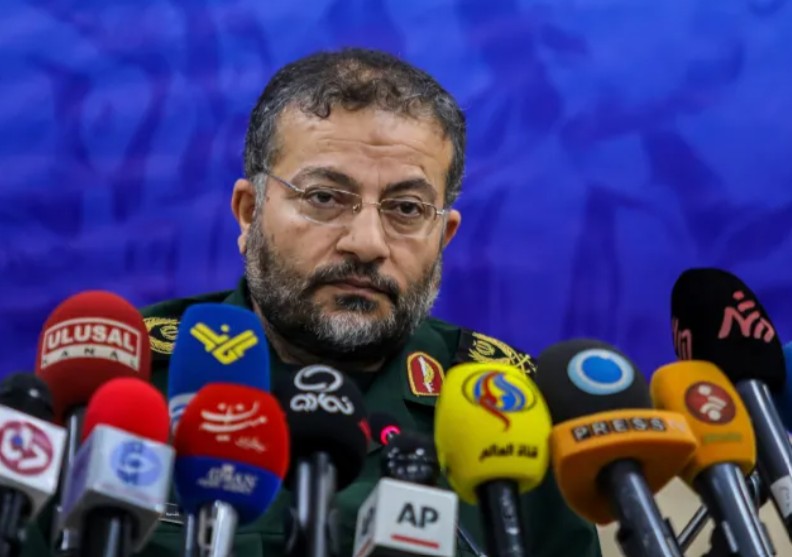
Gholamreza Soleimani during a media conversation
-
In late 2025 and early 2026, Gholamreza Soleimani ordered many Basij battalions to use all necessary means to clear public places during the new wave of nationwide unrest.
-
In January 2026, many reports showed that Basij units used live ammunition in provinces such as Sistan, Baluchestan, and Kurdistan.
- On 17 March 2026, the Israeli military announced that Gholamreza Soleimani was killed in a targeted airstrike in central Tehran.
-
The IDF claimed that they used exact intelligence for the strike after getting location tips from the residents of Tehran.
-
Gholamreza Soleimani was killed along with his deputy commander, Seyyed Karishi. They were hiding in a tent in a wooded area of Tehran.
-
Later, Iranian state media confirmed Soleimani’s death.
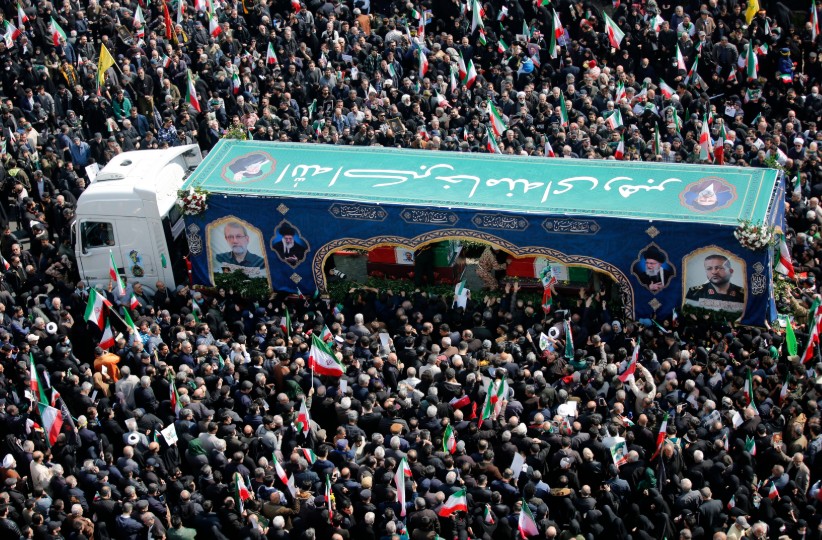
Thousands of people gathered to honour the two figures, Gholamreza Soleimani and Ali Larijani
 Ali Khamenei Age, Death, Wife, Children, Family, Biography
 Ebrahim Raisi Age, Death, Wife, Biography
 Mostafa Khamenei Age, Caste, Family, Biography
 Reza Pahlavi (Crown Prince of Iran) Age, Girlfriend, Wife, Children, Family, Biography
 Masoud Pezeshkian Age, Wife, Children, Family, Biography
 Alireza Arafi Age, Family, Biography
 Ali Larijani Age, Death, Wife, Children, Family, Biography
 Hassan Rouhani Age, Wife, Children, Family, Biography & More