
Bashar al-Assad Age, Wife, Children, Family, Biography
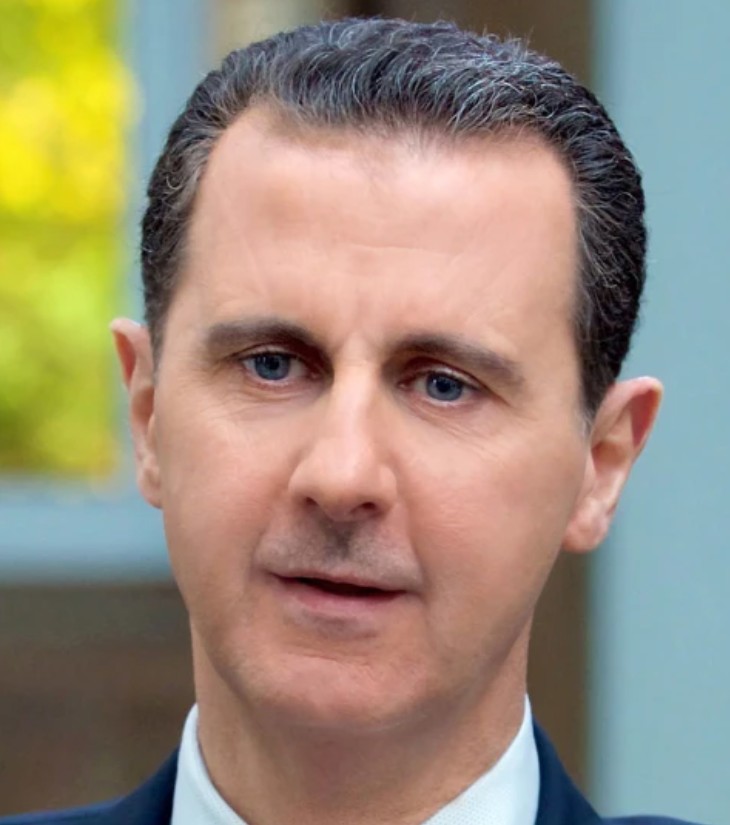
| Bio/Wiki | |
|---|---|
| Full Name | Bashar Hafez al-Assad |
| Profession | Politician |
| Physical Stats | |
| Eye Colour | Blue |
| Hair Colour | Salt & Pepper |
| Politics | |
| Political Party | • Arab Socialist Ba'ath (until 2024) • National Progressive Front (until 2025)  |
| Political Journey | • 24 June 2000-8 December 2024: General Secretary of the Central Command of the Arab Socialist Ba'ath Party • 17 July 2000-8 December 2024: President of Syria |
| Military Service | |
| Allegiance | Ba'athist Syria |
| Branch/service | Syrian Arab Army |
| Years of service | 1988–2024 |
| Rank | Field marshal |
| Unit | Republican Guard (until 2000) |
| Commands | Syrian Arab Armed Forces |
| Battles/wars | Syrian civil war |
| Awards | • 25 June 2001: Grand Cross of the National Order of the Legion of Honour – France, the highest rank of France's Legion of Honour. Assad later returned the award on 20 April 2018 after France started the process to revoke it. • 21 April 2002: Order of Prince Yaroslav the Wise – Ukraine. It was revoked on 18 March 2023. • 21 March 2004: Knight Grand Cross of the Royal Order of Francis I – Two Sicilies. It was later revoked. • 31 May 2008: Order of Zayed, United Arab Emirates • 5 October 2009: Order of the White Rose of Finland • 8 October 2009: Order of King Abdulaziz, Saudi Arabia • 11 March 2010: Knight Grand Cross with Collar of the Order of Merit of the Italian Republic. Italy revoked it on 28 September 2012. • 28 June 2010: Collar of the Order of the Liberator, Venezuela • 30 June 2010: Grand Collar of the Order of the Southern Cross, Brazil • 31 July 2010: Grand Cordon of the National Order of the Cedar, Lebanon • 2 October 2010: Order of the Islamic Republic of Iran, Iran • 2018: Uatsamonga Order, South Ossetia |
| Personal Life | |
| Date of Birth | 11 September 1965 (Saturday) |
| Age (as of 2025) | 60 Years |
| Birthplace | Damascus, Syria |
| Zodiac sign | Virgo |
| Signature | 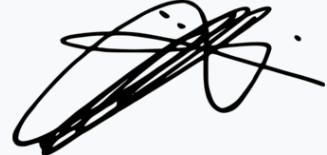 |
| Nationality | Syrian |
| Hometown | Damascus, Syria |
| School | Arab-French al-Hurriya School, Damascus (1982) |
| College/University | Damascus University |
| Educational Qualification | MD from Damascus University |
| Religion | Islam |
| Branch | Alawite |
| Food Habit | Non-vegetarian |
| Controversies | • In the 2000s, Bashar al-Assad started an economic liberalisation program, which allowed more private businesses and the sale of some state-owned assets. • Critics stated that it increased corruption and nepotism. Assad's Alawite supporters gained a large share of the privatised businesses and assets. His cousin Rami Makhlouf became one of the richest and most powerful businessmen in Syria. • Small businesses found it harder to compete. Private business owners also faced pressure. The growing gap between rich and poor angered many Syrians. Rural people and working-class families were especially unhappy. • Before the 2011 uprising, bribery and corruption were common in the government, army and bureaucracy. Many people believed that Assad's loyal supporters received special treatment. Sectarian favouritism and nepotism increased public anger. Working-class areas were badly affected by these policies. • In 2011, the Syrian civil war damaged Syria's economy. Factories, roads, homes and other important buildings were destroyed. Many businesses closed. Investors left the country. Unemployment rose to more than 50 percent, and about half of the population was living below the poverty line. These sanctions had already existed before the war and were strengthened after the conflict began. • In 2013–2014: Syria's economy became more dependent on the war. A 2014 European Council on Foreign Relations report said that much of Syria's economy was in ruins. It also said that the war and sanctions had destroyed assets and infrastructure. • In 2014, about two-thirds of Syrians were reported to be living in extreme poverty. That same year, a shopping mall, worth a $50 million, was opened in Tartus. Some people felt that the government was trying to show a normal life while the country was still at war. The government also gave government jobs to families of soldiers who had died. • After that, the EU banned the sale of jet fuel to Assad's government. The government then had to buy more expensive fuel from other sources. • In 2019, the Assad family was accused of taking greater control of Syria's economy. • Bashar al-Assad and his wife Asma al-Assad were accused of taking economic assets from former loyal business leaders. Their influence reportedly grew over shipping, property, telecommunications and banking. • Bashar's brother Maher al-Assad was accused of becoming wealthy through control of parts of the illegal Captagon drug trade. He was also accused of taking wealth from the war. • In 2019, the government began confiscating major private assets. Critics stated that many important businesses were transferred to people close to Bashar and Asma. • Asma al-Assad became an important figure in Syria's economic system. She headed a secretive economic council. Her organisation, Syria Trust, was also described as an important part of her financial network. Some critics accused her network of controlling or checking the foreign aid received by Syria. • UN agencies were reportedly allowed to work only through Syrian government-approved organisations. • In 2022, corruption remained a major problem in Syria. Syria was ranked the second-worst country in the world in the Corruption Perceptions Index. It was also described as the most corrupt country in the Arab world. The long war, poverty, sanctions and corruption had left the Syrian economy in very poor condition. |
| Social Media | • Instagram |
| Relationships & More | |
| Marital Status | Married |
| Marriage Date | 13 December 2000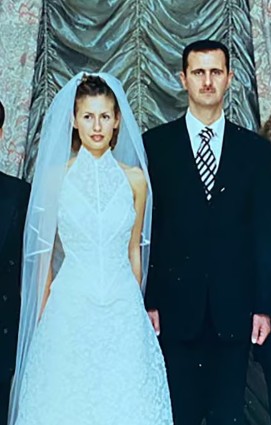 |
| Family | |
| Wife/Spouse | Asma Akhras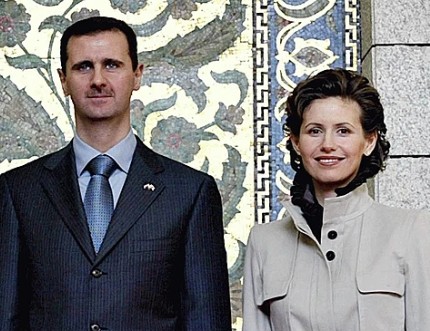 |
| Children | Son(s)- 2 • Hafez al-Assad • Karim al-Assad Daughter- 1 • Zein al-Assad 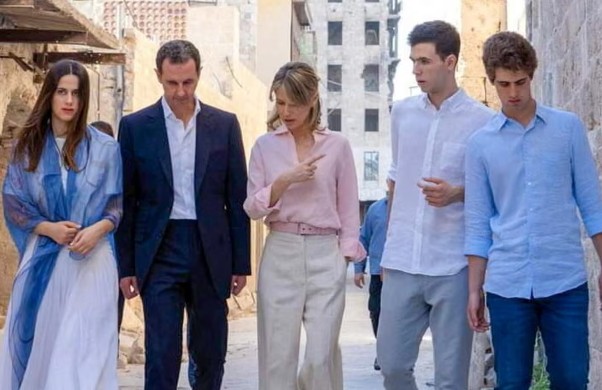 |
| Parents | Father- Hafez al-Assad (politician and military officer who served as the president of Syria from 1971 until his death in 2000)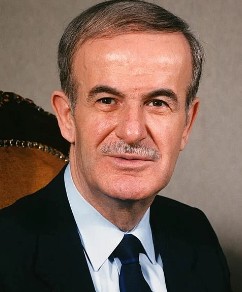 Mother- Anisa Makhlouf (the Syrian First Lady from 1971 to 2000) 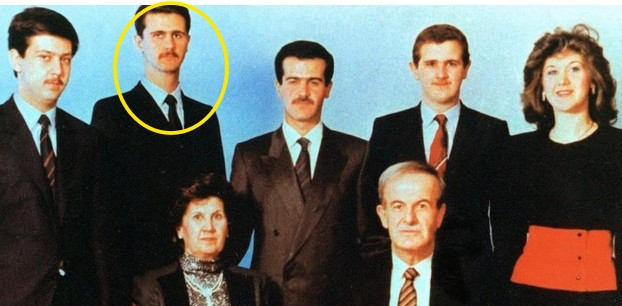 |
| Siblings | Brother(s)- 3 • Bassel al-Assad (deceased) • Maher al-Assad (a senior military commander) 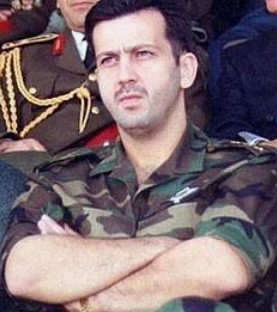 • Majd al-Assad (decased) Sister- 1 • Bushra al-Assad |
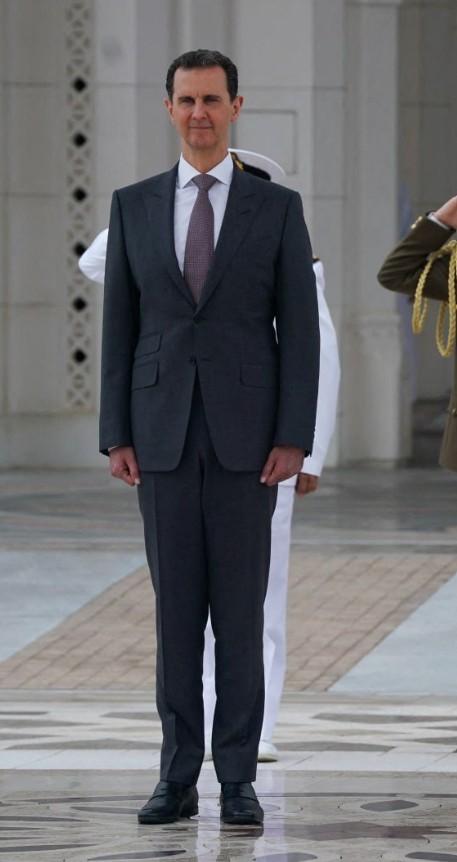
Some Lesser Known Facts About Bashar al-Assad
- Bashar Hafez al-Assad grew up in Damascus, Syria.
- He was the second son of Hafez al-Assad and Anisa Makhlouf.
- His father ruled the country for about 30 years as the President of Syria.
- As a child, he was quiet and shy.
- His elder brother, Bassel al-Assad, was the family’s expected future leader.
- After completing his high school in 1982, he started studying medicine at the University of Damascus.
- In 1988, after graduating as a doctor, he started training in eye medicine, also called ophthalmology.
- After that, he worked at Tishreen Military Hospital near Damascus for some time.
- During this time, he did not plan to become the president of Syria.
- Reportedly, he wished to become a doctor.
- In 1992, Bashar went to London, Britain, where he continued his training in ophthalmology at the Western Eye Hospital.
- During his studies in London, he was called as a “geeky I.T. guy.”
- He was far away from the political life of Syria.
- In 1994, his elder brother Bassel died in a car accident. After that, Bashar’s family called him back to Syria.
- He was considered quieter and less outgoing than his elder brother Bassel.
- His father then started preparing him to become the future leader of the country.
- From 1994 to 1999, Bashar received military training in Syria. During these years, he quickly moved up through the army ranks.
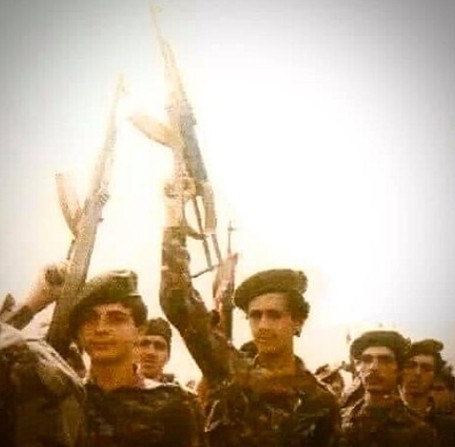
An old picture of Bashar al-Assad while serving in the Syrian military
- He became a colonel in 1999. During this period, he also started helping his father in his political work.
- Bashar was also appointed as the President of the Syrian Computer Society. He then introduced internet in Syria.
- He started listening to complaints from ordinary people. He also delivered public speeches and spoke about fighting corruption.
- He reportedly built a public image as a younger and more modern member of the Assad family.
- On 10 June 2000, his father, Hafez al-Assad, died after a heart attack.
- Bashar then started preparing to take his the place of his father in politics.
- Syria changed the rules about the minimum age for president so that Bashar could become a candidate.
- On 17 July 2000, Bashar al-Assad became the President of Syria at the age of 34.
- He was also given the additional responsibility as the commander-in-chief of the Syrian Armed Forces and Regional Secretary of the Ba’ath Party.
- Reportedly, the Syrian citizens hoped that the young doctor would bring political change in the country.
- In his early speeches, he talked about reforms, transparency, and criticism of the government.
- In December 2000, Bashar married Asma Akhras, who was born and raised in London to Syrian parents. Asma had studied computer science and French literature at King’s College London.
- She worked as an investment banker before marrying Bashar.
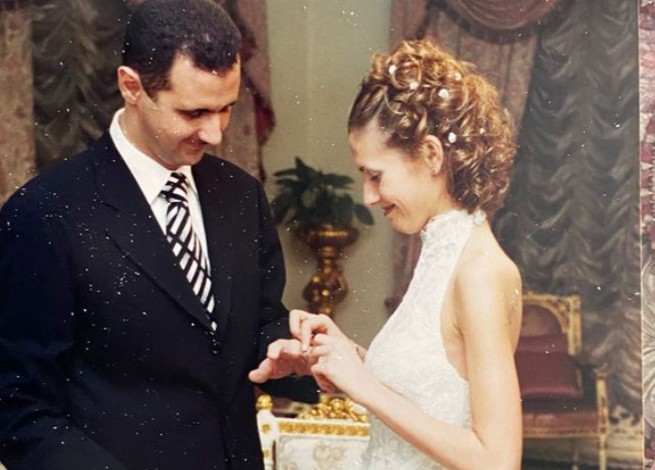
An old picture of Bashar al-Assad with his wife
- In 2001, when Pope John Paul II visited Syria, he met President Bashar al-Assad in Damascus.
- During this visit, the Pope also visited Christian religious leaders in Damascus and reportedly promoted brotherhood between Christians and Muslims.
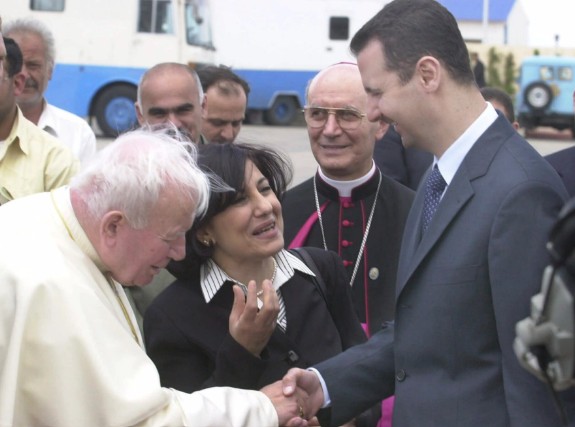
Bashar al-Assad while meeting Pope John Paul II
- During his first years as president, Bashar served the country as a reformer. He allowed public to hold discussions and promised political changes. However, he restricted political freedom.
- According to a media outlet named Human Rights Watch, many political activists were arrested and restricted freedom of speech.
- He ordered to arrest people who openly criticised the government.
- On 22 September 2001, Bashar al-Assad introduced a new Press Law, which allowed the government to control all printed and published material in Syria. It covered newspapers, books, pamphlets and magazines.
- The publishers, writers, editors, distributors and journalists who did not follow the laws could be fined or sent to prison. Other people accused of breaking the law could also faced fines or imprisonment.
- In April 2005, Syria withdrew its military forces from Lebanon. Syrian forces had been in Lebanon for about 30 years.
- The withdrawal followed strong pressure after the assassination of Lebanese former Prime Minister Rafic Hariri and the protests that followed.
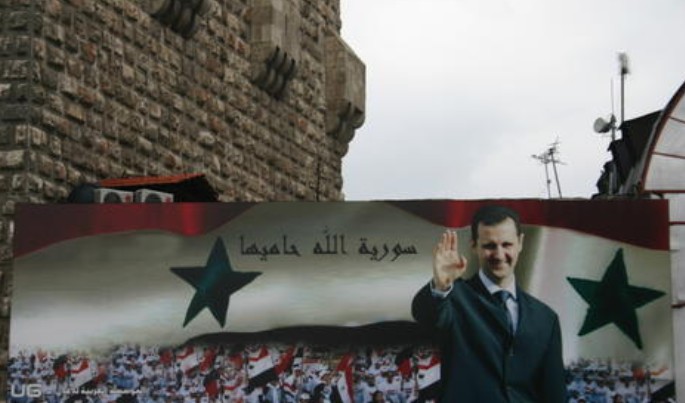
Billboard with a portrait of Bashar al-Assad and the text ‘Syria is protected by God’ on the old city wall of Damascus in 2006
- In 2011, when the Arab Spring protests reached Syria, a large protests started in March 2011. The protestors demanded political freedom, better living conditions and an end to government repression in Syria.
- During these protests, the government arrested many people and deployed military force.
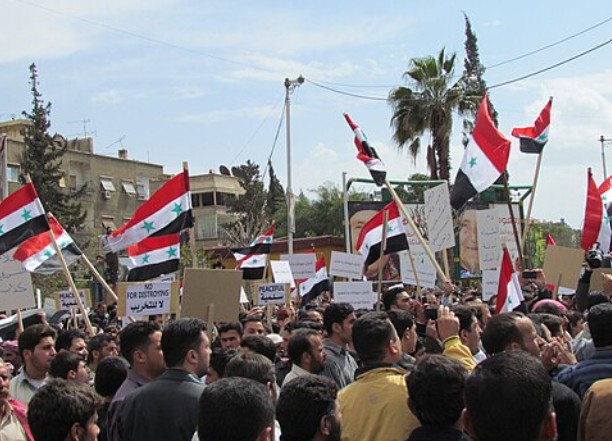
Anti-Assad demonstrations in Douma, 8 April 2011
- Many media outlets, such as Human Rights Watch, reported that many people were killed and tortured during these protests, and Syrian security forces arrested several protestors.
- These protests soon grew into a civil war, and this conflict became one of the worst wars of the 21st century.
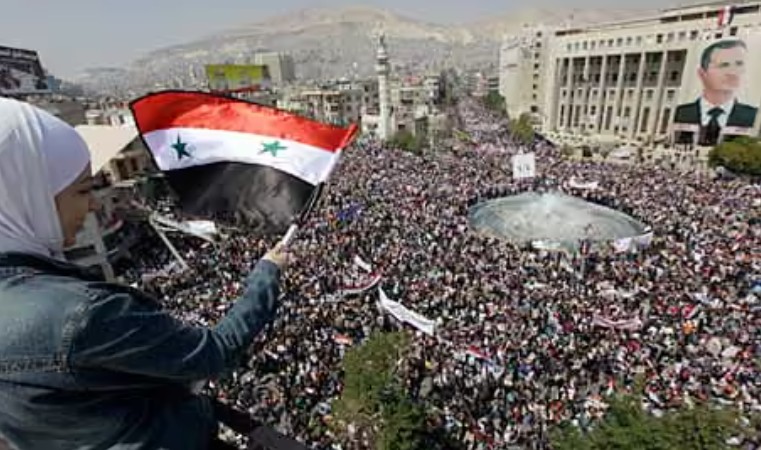
Syrian pro-government demonstrators gather in a central square in Damascus to show their support for Bashar al-Assad’s rule
- During these crises, Bashar promised to make changes in the rules of the government. However, the violence continued.
- According to some media reports, the promised reforms were weakened by the continuing crackdown, and thousands of people were arrested. Many civilians were killed or injured.
- Later, many other foreign countries and armed groups also got involved in the war.
- On 6 January 2013, Bashar al-Assad delivered his first major speech. He said that the conflict in Syria was caused by “enemies” from outside the country. He said that these enemies would “go to Hell.”
- He added in his speech that they would “be taught a lesson.” He said that he was open to a political solution and failed attempts did not mean that he was against finding a political solution.
- After 2013, Syria faced serious accusations over the use of chemical weapons.
- Many international investigations found evidence and linked the chemical attacks to Syrian government and military forces.
- Later, the Organisation for the Prohibition of Chemical Weapons linked some specific chemical attacks to the Assad government. After that, these evidence caused international anger and new sanctions on Syrian government.
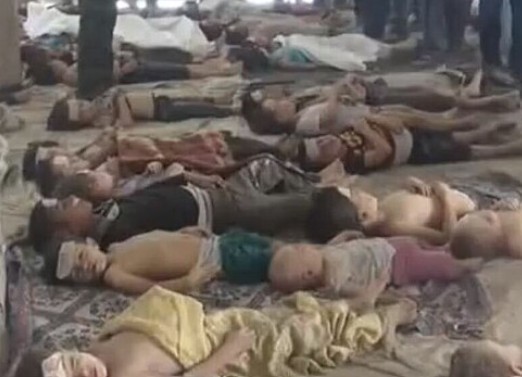
Children killed by pro-Assad military forces in the Ghouta chemical attack, the deadliest chemical weapons attack in the 21st century
- That same year, after Tadamon massacre, investigators found witnesses who stated that Assad ordered Syrian Military Intelligence to direct the Shabiha militia to kill civilians.
- In 2014, Bashar won another presidential term. The election was held during the civil war, and his government continued fighting opposition groups.
- In 2015, Russia started supporting Syrian military under the leadership of Assad. The Russian air power helped Assad’s government to again get the control of important areas in Syria.
- That same year, France started an investigation against Assad for crimes against humanity. French officials stated in the media that serious crimes in Syria should not go unpunished.
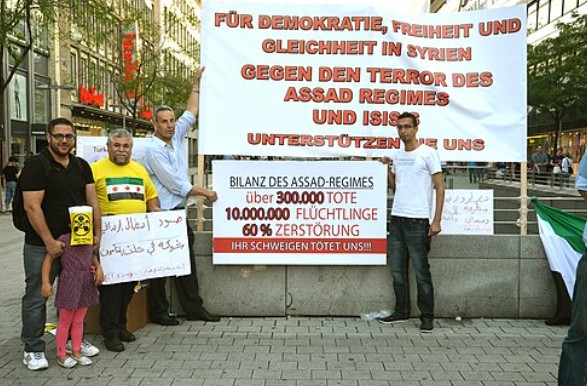
Members of the Syrian community in Hanover protest against Bashar al-Assad on the second anniversary of Ghouta chemical attacks, 21 August 2015
- During this period, Iran and some Iran-backed groups also supported Assad’s government.
- After that, Assad’s military forces recovered much of the territory they had lost.
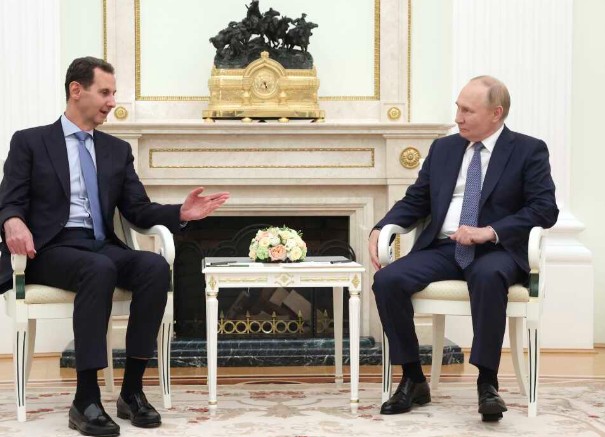
Bashar al-Assad while meeting Russian president
- In 2016, a UN investigation reported deaths on a large scale inside Syrian detention centers. The UN said that these deaths could amount to extermination as a crime against humanity.
- The report described severe abuse of prisoners, even children as young as seven years old died in detention.
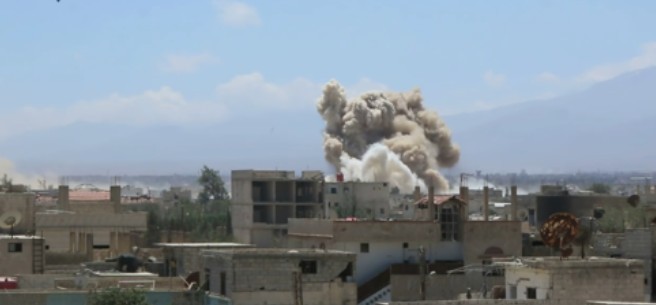
Bombing of Darayya suburb of Damascus by the Syrian Arab Air Force, 17 June 2016
- In 2017, a chemical attack in Khan Shaykhun killed and injured many civilians. After that, the United States blamed the Assad government for these killings.
- The United States later carried out a missile strike against a Syrian airbase.
- After that, Assad faced a strong international criticism for his actions.
- The Syrian civil war caused huge loss of life and forced millions of people to leave their homes.
- Russia became one of his most important foreign supporters during the war.
- For many years, Ba’athist Syria banned the Kurdish language in schools and public institutions. During Bashar al-Assad’s rule, discrimination against Kurds increased. Kurdish people faced more restrictions and unfair treatment.
- In 2018, another chemical attack in Syria was investigated.
-
In the findings, an investigation by OPCW stated that there were proofs to believe that Syrian government forces used chlorine in Saraqib. However, the Assad government denied responsibility for all accusations.
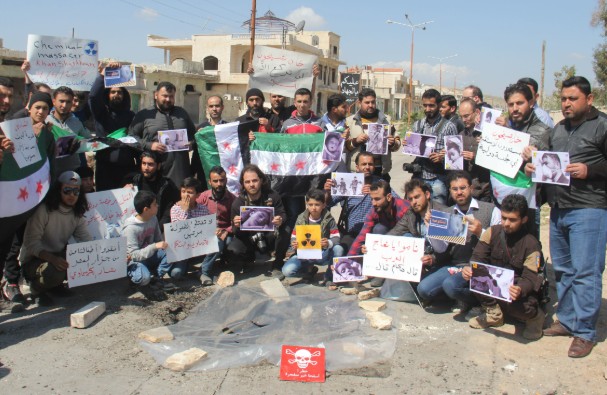
A protest against the chemical attack in Syria
-
That same year, Germany issued an international arrest warrant against Jamil Hassan, a senior military intelligence officer of Syria. He was accused of having command responsibility for torture and deaths in detention centers.
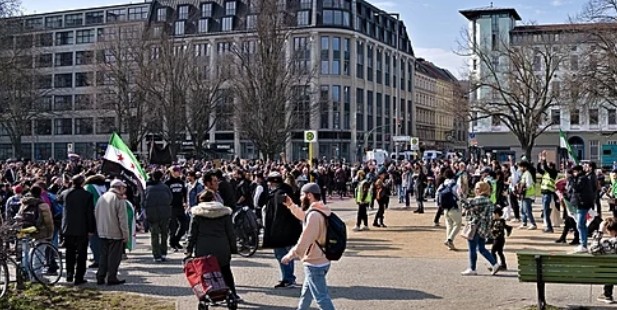
Anti-Assad demonstrations in Berlin, 18 March 2023
- In 2020, the United States announced the Caesar Syria Civilian Protection Act, which placed strict sanctions on people and businesses who supported Assad’s government.
- The sanctions were linked to human rights abuses and the continuing war.
-
In 2021, Bashar won another presidential election and remained in power. After that, Syria continued to face economic problems, sanctions and the effects of the long civil war.
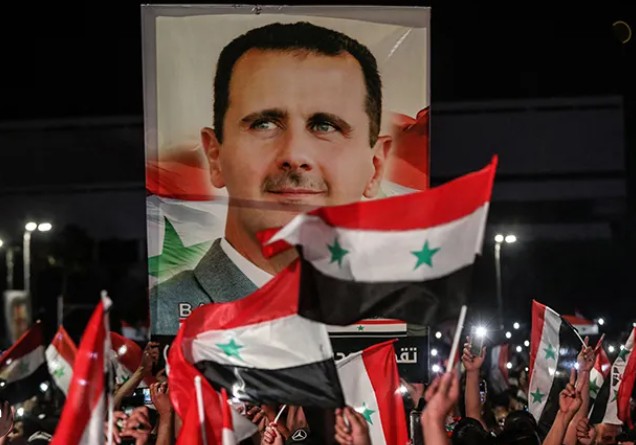
Bashar al-Assad’s supporters celebrating after he was elected as the President of Syria in 2021
- That same year, the UN estimated that at least 306,000 civilians were killed between 2011 and 2021.
- By 2022, the total number of deaths was estimated at about 580,000.
- From 2011 to 2023, about 154,000 people were forcibly disappeared or arbitrarily detained.
- By 2023, more than 135,000 people were reported to have been tortured, imprisoned or killed in government detention centers.
-
Many of the victims were women and children. Syrian government forces were accused of killing civilians as part of their war strategy.
-
They were also accused of torture, forced disappearances and unlawful arrests. Assad’s government was blamed for attacks on civilians because of their political or sectarian background.
-
In 2024, an investigation identified 24 Syrian children who were allegedly disappeared were detained and later killed after they turned 18.
-
The investigation claimed that more than 6,000 detainees under the age of 18 were sentenced to death at Sednaya Prison and a military field court between 2014 and 2017.
- That same year, Assad’s government suddenly began to collapse. In late November, Rebel forces started a major offensive and started capturing important cities and moved quickly toward Damascus.
- On 8 December 2024, Bashar al-Assad left Syria and ended his 24-year presidency in Syria.
- After this, his family’s rule over Syria, which had lasted for more than five decades, also came to an end.
- He moved from Syria to Russia, which gave Assad and his family asylum on humanitarian grounds. He started living in Moscow.
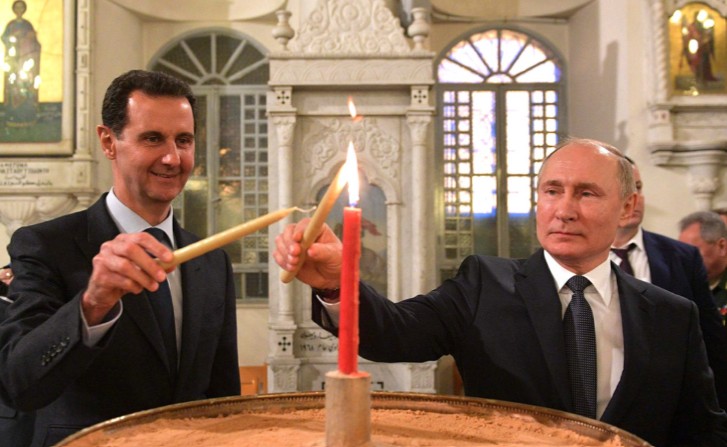
Bashar al-Assad with Russian president
- During his college days, Bashar wanted to be a doctor, not a president.
- The unexpected death of his elder brother changed his entire future.
- He is fluent in English and French.
- On 11 August 2026, a Damascus court sentenced Bashar al-Assad to death in absentia. During the time of verdict, he was not present in court as he was settled in Russia.
- The court linked the sentence to crimes including murder, torture and crimes against humanity during the Syrian civil war.
- His brother Maher al-Assad was also sentenced to death in absentia.
- The verdict also held former Assad-era officers responsible for crimes committed during the war.
- His presidency began with hopes of reform but ended after years of war, repression, and international criticism.
-
Assad is named as the “Butcher of Syria” by many noted politicians, writers, and journalists of Syria.
- He likes travelling to distant places and swimming in his free time.
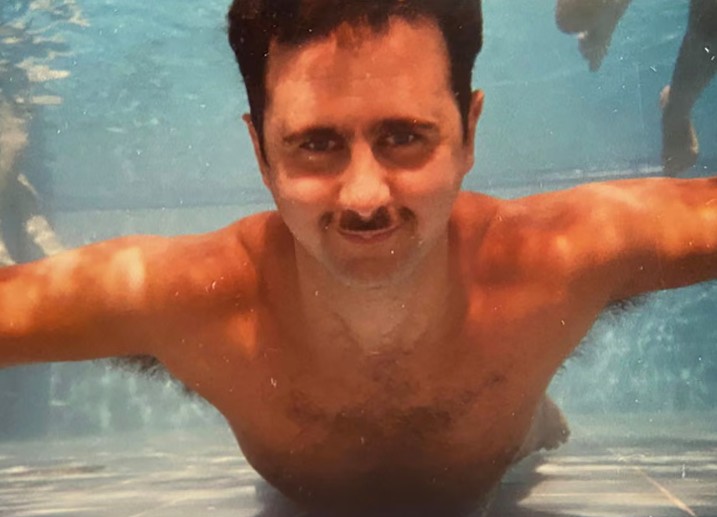
Bashar al-Assad while enjoying swimming
 Ahmed al-Sharaa Height, Age, Wife, Children, Family, Biography
 Zohran Mamdani Age, Wife, Family, Biography
 Khalil al-Hayya Age, Wife, Children, Family, Biography
 Donald Trump Jr. Height, Age, Girlfriend, Wife, Family, Biography
 Reza Pahlavi (Crown Prince of Iran) Age, Girlfriend, Wife, Children, Family, Biography
 Ali Larijani Age, Death, Wife, Children, Family, Biography
 Ebrahim Raisi Age, Death, Wife, Biography
 Hassan Rouhani Age, Wife, Children, Family, Biography & More