
Dr Lars-Christian Koch Age, Biography
Quick Info→
Age: 66 Years
Profession: Ethnomusicologist
Hometown: Peine, Germany

| Bio/Wiki | |
|---|---|
| Full Name | Professor Dr. Lars-Christian Koch |
| Profession | Ethnomusicologist |
| Known for | Receiving the Padma Shri by the Government of India for promoting Indian classical music |
| Physical Stats | |
| Eye Colour | Blue |
| Hair Colour | Salt & Pepper |
| Career | |
| Award(s) | • Padma Shri by the Government of India (2026)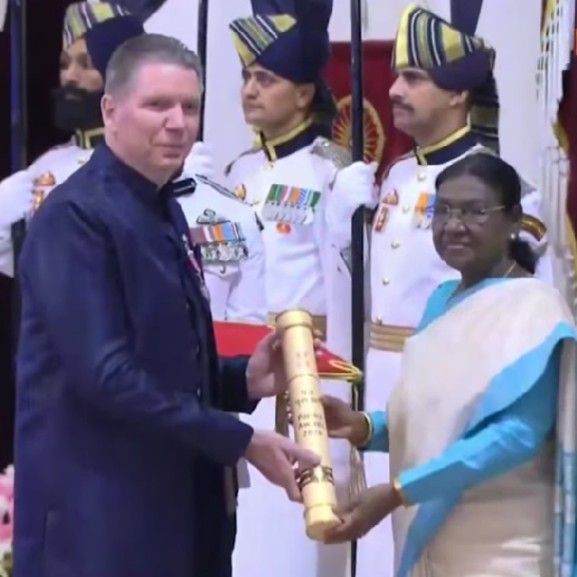 • The 6th Merck-Tagore Award for Promoting Intercultural Exchange between India and Germany (2026) |
| Personal Life | |
| Date of Birth | Year, 1959 |
| Age (as of 2025) | 66 Years |
| Birthplace | Peine, Lower Saxony, Germany |
| Nationality | German |
| Hometown | Lower Saxony, Germany |
| Educational Qualification(s) | • Graduation in Ethnology • PhD in Musicology in Bonn |

Some Lesser Known Facts About Dr Lars-Christian Koch
- He grew up in Peine, a quaint town in Lower Saxony, Germany.
- After completing his formal education in Ethnology, he pursued a Ph.D. in Musicology in Bonn. Later, he merged his both fields.
- Dr Lars-Christian Koch has served as Head of Media (Ethnomusicology and Visual Anthropology) and the Berlin Phonogram Archive at the Ethnologisches Museum in Berlin.
- In 2018, he was appointed as the director of the Staatliche Museen zu Berlin collections in the Humboldt Forum.
- After that, he started working as the director of both the Ethnologisches Museum and the Museum of Asian Art. He then combined the into the Humboldt Forum at the Berlin Palace, where the Prussian kings and German emperors once lived.
- Dr Lars-Christian Koch has served as the director of the State Ethnographic Collections of the Dresden State Art Collections (SKD) in Germany.
- He also works as a Professor of Ethnomusicology at the University of Cologne.
- He serves as an Honorary Professor at the University of the Arts in Berlin.
- He also serves as a guest professor at the University of Vienna and the University of Chicago.
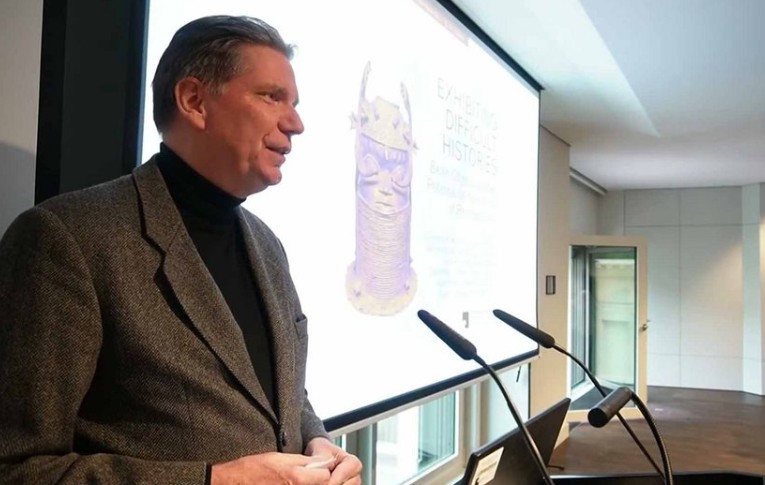
Dr Lars-Christian Koch while teaching at a University
- He has redefined Indian music and instruments through his writings for the Western countries. His writings have also improved the understanding of classical music within India.
- His work in Indian music for decades helped it to gain an important place in the field of study in Global Ethnomusicology, a study of music.
- Apart from Indian classical music, Koch has also written on Buddhist music.
- Dr Lars-Christian Koch has worked and researched on ground level in India and South Korea and focused on historical recordings and music archaeology.
- In 1994, in his PhD dissertation, he researched about the rasa doctrine (the foundational philosophy of North Indian (Hindustani) classical music). He then compared his findings with the ‘Doctrine of Affections,’ which was used in Europe in the 16th and 17th centuries during the Baroque era.
- He researched and wrote in detail about Natyashatra (written by Bharat Muni), a classic Indian cultural text. He detailed about the aesthetic touch and emotions of these texts so that the interested audience could easily understand it through performing arts.
- Dr Lars-Christian Koch also worked on Navarasas, the nine basic human emotions related to classical Indian performing arts, such as dance, drama, and literature.
- He then compared it with the theory of six basic affectations i.e. admiration, love, hatred, desire, joy and sorrow by some French scholar and critics.
- According to these, French scholars, if these six basic affectations were used by a musician in a proper way then it could produce a magical result.
- During his translation work, he did not rush to translate Indian culture in Western theory. He thoroughly analyzed and followed Indian music vocabulary and its structured aesthetic system.
- During his work, Dr Lars-Christian Koch regularly visited India and its states, specifically West Bengal, where he worked on the music and songs written and composed by Rabindranath Tagore. Its called the Rabindra Sangeet.
- In his book ‘My Heart Sings: The Songs of Rabindranath Tagore Between Tradition and Modernity,’ he mentioned that the music by Tagore not only shows the classical, regional, and cultural traditions and perspectives of India, but also elaborates its modern side.
- He applied his ethnomusicological perspective in his book that helped both the Indian and Western readers to understand Tagore and his music in a better way.
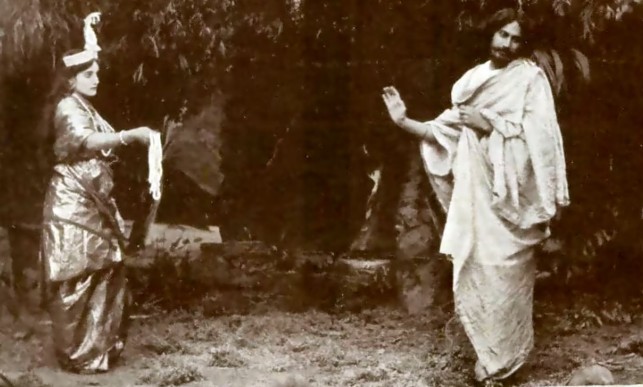
A picture from Rabindranath Sangeet
- In 2011, he published his another book ‘Sitar and Surbahar Manufacturing: The Tradition of Kanailal & Brother’ through Ethnologisches Museum Berlin.
- In this book, Dr Lars-Christian Koch wrote the stories of the manufacturing culture of instruments at the shops of the Upper Chitpur Road in Burrabazar in Kolkata.
- He showed the manufacturing tradition through photographs and complete details. He wrote that Kanai Lal adopted technicalities while manufacturing the products and started the business in 1930.
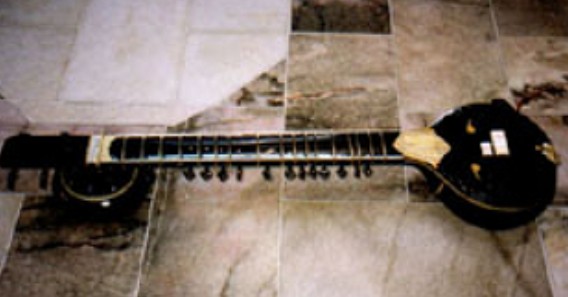
A picture from the book ‘Sitar and Surbahar Manufacturing The Tradition of Kanailal & Brother’
- He interviewed many people to know about the manufacturing process.
- In his book, Dr Lars-Christian Koch highlighted the works of noted Indian musicians, such as Enayet Khan, Waheed Khan, Pandit Ravi Shankar, and Ustad Vilayat Khan.
- According to him, these Indian musicians used the instruments only manufactured at the shop of Kanailal & Brother.
- In 1995, this shop was closed as there was no one to continue the craft.
- According to him, it was a single family in India, who manufactured traditional instruments.
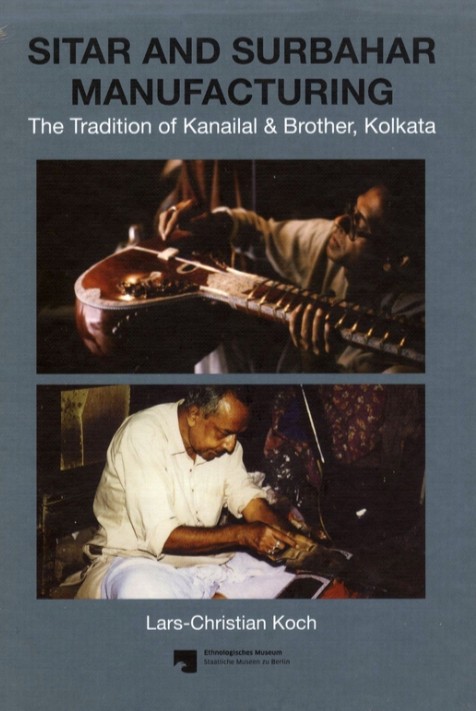
The cover of the book ‘Sitar and Surbahar Manufacturing The Tradition of Kanailal & Brother’
- His first teacher from India was Dr. Tripti Kuri Roy from West Bengal. She introduced him to the culture of Bengal and India. She was his mentor and guide.
- In May 2026, Dr Lars-Christian Koch made headlines when the Government of India awarded him the Padma Award, India’s highest civilian award, for his work with the Indian classical music for more than decades.
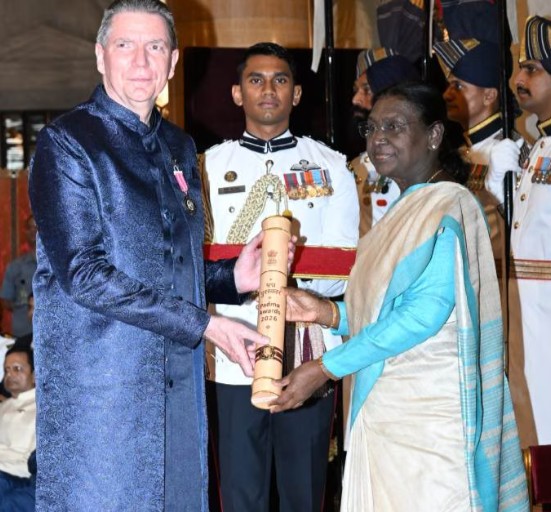
Dr Lars-Christian Koch while receiving the Padma Shri Award from Indian President
 Tanveer Bookwala Age, Wife, Family, Biography & More
 Kiran Desai Age, Boyfriend, Husband, Children, Family, Biography & More
 Salman Rushdie Height, Age, Girlfriend, Wife, Children, Family, Biography
 Ravinder Singh (Author) Age, Girlfriend, Wife, Family, Biography, & More
 Aravind Adiga Age, Girlfriend, Wife, Children, Family, Biography & More
 Akshat Gupta Age, Wife, Family, Biography & More
 Khushwant Singh Age, Death, Wife, Children, Family, Biography & More
 Nikita Singh Age, Boyfriend, Husband, Family, Biography & More