
Madhav Gadgil Age, Death, Wife, Children, Family, Biography
Quick Info→
Age: 83 Years
Death Cause: Brief Illness
Wife: Sulochana Gadgil
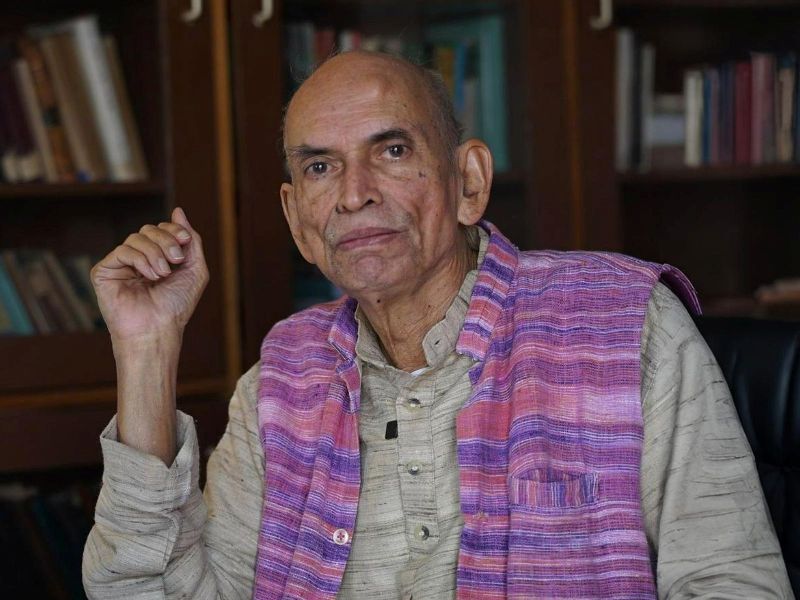
| Bio/Wiki | |
|---|---|
| Full Name | Madhav Dhananjaya Gadgil |
| Profession(s) | • Ecologist • Academic • Writer • Columnist |
| Physical Stats | |
| Eye Colour | Black |
| Hair Colour | Grey |
| Career | |
| Awards, Honours, Achievements | 1981: Padma Shri by the Government of India 1983: Honoured with Rajyotsava Prashasti by the Government of Karnataka 1984: Elected Fellow of the Indian National Science Academy (INSA) 1986: Received Shanti Swarup Bhatnagar (SSB) Prize from CSIR for contributions to science and technology 1990: Elected Fellow of the Indian Academy of Sciences (IAS) and National Academy of Sciences, India (NASI) 1991: Elected Foreign Associate of the US National Academy of Sciences 2002: Conferred Harvard Centennial Medal by Harvard University 2003: Volvo Environment Prize (shared with economist Muhammad Yunus) 2006: Padma Bhushan by the Government of India 2007: H. K. Firodia Award from the H. K. Firodia Foundation 2013: Conferred Doctor of Science (Honoris Causa) by the Central University of Orissa 2014: Received the Georgescu-Roegen Award from TERI for his work with WGEEP 2015: Awarded the John and Alice Tyler Prize for Environmental Achievement by the University of Southern California, shared with scientist and ecologist Jane Lubchenco 2019: Honoured with Fergusson Gaurav Puraskar as Outstanding Alumnus of Fergusson College 2024: Awarded Champions of the Earth by the United Nations • Received the Vikram Sarabhai Award • Received the Ishwarchandra Vidyasagar Award • Became Fellow of the Third World Academy of Sciences (TWAS) • Made Honorary Fellow of the Association for Tropical Biology and Conservation (ATBC) • Awarded National Environment Fellowship by the Ministry of Environment and Forests |
| Personal Life | |
| Date of Birth | 24 May 1942 (Sunday) |
| Birthplace | Pune, Bombay Province, British India (now Pune, Maharashtra, India) |
| Date of Death | 7 January 2026 (Wednesday) |
| Place of Death | Pune, Maharashtra, India |
| Age (at the time of death) | 83 Years |
| Death Cause | Brief Illness |
| Zodiac sign | Gemini |
| Nationality | Indian |
| Hometown | Pune |
| School | Balshikshan and Modern High School, Pune |
| College/University | • Fergusson College, Pune (affiliated with Savitribai Phule Pune University (1963) • University of Mumbai (1965) • Harvard University, Cambridge, Massachusetts, United States (mid-1960s) |
| Educational Qualification(s) | • B.Sc. in Biology from Fergusson College • A master's degree in Zoology from the University of Mumbai • Ph.D. in Mathematical Ecology from Harvard University |
| Relationships & More | |
| Marital Status (at the time of death) | Widower |
| Family | |
| Wife/Spouse | Sulochana Gadgil (meteorologist) (passed away in 2025)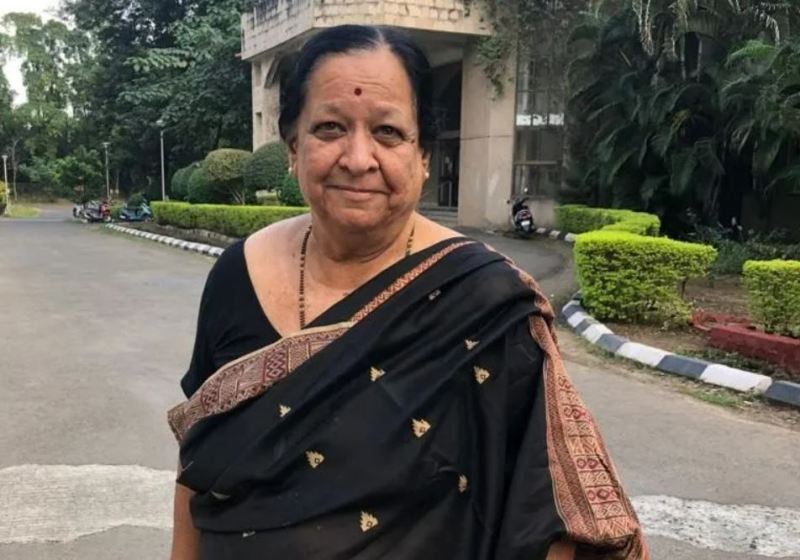 |
| Children | Son- Siddhartha Gadgil (mathematician) Daughter- (Journalist cum Spanish teacher) |
| Parents | Father- Dhananjay Ramchandra Gadgil (economist) (deceased) 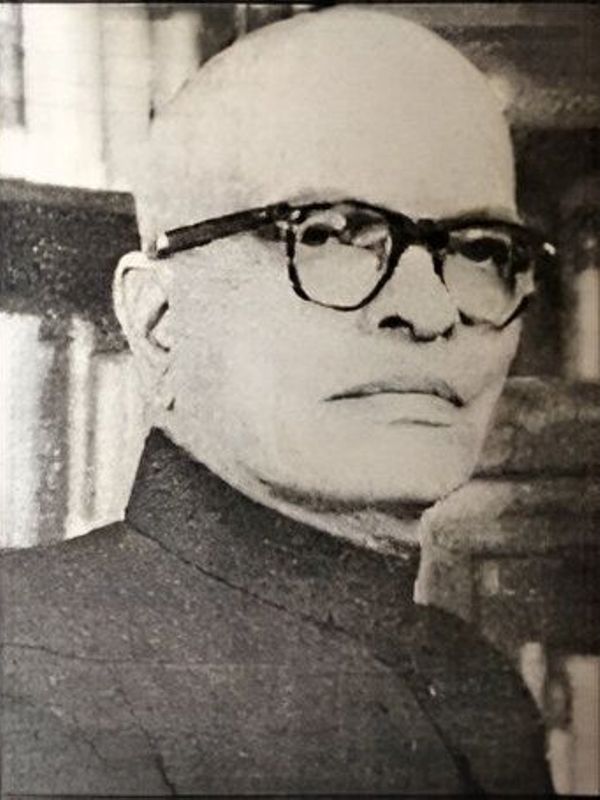 Mother- Pramila (deceased) |
| Siblings | Brother(s)- 2 • Ajit • Purshottam Sister- 1 • Sulabha |
| Grandchildren | Granddaughter(s)- 2 • Tara • Revati 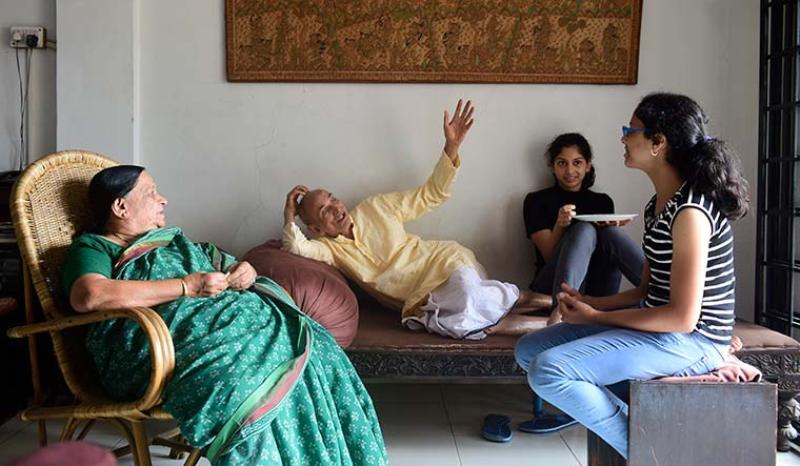 |

Some Lesser Known Facts About Madhav Gadgil
- Madhav Gadgil grew up in Pune.
- Gadgil developed an interest in writing at a young age. While in 10th grade, he published ten articles on animal behaviour in the Marathi science magazine Srishtidnyan.
- Madhav was actively involved in sports during his college years.
- In 1959, he set the Maharashtra State Junior record in the high jump, and in 1961, he went on to break the Pune University high jump record.
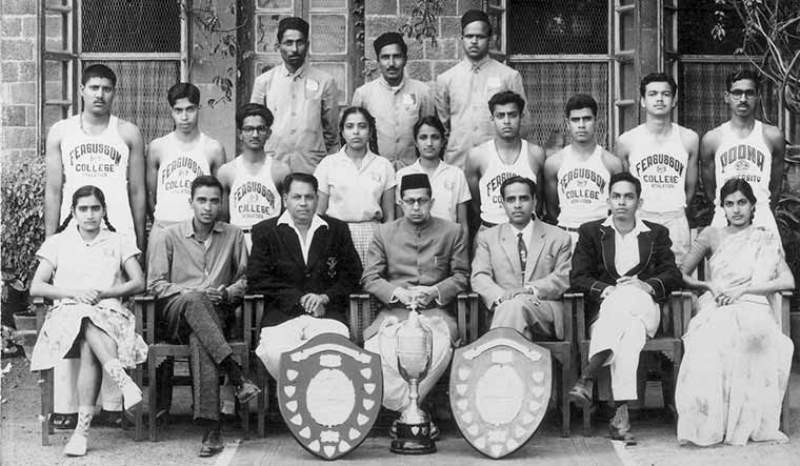
Madhav Gadgil (seated, second from the right) as the captain of the Fergusson College athletics team in 1961
- During his college years, he also represented Pune University at the All India University Athletic Meet.
- Around the same period, Madhav met Sulochana Gadgil during his time at Fergusson College, who later became a noted meteorologist and a Harvard scholar, and the two eventually married.
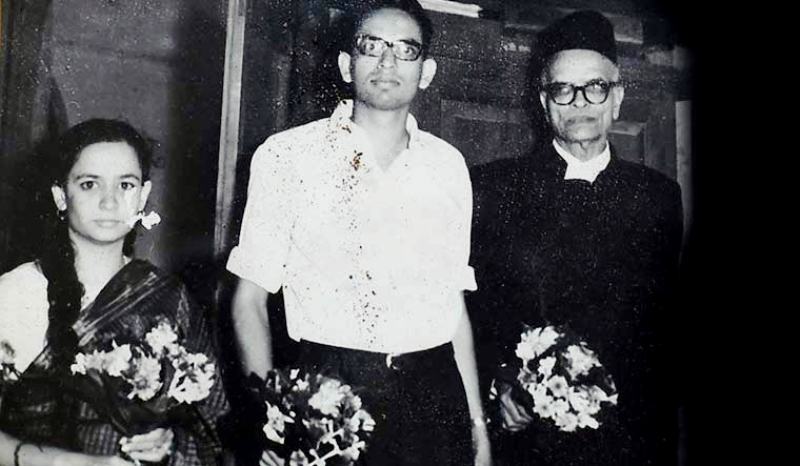
Madhav Gadgil and Sulochana Gadgil (as newlyweds) with his father, Dhananjay Ramchandra Gadgil
- After studying at Fergusson College and the University of Mumbai, Madhav Gadgil joined Harvard University in the mid-1960s, encouraged by Giles Mead, who was then the curator of fishes at the Harvard Museum of Comparative Zoology.
- At Harvard University, Madhav initially planned to work with Giles Mead, but his later interest changed after being influenced by lectures from E. O. Wilson, who was then emerging as a leading voice in ecology and evolutionary biology.
- After completing his PhD from Harvard University, he received an IBM Fellowship, which allowed him to continue his research work as a research fellow at the Harvard Computing Center.
- For the next two years, he continued his research while also teaching Biology at Harvard University.

Madhav Gadgil during a lecture
- In 1971, Madhav Gadgil returned to India and joined the Agharkar Research Institute in Pune as a scientific officer, where he worked for the next two years under the Maharashtra Association for Cultivation of Science.
- He also joined the Damodar Dharmanand Kosambi Chair as a visiting research professor at the University of Goa.
- In 1973, he moved from Pune to Bengaluru to join the Indian Institute of Science (IISc). He worked there for more than three decades and retired from the institute in 2004 as its chairman.
- During his time at IISc, he helped promote interdisciplinary research by establishing the Centre for Theoretical Studies and the Centre for Ecological Studies.
- In 1976, the Government of Karnataka asked him to study the state’s bamboo resources, and his findings later influenced policy decisions, including cuts in subsidies for forest-based industries.

- In 1986, Madhav was appointed to the Scientific Advisory Council to the Prime Minister of India. He served in this position until 1990, during which he supported the creation of India’s first biosphere reserve in the Nilgiris.
- In 1991, Madhav served as a visiting professor at Stanford University. He served in the same position at the University of California, Berkeley in 1995.
- Gadgil published his first English book, This Fissured Land, in 1992. The book explores the ecological history of India.
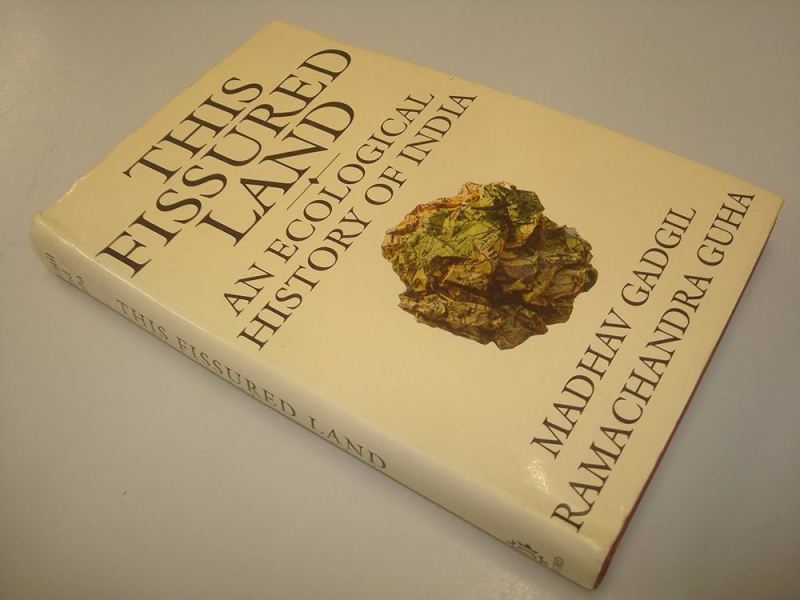
Cover of Madhav Gadgil’s ‘This Fissured Land’ (1992)
- He authored many other books, including ‘Ecology and Equity: The Use and Abuse of Nature in Contemporary India’ (1995), ‘Diversity: The Cornerstone of Life’ (2005), and ‘Ecological Journeys: The Science and Politics of Conservation in India’ (2005).

Madhav Gadgil, while signing a book
- Madhav also published works in Marathi, including Nisarganiyojan Lokasahabhagane, contributed more than 40 articles, and had a fortnightly column in The Hindu. He also wrote a monthly column for the Marathi daily Sakal.
- In 1998, Madhav became the chairman of the Science and Technology Advisory Panel of the Global Environment Facility, a United Nations–linked body, and held this responsibility until 2002.
- Over the years, he also contributed to national policy and education by serving on the Environmental Education Panel of NCERT and as a member of the National Advisory Council.
- Later, he became a member of the National Tiger Conservation Authority and chaired the committee responsible for proposing environmental education curricula at the school level.
- Gadgil helped draft the Biological Diversity Act of 2002 and prepared the official manual for the People’s Biodiversity Registers. He also assisted the National Biodiversity Authority in compiling local-level biodiversity records.
- In 2010, the Government of India appointed him as chairman of the Western Ghats Ecology Expert Panel, which was set up to examine ecological issues in the region.
- Madhav was known for bringing quantitative methods to the study of ecology and animal behaviour in India and for highlighting the importance of humans as part of the ecosystem.
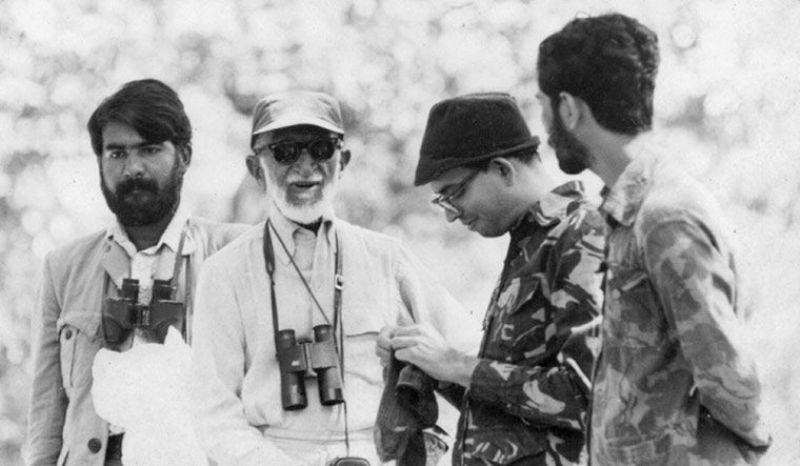
Madhav Gadgil with ornithologist Salim Ali in Bandipur National Park in Karnataka in 1977
- Throughout his career, Gadgil researched population biology, conservation, human ecology, and ecological history, publishing over 250 articles in journals and magazines.
- His life and work have been documented in a Marathi biographical book titled ‘Vidnyanyatri – Dr. Madhav Gadgil’ (2011), written by A. P. Deshpande.
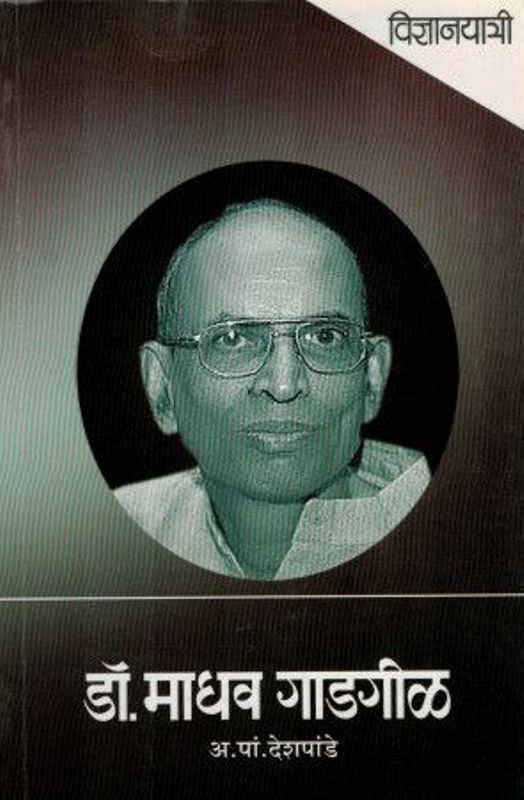
A cover page of the book ‘Vidnyanyatri – Dr. Madhav Gadgil’ (2011)
- Some of his works have also been translated into multiple languages and are used as academic texts.
 Sharif Osman Hadi Age, Death, Family, Biography
 K. G. Sankara Pillai Age, Family, Biography
 Ande Sri Age, Death, Wife, Children, Family, Biography
 Banu Mushtaq Height, Age, Husband, Children, Biography
 Jim Curtis Height, Age, Girlfriend, Wife, Children, Biography
 Manoj Bhawuk Age, Wife, Children, Biography
 Irwin Allan Sealy Height, Age, Wife, Biography
 S. L. Bhyrappa Age, Death, Wife, Children, Family, Biography