
Rakesh Mehta Age, Death, Wife, Children, Family, Biography
Quick Info→
Death Cause: Suicide By Hanging
Age: 74 Years
Death Date: 06/09/2026
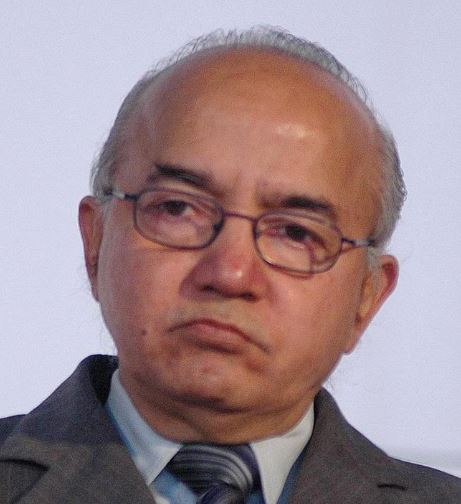
| Bio/Wiki | |
|---|---|
| Profession | Retired IAS |
| Famous for | Being Chief Secretary of Delhi |
| Career | |
| Debut | • 1975 – Selected for the Indian Administrative Service (AGMUT cadre, 1975 batch) • Commissioner, Municipal Corporation of Delhi (MCD) • Chairman and Managing Director, Delhi Transport Corporation (DTC) • 2007 – Chief Secretary, Government of Delhi • November 2010 – Retired as Chief Secretary of Delhi • Post-retirement – State Election Commissioner |
| Personal Life | |
| Date of Birth | Year, 1952 |
| Date of Death | 6 September 2026 |
| Place of Death | Noida, Uttar Pradesh, India |
| Age (at the time of death) | 74 Years |
| Death Cause | Suicide by hanging |
| Nationality | Indian |
| Hometown | Delhi |
| College/University | • St Stephen's College, New Delhi • Jawaharlal Nehru University (JNU), New Delhi • London School of Economics (LSE) |
| Educational Qualification | • BA Honours (St Stephen's) • Master of Arts (JNU) • London School of Economics (LSE) |
| Religion | Hinduism |
| Relationships & More | |
| Marital Status (at the time of death) | Married |
| Family | |
| Wife/Spouse | Sumati Mehta (Retired IAS) |
| Children | Son- 1 Daughter- 1 |
| Parents | Father- Kulwant Ram Mehta |
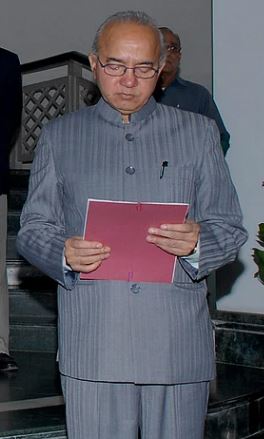
Some Lesser Known Facts About Rakesh Mehta
- Rakesh Mehta joined the Indian Administrative Service in 1975.
- He was a member of the cadre of the AGMUT and had passed the Civil Services Examination to gain admission to the service.
- He was educated at St Stephen’s College, getting his BA Hons qualification. He then did his MA at JNU.
- Later he went to London and earned an MSc from the London School of Economics. Mehta had worked in the Delhi government for many years in various capacities.
- He served as a Commissioner in Municipal Corporation of Delhi for 3 years.
- He was MCD Commissioner and in that role, he implemented the unit area approach to property tax computation.
- This was the time when he was lobbying for the shift of the slaughterhouse at Kasabpura, near New Delhi Railway Station.
- The slaughterhouse was a major source of pollution in the vicinity. The proposal was opposed by those from the meat trade.
- The Congress party was in power in both the Delhi government and the MCD at that time. Mehta refused to budge from his position.
- He later briefed reporters about the German technology used at the new automated slaughterhouse set up in Ghazipur.
- He also has been involved in the changes associated with the privatization of the power sector in Delhi. Along with this, he was involved in phasing out Delhi’s Blue Line buses and brought in low floor buses in their place.
- He had served with the former Delhi Chief Secretary Ramesh Negi in the MCD, Delhi Jal Board and the Transport Department. Negi attributed him with a number of administrative changes.
- Mehta is credited with setting up the Air Ambience Fund. Over time this fund has expanded to almost 5 crores of rupees.
- In 2007, Mehta was appointed to become the Chief Secretary of Delhi. He was in regular touch with the then Chief Minister Sheila Dikshit.
- He left this position in November 2010. During his term as Chief Secretary, he had the honor of hosting the Commonwealth Games in Delhi in 2010.
- Mehta was instrumental in the preparations for the Games. The Engineer in Chief Sarvgya Srivastava, also played a part in this preparation.
- In September 2010 the Barapullah Elevated Road, which was part of the Games project, was still unfinished.
- The project of the flyover at Mayur Vihar was also delayed during this time. Mehta has assured officials that both the projects will be completed on time.
- He also worked on a few other transport, power and civic infrastructure works in Delhi during his time. It was Mehta who introduced BRT in Delhi.
- He has borrowed the idea from Bogota, Colombia and even visited the city before arriving in Delhi. He is the former chief of DTC who once invited the former Bogota’s mayor, Enrique Penalosa to meet at a high level. He decided to take the meeting at Dilli Haat.
- Delhi’s busiest road was the site of strong opposition to the BRT project. During this time, Haroon Yusuf was the Transport Minister of Sheila Dikshit’s government.
- At the same time, RK Verma was Transport Commissioner. When the Delhi government called a meeting to review the BRT project, Mehta listed out at least ten benefits of the project at the meeting.
- Later on, the government decided to stop any further development of the corridor beyond what has already been built.
- Mehta wanted to leave the completed stretch as is. He felt it would manifest itself gradually.
- Abhijit Sarkar had served as Transport Secretary then as an officer of the DANICS. Sarkar said that Mehta asked Sheila Dikshit that the section of BRT that had been developed shouldn’t be dismantled even if the network could not be completed.
- Sarkar also remembered that even as Chief Secretary Mehta did not allow his experience in the transport sector to overpower his work in other departments.
- His colleagues said he was a “bureaucrat with solutions. He was a person who could cut to the chase on politically sensitive projects without all the hocus pocus.
- Mehta would have a regular routine for meetings. He was not a no-show at the meetings. The meetings began and ended as scheduled.
- He was responsible for recording the minutes of his meetings and immediately telephoning his stenographer at the conclusion of the meeting.
- Under his process, minutes which normally required two or three months to be circulated went to everyone’s desk in a couple of hours.
- Mehta was one of the first officers to launch Ladli Yojana scheme in the Delhi region. Many other states followed suit.
- He also decided to give the Delhi Secretariat canteen completely to women. The canteen continues to be run by women to this day.
- He was also appointed as Delhi’s State Election Commissioner after his retirement. Mehta’s wife Sumati Mehta is also an IAS officer (Delhi cadre) from the retired service.
- His son was unmarried and working for his PhD. He had a daughter who lives in London with her husband.
- Mehta had no one at his house in Kendriya Vihar 2, Pocket 6, Noida. This is under the jurisdiction of Noida Phase 2 police station.
- He had high blood pressure and high blood sugar. Police got a call regarding his death at around 1.28 pm on 6 September 2026.
- Mehta committed suicide at his house in Noida. The police received a call on Dial 112. His door at his flat was locked and a key was not found and it required unlocking.
- A purported suicide note was found at the spot. Here he referred to long-term illness as the rationale for making the move.
- At the time of his death his wife was in Dehradun visiting his son. If he did not pick up the phone, they would report to the guard at his residence.
- The guard found his body. Soon after, a relative of the patients who lives close to the house in Noida also arrived at the scene.
- A post mortem examination was conducted by police, who handed over the body to the family. His final rites were done on 7 September 2026 at the crematorium, located in the Lodhi Road.
 Megha Dhade (Bigg Boss 12) Age, Husband, Family, Biography & More
 Shiv Pandit Height, Weight, Age, Affairs, Wife, Family, Biography & More
 Aaliyah Chavez Height, Age, Family, Biography
 Petal Gahlot Height, Age, Family, Biography
 Chatrapathi (2023) Actors, Cast & Crew
 Biswa Kalyan Rath (Comedian) Age, Girlfriend, Wife, Family, Biography & More
 Gurucharan Singh Height, Age, Family, Biography
 Gautam Vig (Actor) Height, Age, Wife, Biography & More