
Narges Mohammadi Age, Husband, Children, Family, Biography
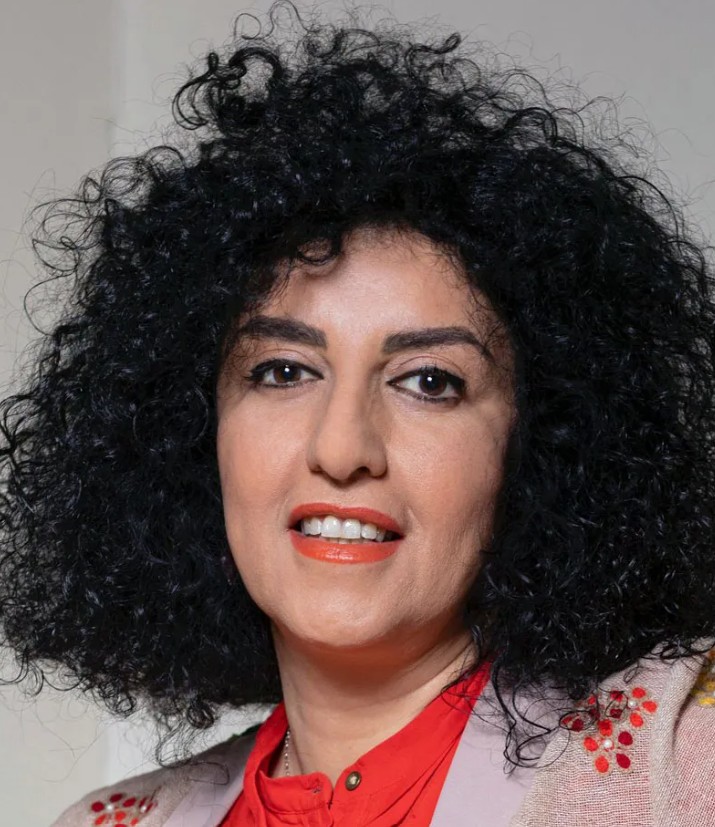
| Bio/Wiki | |
|---|---|
| Other Name | Narges Safie Mohammadi |
| Profession | Human Rights Activist |
| Physical Stats | |
| Eye Colour | Black |
| Hair Colour | Black |
| Career | |
| Organization(s) | • Defenders of Human Rights Center • National Council for Peace |
| Movement | Neo-Shariatism |
| Award(s) | • 2009: Alexander Langer Award • 2011: Per Anger Prize, the Swedish government's international award for human rights • 2016: Human Rights Award of the City of Weimar • 2018: Andrei Sakharov Prize from the American Physical Society • 2022: Prize for Press Freedom from Reporters Without Borders • 2022: Recognition as one of BBC's 100 inspiring and influential women • 2023: Olof Palme Prize from the Swedish Olof Palme Foundation • 2023: PEN/Barbey Freedom to Write Award from PEN America • 2023: UNESCO/Guillermo Cano World Press Freedom Prize (shared with Elaheh Mohammadi and Niloofar Hamedi) • 2023: Nobel Peace Prize • 2024: Cinema for Peace Honorary Award |
| Personal Life | |
| Date of Birth | 21 April 1972 (Friday) |
| Age (as of 2025) | 53 Years |
| Birthplace | Zanjan, Iran |
| Zodiac sign | Taurus |
| Nationality | Iranian |
| Hometown | Karaj, Iran |
| College/University | Imam Khomeini International University, Qazvin, Iran |
| Educational Qualification | Graduation in Physics |
| Religion | Islam |
| Food Habit | Non-vegetarian |
| Controversy | In 2016, a court sentenced her to 16 years in prison for her work in human activism. In 2020, she was released from jail, but police re-arrested her in 2021. Since then, she kept reporting the abuse of women in detention from inside prison. |
| Social Media | • Instagram • YouTube |
| Relationships & More | |
| Marital Status | Married |
| Marriage Date | Year, 1999 |
| Family | |
| Husband/Spouse | Taghi Rahmani (journalist, writer, activist)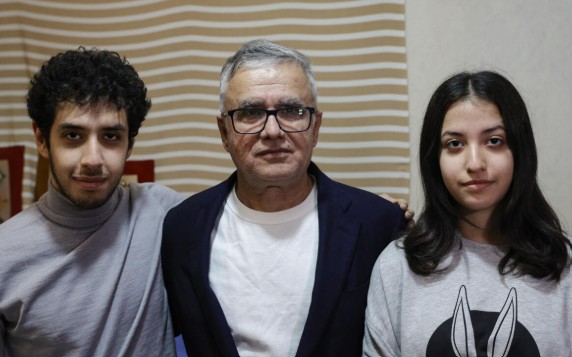 |
| Children | Son- Ali Rahmani Daughter- Kiana Rahmani Note: They are twins |
| Siblings | Brother- Hamidreza Mohammadi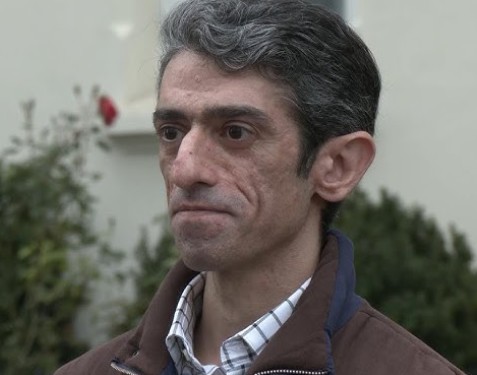 |
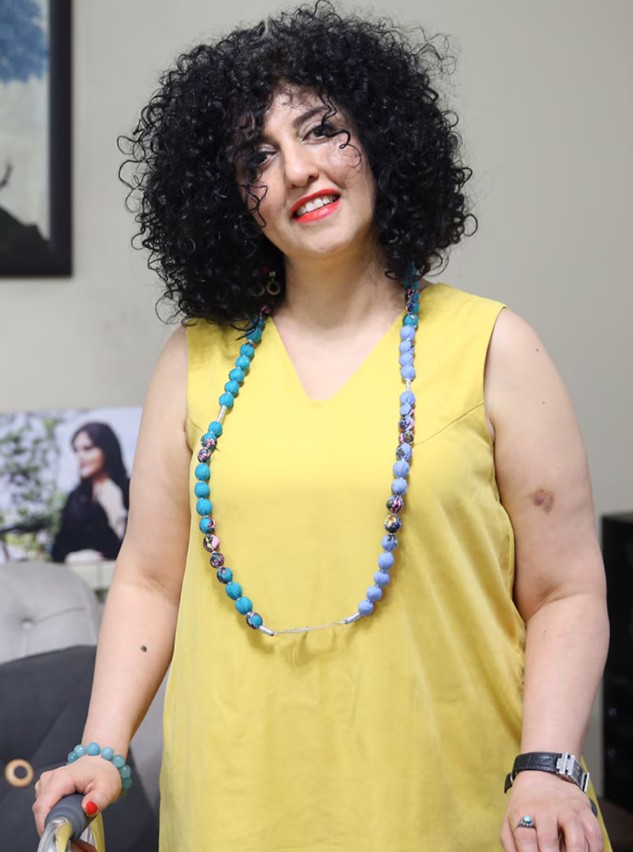
Some Lesser Known Facts About Narges Mohammadi
-
Narges Mohammadi was born into an Iranian Azerbaijani family and grew up in Karaj and the Kurdish cities of Iran.
-
During her studies at the Imam Khomeini International University, Qazvin, Iran, she became known for writing articles for the student newspaper to support women’s rights.
-
She often attended the meetings of a student political group called ‘Enlightened Student Group,’ where she was arrested by the police twice.
-
During this period, Narges Mohammadi regularly participated in a mountain climbing group. However, police officials banned her from climbing because of her involvement in politics.
-
After completing her formal education, she worked as a journalist for some reformist newspapers.
-
She has published a book of political essays titled “The Reforms, the Strategy and the Tactics.”
-
In 2003, she joined the Defenders of Human Rights Centre (DHRC), which was started by Shirin Ebadi, a Nobel prize winner.
-
Later, Narges Mohammadi was designated as the vice president of this organisation.
-
In 1999, she married her fellow activist and journalist Taghi Rahmani. Soon after their marriage, he was sentenced to 14 years in prison.
- During this period, she and her husband supported Neo-Shariatism, an ideology which rejects an Islamic state and supports secular democracy.
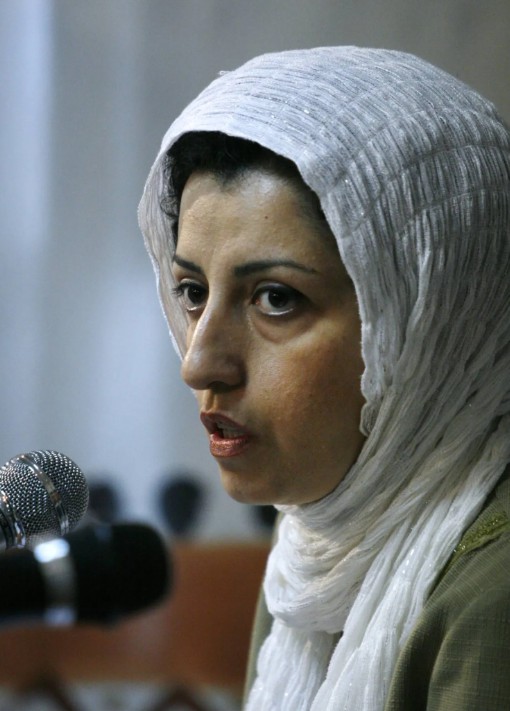
An old picture of Narges Mohammadi
-
In 1998, she was arrested for criticising the Iranian government and was sent to jail for a year.
-
In April 2010, she was presented in the Islamic Revolutionary Court for her DHRC membership.
-
Narges Mohammadi was released on $50,000 bail but was re-arrested a few days later.
-
The Iranian government kept her in Evin Prison, where her health worsened after she developed an epilepsy-like condition.
-
After being kept in prison for a month, they released her for medical treatment.
- In 2010, Nobel Peace Prize winner Shirin Ebadi received the Felix Ermacora Human Rights Award. During her speech on the stage, she dedicated the award to Narges Mohammadi. Shirin Ebadi said,
This courageous woman deserves this award more than I do.”
- In July 2011, after a trial, the court found her guilty of acting against national security, DHRC membership, and conspiracy against the state.
-
In September 2011, the Iranian government sentenced her to 11 years in prison, and the court granted her a 23-page judgment.
-
The judgment claimed that her human rights work was trying to destroy the regime.
-
In 2012, her husband moved to France from Iran after completing his 14-year imprisonment. Narges stayed in Iran and kept doing human rights work.
- In March 2012, an appeals court upheld her sentence but reduced her imprisonment from 11 to 6 years.
-
On 26 April 2012, Narges Mohammadi was arrested and put into jail.
-
After that, the British Foreign Office protested against her sentence. It claimed that the effort was to silence human rights defenders. Another organisation, Amnesty International, called her a prisoner of conscience and demanded her release.
-
A media outlet warned in its publication that her life was in danger in prison.
-
In July 2012, many international lawmakers across the world called for her freedom. These included US Senator Mark Kirk, former Canadian Attorney General Irwin Cotler, UK MP Denis MacShane, Australian MP Michael Danby, Italian MP Fiamma Nirenstein, and Lithuanian MP Emanuelis Zingeris.
-
On 31 July 2012, the Iranian authorities released her from prison.
- On 31 October 2014, Narges Mohammadi delivered a speech at Sattar Beheshti’s gravesite. She questioned why Parliament pushed a “Promotion of Virtue and Prevention of Vice” plan.
- She stated that no one spoke up two years earlier when Sattar Beheshti died from torture by his interrogator.
- Soon after her speech went viral on social media, the Evin Prison court summoned her. Narges Mohammadi then explained the summons in the media. She said,
In the summons I received on 5 November 2014, it is stated that I must turn myself in ‘for charges’, but there is no further explanation about these charges.
-
On 5 May 2015, authorities arrested Narges Mohammadi again on new charges.
-
The Revolutionary Court sentenced her to 10 years for starting an illegal group (Legam, a campaign to end the death penalty step by step), 5 years for conspiracy against national security, and 1 year for propaganda against the system (due to media interviews and a 2014 meeting with the EU’s Catherine Ashton).
-
In January 2019, she started a hunger strike in Evin Prison with Nazanin Zaghari-Ratcliffe. They protested for the lack of medical care.
-
In July 2020, she claimed that she had caught COVID-19 but recovered by August.
-
On 8 October 2020, the Iranian government released her from prison.
-
In March 2021, Narges Mohammadi wrote an article for the Iran Human Rights Annual Report on the Death Penalty.
-
In May 2021, Tehran’s Branch 1188 of Criminal Court Two accused her of spreading propaganda against the system and sentenced her to 2.5 years in prison, 80 lashes, and two fines.
-
After four months, she got a summons to start the sentence, but she ignored it and called the conviction unfair.
-
On 16 November 2021, when she was in Karaj, Alborza, at a memorial for Ebrahim Ketabdar, who was killed by security forces during the 2019 nationwide protests, police arrested her.
- Her arrest was called unfair by various organisations such as Amnesty International and the International Federation for Human Rights.
-
In December 2022, during the Mahsa Amini protests, the BBC published her report on the sexual and physical abuse of women in jail.
-
In January 2023, Narges Mohammadi shared a report from the prison on women’s conditions in Evin Prison. She conducted interviews with 58 women prisoners who talked about their torture.
-
In her report, she claimed that 57 of these women prisoners spent a total of 8,350 days in solitary confinement, and 56 of them received sentences for 3,300 months.
- She opposed solitary confinement and called it ‘White Torture.’ She said,
I declare once more that [solitary confinement] is a cruel and inhumane punishment, I will not rest until it is abolished.”
- In 2022, she published a book titled ‘White Torture: Interviews with Iranian Women Prisoners’ related to the above report.

The cover of the book ‘White Torture Interviews with Iranian Women Prisoners’
-
In 2023, this book was released in German as Frauen! Leben! Freiheit! (“Women! Life! Freedom!”).
-
In September 2023, Narges Mohammadi supported singer Mehdi Yarrahi after Mehdi was arrested for her protest song ‘Roosarito.’
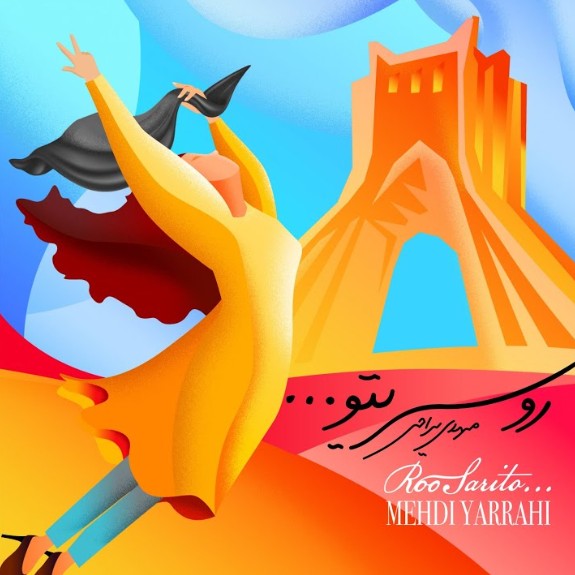
The poster of the song ‘Roosarito’ by Mehdi Yarrahi
- In 2023, she became the 19th woman to win the Nobel Peace Prize and the second Iranian woman to receive the honour.
-
In May 2024, she stated in the media that she faced new charges of offences against Iran.
-
That same year, in December, she received temporary prison leave for three weeks for medical treatment. She required surgery on a cancerous leg bone.
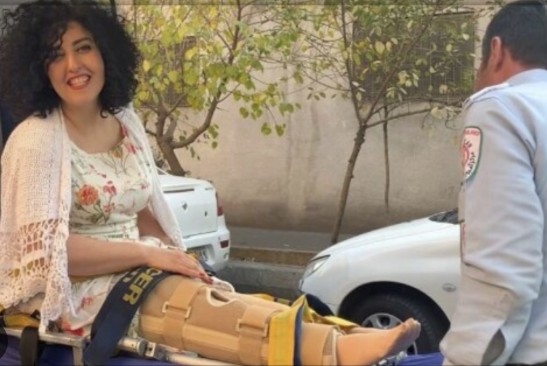
Narges Mohammadi after her leg operation
-
In January 2025, Narges Mohammadi announced that she was finishing her autobiography and a new book on abuses and sexual harassment against detained women in Iran.
- In July 2025, the Norwegian Nobel Committee said that Iran threatened to “physically eliminate” her.
- On 12 December 2025, police rearrested her at the funeral of Khosrow Alikordi, a human rights lawyer, in Mashhad. She was publicly criticising the leaders of Iran.
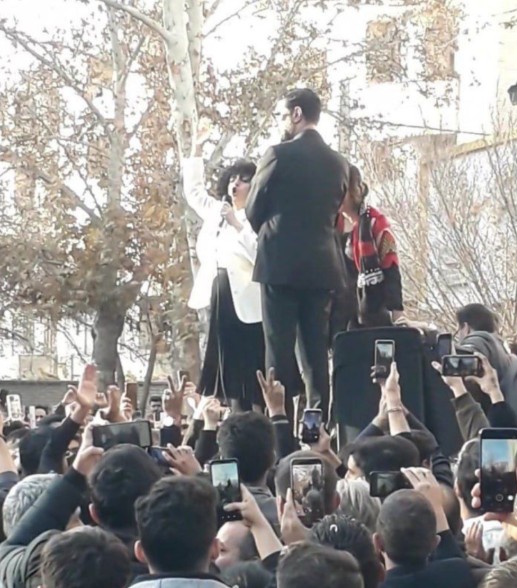
Narges Mohammadi while delivering a speech at Mashhad
- On 15 December 2025, reports said that after her arrest, she was hit on the head and neck. She was taken to the emergency room twice for treatment. Her lawyer claimed,
She suffered severe blows to the head, resulting in dizziness, double vision, and blurred eyesight. Bruises and marks of assault were still visible.”
- On 28 January 2026, the Narges Mohammadi Human Rights Foundation and Iranian thinkers like Amirsalar Davoudi, Hatam Ghaderi, Abolfazl Ghadyani, Mehdi Mahmoudian, Abdollah Momeni, Mohammad Najafi, Jafar Panahi, Mohammad Rasoulof, Nasrin Sotoudeh, and Sedigheh Vasmaghi stated on Instagram that the 2026 Iran massacres were a crime against humanity.
- They blamed the Supreme Leader, Ali Khamenei, as the main responsible person for the massacres.
- On 8 February 2026, an Iranian court charged her with conspiracy and propaganda against the state and sentenced her to 7 years and 6 months in prison. She also granted 2 years of internal exile in South Khorasan.
- She has been featured on the covers of various noted magazines such as Vogue and Time.
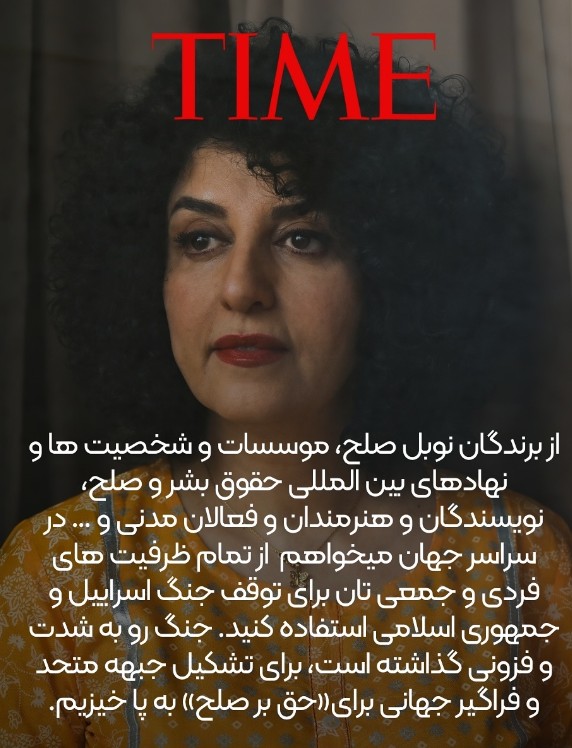
Narges Mohammadi on the cover of Time magazine
 Anjali Bhardwaj Age, Husband, Family, Biography & More
 Diya Sana (Social Activist) Age, Boyfriend, Family, Biography & More
 Kailash Satyarthi Age, Wife, Family, Biography & More
 Monica Purohit Age, Husband, Family, Children, Biography & More
 Deepali Sayed Age, Husband, Family, Biography & More
 Seema Singh (NGO MeghaShrey) Height, Children, Husband, Biography
 Rouble Nagi Age, Husband, Children, Family, Biography
 Ela Bhatt Age, Death, Husband, Children, Family, Biography