
Béla Tarr Age, Death, Wife, Children, Family, Biography
Quick Info→
Death Cause: Prolonged Illness
Wife: Ágnes Hranitzky
Age: 70 Years
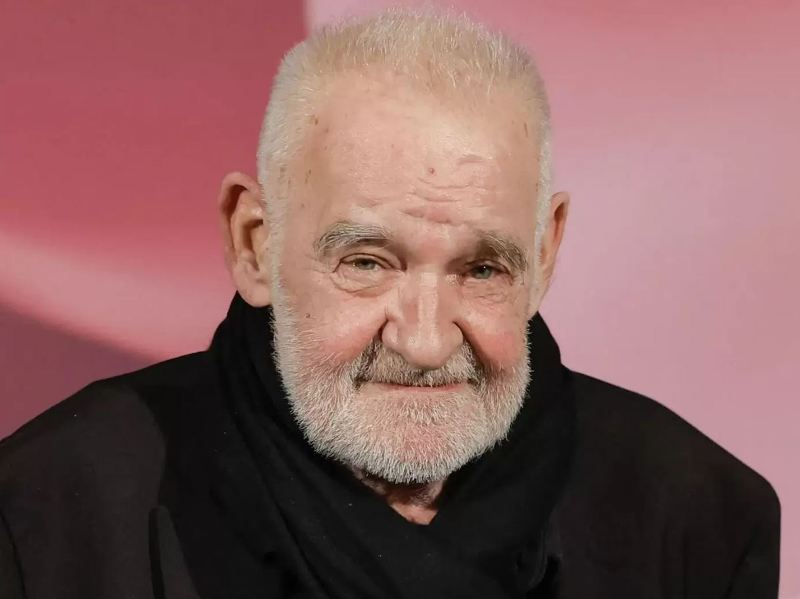
| Bio/Wiki | |
|---|---|
| Profession | Filmmaker |
| Physical Stats | |
| Eye Colour | Grey |
| Hair Colour | Grey |
| Career | |
| Debut | Film: Családi tűzfészek (trans. Family Nest) (1979) 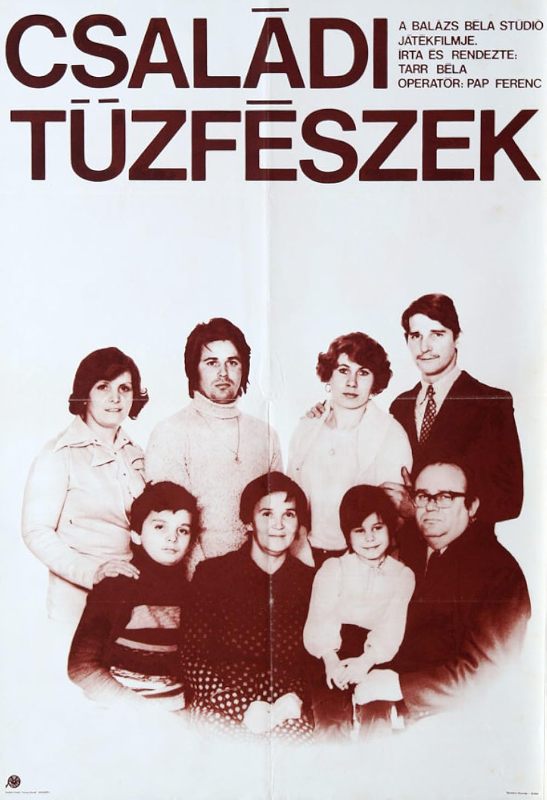 |
| Last Film | A torinói ló (trans. The Turin Horse) (2011)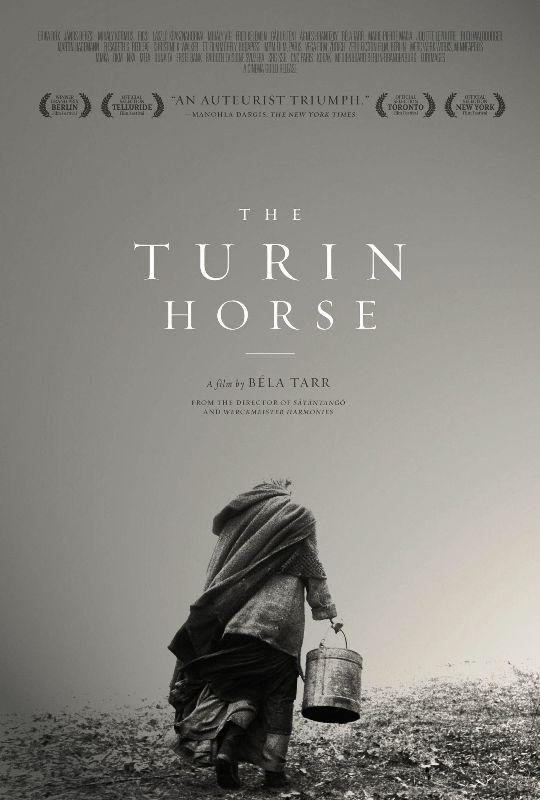 |
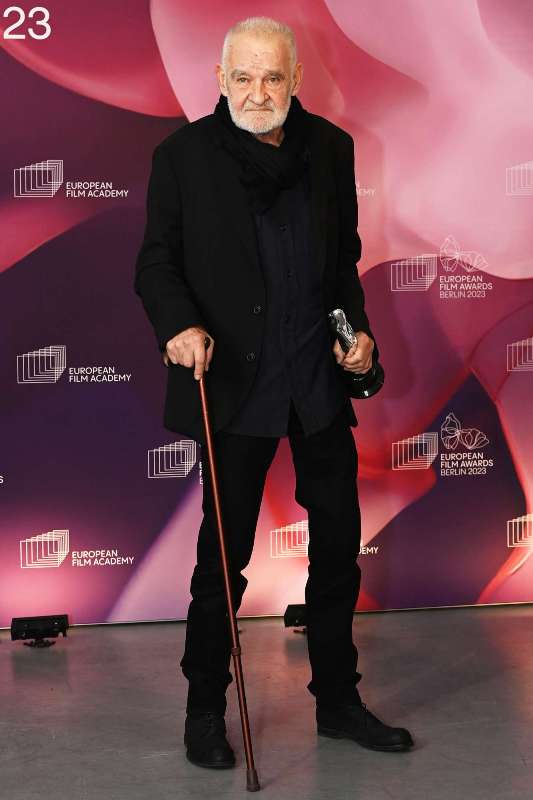
| Awards, Honours | 1979: Grand Prize for the film 'Családi tűzfészek' (trans. Family Nest) at the Mannheim–Heidelberg International Film Festival 1982: Special Mention Award for 'The Prefab People' at the Locarno International Film Festival 1984: Ernest Artaria Award for 'Almanac of Fall' at the Locarno International Film Festival 1988: Bronze Rosa Camuna Award for 'Damnation' at the Bergamo Film Meeting 1994: Caligari Film Award for 'Sátántangó' at the Berlin International Film Festival 1994: National Society of Film Critics Award for Experimental Film for 'Sátántangó' from the National Society of Film Critics 1994: Âge d'Or Prize for 'Sátántangó' at the Brussels Prix de l’Âge d’Or 1994: Grand Prix of the Jury for 'Sátántangó' at the Budapest Hungarian Film Week 1994: FIPRESCI Prize for 'Sátántangó' at the Faro Island Film Festival 1994: Golden Moon Award for Best Director for 'Sátántangó' at the Faro Island Film Festival. 2001: Berliner Zeitung Jury Award for 'Werckmeister Harmonies' at the Berlin International Film Festival 2005: France Culture Award (Foreign Filmmaker of the Year) for 'Damnation' from France Culture February 2011: Silver Bear Grand Jury Prize for 'The Turin Horse' at the 61st Berlin International Film Festival February 2011: Competition FIPRESCI Prize for 'The Turin Horse' at the 61st Berlin International Film Festival September 2012: Special Award for Lifetime Achievement at the Batumi International Art-House Film Festival (BIAFF) 2016: Appointed Honorary Professor at the Beijing Film Academy 2017: Honorary Medal and appointment as Honorary Professor at Wuhan University June 2017: Lifetime Achievement Award at the Sardinia Film Festival (12th edition) 2021: Homeland Award, received in Budapest December 2022: Lifetime Achievement Award at the International Film Festival of Kerala (IFFK), 27th edition 2023: Honorary Doctorate, conferred by FAMU – Prague University of the Arts December 2023: Honorary Award of the EFA President and Board at the 36th European Film Awards. November 2024: Lifetime Achievement Award, received at the 37th Tokyo International Film Festival (TIFF) |
| Personal Life | |
| Date of Birth | 21 July 1955 (Thursday) |
| Birthplace | Pécs, Hungary |
| Date of Death | 6 January 2026 (Tuesday) |
| Place of Death | Budapest, Hungary |
| Age (at the time of death) | 70 Years |
| Death Cause | Prolonged Illness |
| Zodiac sign | Cancer |
| Nationality | Hungarian |
| College/University | University of Theatre and Film Arts (1977-1981) |
| Educational Qualification | A degree in Film Directing |
| Relationships & More | |
| Marital Status (at the time of death) | Married |
| Marriage Date | Year, 1978 |
| Family | |
| Wife/Spouse | Ágnes Hranitzky (film editor, director) |
| Children | Son- None Stepdaughter- Réka Gaborjani-Szabó |
| Parents | Father- Béla Tarr (scenery designer) (deceased) Mother- Mari Tarr (aka Mária Tarr) (theatre director) (deceased) |
| Siblings | Brother- György Tarr (painter) Sister- None |
Some Lesser Known Facts About Béla Tarr
- Béla Tarr grew up in Budapest, Hungary.
- He belonged to an artistic family. His father was a set designer, while his mother worked as a theatre prompter for more than fifty years.
- During his later high school years, Béla Tarr adopted anarchist beliefs and became deeply politically engaged.
- In an interview, he once shared that he was so absorbed in political thought that he often went to school without carrying a schoolbag, keeping Mao’s Little Red Book in his pocket instead.
- When Tarr was ten years old, his mother took him to a casting audition organised by Hungarian National Television, where he was selected to play the protagonist’s son in a television adaptation of Leo Tolstoy’s The Death of Ivan Ilyich.
- After this role, Tarr did not pursue acting further, except for small roles such as a cameo in ‘Dog’s Night Song’ (1983) and a brief appearance in ‘Season of Monsters’ (1987).
- On his 14th birthday, Tarr received an 8mm camera from his father, which marked the beginning of his serious interest in filmmaking.
- At 16, Tarr formed a filmmaking group called ‘Dziga Vertov’ with friends, and their film ‘Guest Workers’ won first prize at an amateur film festival.
- Tarr was later questioned by communist authorities as the film ‘Guest Workers’ attracted their attention and raised political concerns.
- Around this time, Tarr wanted to study philosophy and saw filmmaking as a hobby. However, due to political restrictions linked to his filmmaking activities, he was rejected by every higher education institution in Hungary.
- Since he was unable to attend any university, Tarr supported himself by doing various odd jobs while continuing to make amateur films.
- As the Hungarian government prevented him from continuing his studies, he chose to give up philosophy and focus fully on filmmaking as his career.
- He even worked as a caretaker at a national House for Culture and Recreation.
- His early amateur films were mostly documentaries that focused on the everyday lives of workers and underprivileged communities in urban Hungary.
- His work drew the attention of Béla Balázs Studios, which later supported his first feature film, Családi tűzfészek (trans. Family Nest) (1979).
- Tarr began shooting ‘Family Nest’ at the age of twenty-two, completing it in six days, with a very small budget and using non-professional actors.
- ‘Family Nest’ used a strong documentary-style realism of the Budapest School, and while critics linked it to filmmaker John Cassavetes’s work, Tarr said he had not seen his films at the time.
- After completing the film, Tarr enrolled at the University of Theatre and Film Arts in Budapest to formally study filmmaking.
- Béla Tarr went on to direct and write many other films, including ‘Szabadgyalog’ (1981), ‘Kárhozat’ (1988), ‘A londoni férfi’ (2007), and ‘A torinói ló’ (2011).
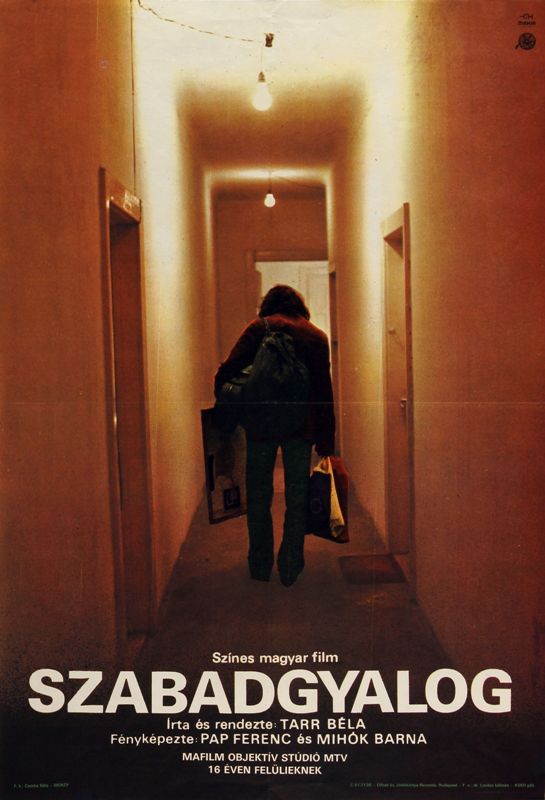
A poster of the film ‘Szabadgyalog’ (1981)
- ‘Panelkapcsolat’ (trans. The Prefab People) (1982) became his first film to feature professional actors in leading roles.
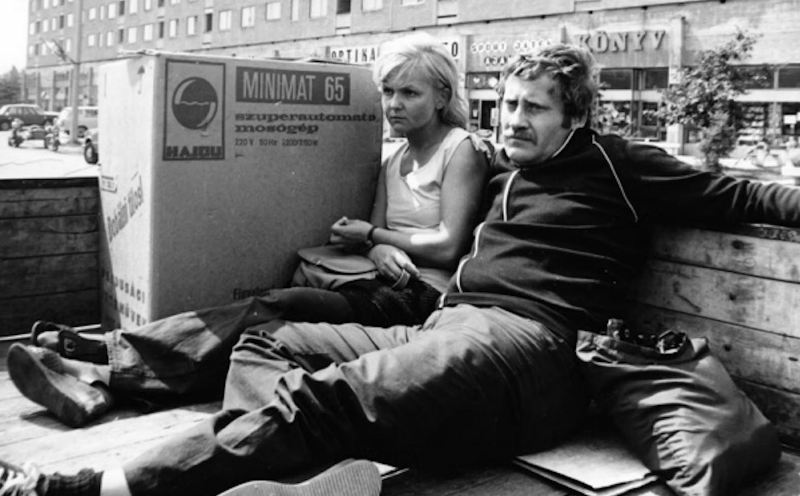
A still from the film ‘Panelkapcsolat’ (1982)
- Béla Tarr shifted toward a minimalist, long take style in his 1982 television adaptation of Macbeth, which was filmed using only two long shots, one five minutes long and the other fifty-seven minutes long.
- In 1984, Tarr released ‘Őszi almanach’ (trans. Almanac of Fall), his last film written entirely by himself.
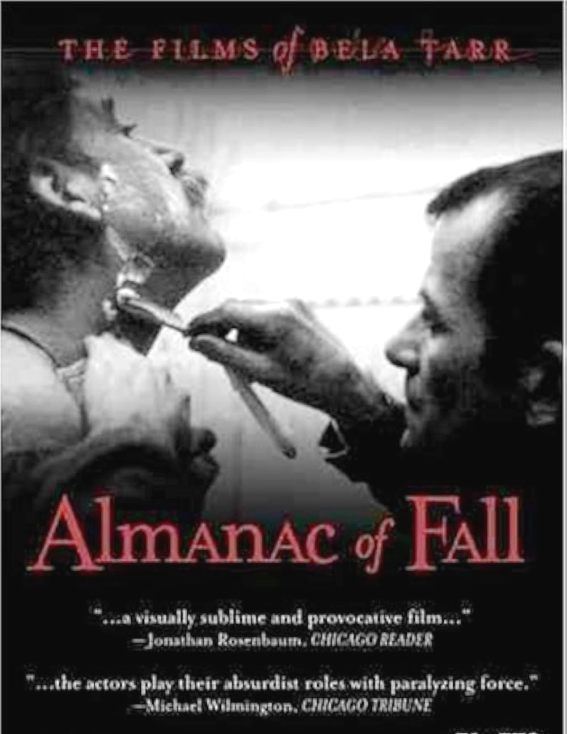
A poster of the film ‘Őszi almanach’ (trans. Almanac of Fall) (1984)
- Béla Tarr began a long collaboration with novelist László Krasznahorkai with ‘Kárhozat’ (trans. Damnation) (1988).
- Tarr and Krasznahorkai’s most ambitious project, Sátántangó, took over seven years to complete and was released in 1994 as a 415-minute film to international acclaim.
- In 1995, Tarr released the 35-minute film Journey on the Plain and then made no new films until 2000.
- He returned with Werckmeister Harmóniák (Werckmeister Harmonies), which was praised by critics and at film festivals worldwide.
- Tarr’s later films are known for long takes that often run six to eleven minutes. These shots use slow, flowing camera movements and sometimes took weeks or even months to film.
- For many years, most of Béla Tarr’s films were unavailable on DVD outside Japan, but later releases by Artificial Eye and Facets Video made them accessible in Europe and North America.
- In January 2011, Tarr joined the Board of Directors of Cine Foundation International, a cinema-based NGO supporting human rights.
- That same month, he publicly condemned the imprisonment of Iranian filmmakers Jafar Panahi and Mohammad Rasoulof, calling it an attack on universal human culture.
- In July 2021, Tarr served as executive producer on the Icelandic-Swedish-Polish film Lamb, directed by Valdimar Jóhannsson, a former student of his at film.factory.
- Filmmaker and photographer Gus Van Sant has often named Béla Tarr as a major influence. He began using long, continuous shots in films like ‘Gerry’ after being inspired by Béla.
 Steven Spielberg Age, Wife, Children, Family, Biography, Facts & More
 Christopher Nolan Height, Weight, Age, Affairs, Wife, Biography & More
 Rohit Shetty (Director) Age, Wife, Children, Family, Biography & More
 Michael Madsen Age, Death, Girlfriend, Wife, Children, Family, Biography
 Matt Alonzo (American Director) Height, Weight, Age, Girlfriend, Biography & More
 Imtiaz Ali (Director) Age, Wife, Girlfriend, Children, Family, Biography & More
 Bradley Cooper Height, Age, Girlfriend, Wife, Family, Biography
 Seth MacFarlane Height, Age, Girlfriend, Family, Biography