
Vinod Khosla Height, Age, Wife, Children, Family, Biography
Quick Info→
Age: 71 Years
Height: 5' 11"
Wife: Neeru Khosla
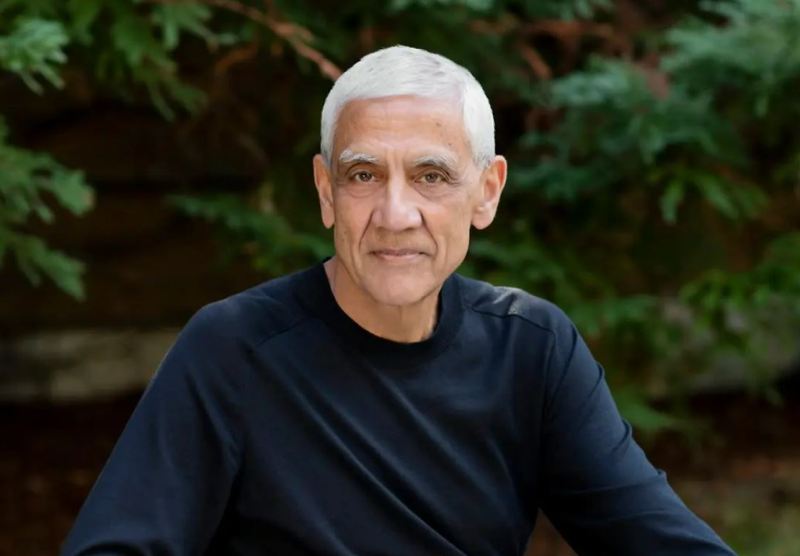
| Bio/Wiki | |
|---|---|
| Profession | Businessman |
| Physical Stats | |
| Height (approx.) | 5' 11" (180 cm) |
| Eye Colour | Black |
| Hair Colour | Grey |
| Career | |
| Awards | • Golden Plate Award from the American Academy of Achievement (2000) • EY Entrepreneur of the Year award in Northern California (2007) • Champions of the Earth award from UNEP for Entrepreneurial Vision in India (2009) • Great Immigrants Award (2009) |
| Personal Life | |
| Date of Birth | 28 January 1955 (Friday) |
| Age (as of 2026) | 71 Years |
| Birthplace | Pune, Bombay State, India (now Pune, Maharashtra, India) |
| Zodiac sign | Aquarius |
| Nationality | Indian-American |
| School | Mount St. Mary's School, New Delhi |
| College/University | • Indian Institute of Technology Delhi (IIT Delhi) (1971 - 1976) • Carnegie Mellon University (CMU), United States • Stanford University, California, United States (1980) |
| Educational Qualification(s) | • Bachelor of Electrical Engineering from IIT Delhi • A master's degree in Biomedical Engineering from CMU • MBA from Stanford University |
| Political Inclination | Democratic Party |
| Controversy | Martins Beach Case: In 2010, Vinod Khosla bought property next to Martins Beach in California, which was privately owned but had allowed the public to visit for a fee. After his purchase, he closed the access road and posted "No Trespassing" signs, stopping people from entering the beach. This led to lawsuits, with courts ruling that he needed a Coastal Development Permit to keep the gate closed, but the public did not have a legal right to enter. State agencies later filed a case trying to force public access under California law, and the dispute is still ongoing. [1]CNN |
| Social Media | • Twitter |
| Relationships & More | |
| Marital Status | Married |
| Marriage Date | Year, 1980 |
| Family | |
| Wife/Spouse | Neeru Khosla (co-founder and chair of the CK12 Foundation)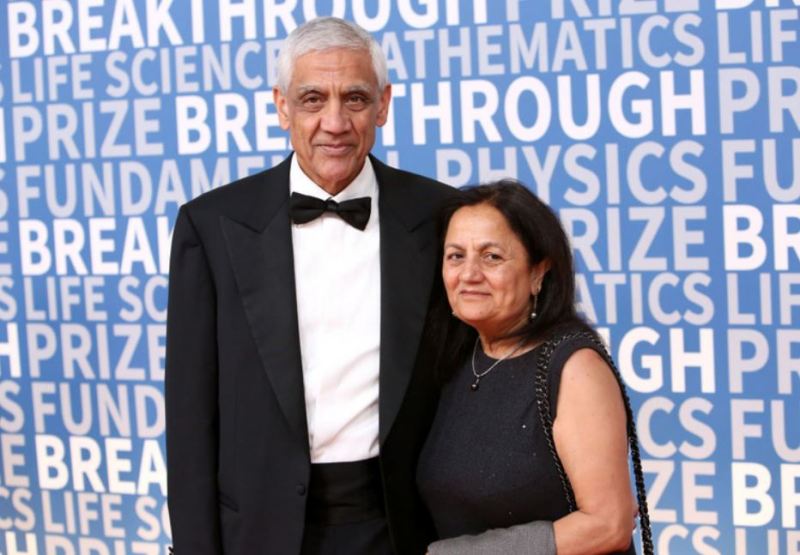 |
| Children | Son- • Neal Khosla Daughter- 3 • Anu Khosla • Nina Khosla • Vani Khosla |
| Parents | Father- (served in the Indian Army) |
| Siblings | Brother- Bikky Khosla (younger) (entrepreneur)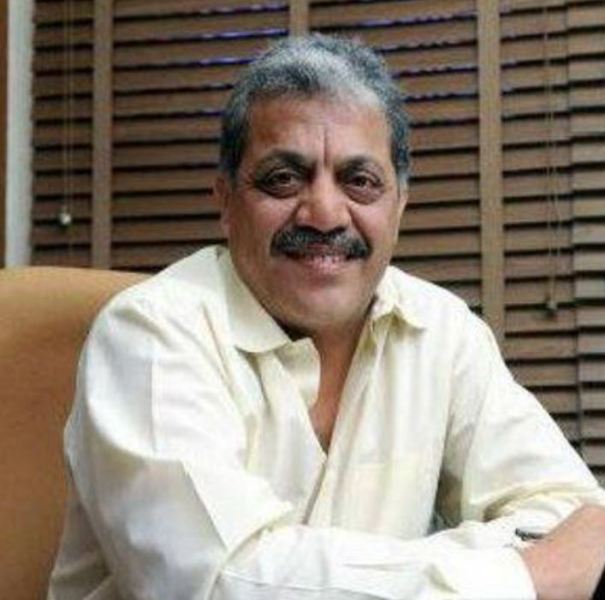 |
| Money Factor | |
| Net Worth (approx.) | US$13.4 billion (as of January 2026) |
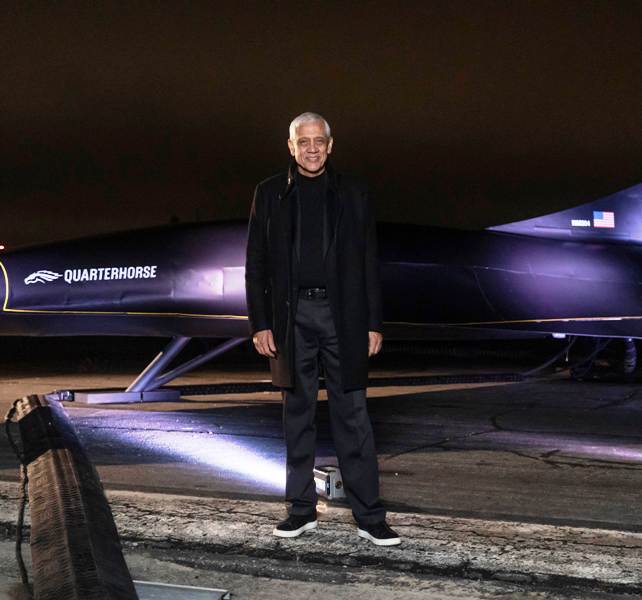
Some Lesser Known Facts About Vinod Khosla
- Vinod Khosla was born into a Punjabi Indian family in Pune, Maharashtra, India.
- His father served as an officer in the Indian Army and was later posted to New Delhi, where the family lived.
- During his teenage years, he developed a strong interest in entrepreneurship after reading about the founding of Intel in Electronic Engineering Times. This pushed him toward a career in technology and sparked his ambition to build his own company.
- He was especially influenced by Andrew Grove, the Hungarian-born co-founder of Intel, whose journey of raising startup funding in Silicon Valley left a lasting impression on him.
- Between 1971 and 1976, Khosla studied at IIT Delhi, where he established the first computer programming club across all IITs. He also managed the institute’s computer centre during a period when the regular operations staff were on strike.
- As a teenager, he authored a research paper on parallel processing, well before the concept became mainstream in the IT industry. He contributed to the creation of India’s first biomedical engineering program during this time.
- In 1975, Vinod attempted to start a soy milk business for households without refrigeration, but it failed due to a lack of funding and long delays, such as a seven-year wait for a phone line.
- The failure of his soy milk business made him look toward Silicon Valley for better opportunities.
- In 1976, Khosla moved to the United States with no financial assets, apart from his admission offer to Carnegie Mellon University.
- He completed a master’s degree in biomedical engineering at Carnegie Mellon University on a full scholarship.
- Khosla later applied to Stanford Business School’s MBA program but was rejected for lack of work experience, which led him to work two full-time jobs while completing his master’s degree in engineering.
- Even after gaining work experience, his second application to Stanford was rejected. Three weeks into his MBA at Carnegie Mellon University, he got admitted to Stanford and finished his MBA there in 1980.
- In 1980, Khosla married Neeru Khosla, who had been his partner since he was 16 years old.
- After completing his MBA in 1980, Khosla decided to become an entrepreneur instead of taking up job offers. He turned down several employment opportunities to focus on building his own company.
- At 25, Vinod created a business plan for an electronic design automation company for electrical engineers. This led him to become the first full-time founder and Chief Financial Officer of Daisy Systems.
- Daisy Systems was among the earliest companies to enter the computer-aided design software market. The company spent nearly 80 per cent of its resources on developing custom computer hardware to support its software.
- Khosla left Daisy Systems because it focused too much on custom hardware, and he wanted to build general-purpose computers. He exited before its 1984 IPO, which later became one of the most successful that year.
- In 1981, he co-founded a company called Data Dump with former Stanford classmate Scott McNealy, but the venture eventually failed.
- In 1982, Khosla co-founded Sun Microsystems with Stanford classmates Andy Bechtolsheim and Scott McNealy. The name SUN stood for Stanford University Network.
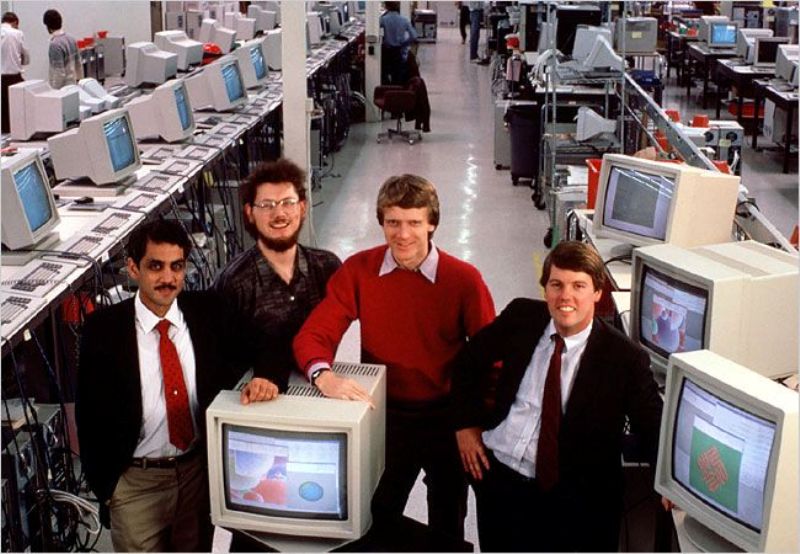
Sun Microsystems’ founders – (from left) – Vinod Khosla, Andy Bechtolsheim, Scott McNealy, and Bill Joy
- Sun Microsystems later developed key innovations such as NFS, early open-source commercial software, SPARC processors, virtual-memory-based desktops, and the Java programming language.
- Khosla raised $300,000 in seed funding from Kleiner Perkins Caufield & Byers. Sun’s simple business plan later became a case study at Harvard Business School.
- Sun Microsystems reached $1 billion in annual revenue within one year, and Khosla helped recruit renowned leaders, including Eric Schmidt and Carol Bartz.
- Khosla served as Sun’s first chairman and CEO from 1982 to 1984.
- In 1984, he left Sun Microsystems to begin his career as an investor in technology startups.
- In 1986, Khosla joined Kleiner Perkins as a general partner. There, he managed investments across several technology areas, including semiconductors and video games.
- Khosla later helped create Nexgen, the first successful Intel-compatible microprocessor clone company, which was later sold to AMD. He also invested in Go Corporation, a stylus-based computer company that eventually failed.
- In 1994, Vinod advised Excite to adapt its search engine for use on the internet. He also helped fund the hardware needed to test this idea by writing a $5,000 check to purchase a larger disk drive.
- During his involvement with Excite, he urged Google’s founders to sell their company to Excite for $750,000, which Excite’s CEO, George Bell, declined.
- On 1 April 1996, Khosla told Excite co-founder Joe Kraus that the company’s IPO had been cancelled. He, however, later called back to say it was only an April Fools’ joke.
- He continued guiding Excite’s founders until the company was sold to @Home Network for $7 billion in May 1999. This became his first venture deal of that size.
- In 1996, as a general partner at Kleiner Perkins, Vinod Khosla invested $275,000 in Juniper Networks, which grew into a $7 billion return for the firm, making it one of the most successful U.S. venture investments ever.
- In 1996, Vinod helped build Cerent Corporation and invested about $8 million, which later grew nearly 300 times. Cerent was later sold to Cisco for $7.8 billion.
- Vinod also helped build Siara and served as its chief executive officer during its first year; Siara was later sold for $3 billion.
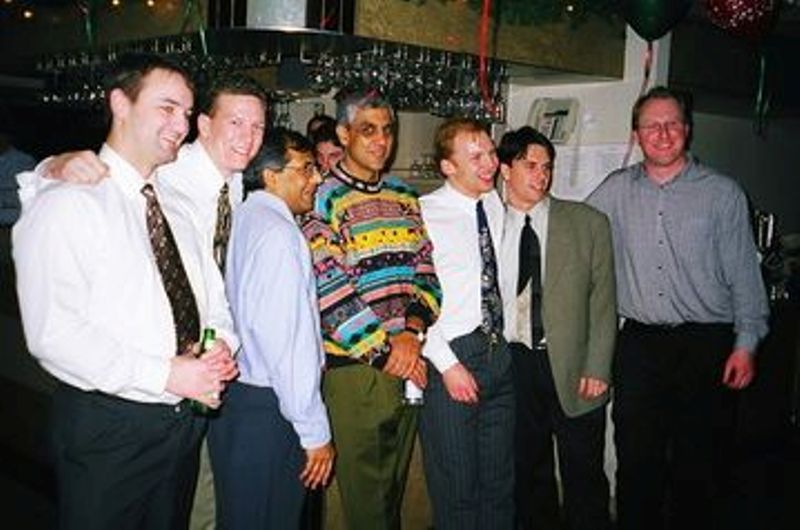
1997: Vinod Khosla (centre) with a crowd of Fiberlane employees
- In November 1999, John Doerr stated that Khosla had generated $10 billion in profits for Kleiner Perkins through his fibre-optic and internet investments, including Juniper, Cerent, and Excite.
- By 2001, it was noted that Khosla had created more multi-billion-dollar companies than any other venture capitalist except John Doerr.
- In 2001, Khosla shared that he made it a priority to have dinner with his family at least 25 times every month.
- In 2004, Vinod left Kleiner Perkins to spend more time with his teenage children and focus on science-driven startups.
- Later in 2004, he founded Khosla Ventures to invest in bold, experimental technologies with social impact. At the time, he had an estimated personal wealth of about $1.5 billion from Sun Microsystems and Kleiner Perkins.
- Khosla is a Democrat who supports politicians mainly based on their climate views and has donated to both parties as well as left-leaning groups.
- He supported California’s clean energy Proposition 87 in 2006, hosted fundraisers for Barack Obama in 2013 and Joe Biden in 2024, and backed Hillary Clinton in the 2016 election.
- Khosla Ventures, based in Menlo Park, California, raised $750 million in 2009 for early- and growth-stage companies and another $250 million for higher-risk investments through Khosla Seed.
- In 2009, Khosla Ventures accepted outside investors for the first time and became known for early bets on companies like Square and clean-energy technologies such as solar, biofuels, batteries, ethanol, and aviation fuel.
- In 2010, Khosla Ventures expanded into food technology and became the first investor in companies such as Instacart and DoorDash.
- In 2012, Khosla published an article titled “Do We Need Doctors Or Algorithms?” where he argued that artificial intelligence would play an increasingly central role in healthcare and could eventually replace many doctors through “bionic assistance.”
- In April 2021, he offered to fund oxygen imports for hospitals in India during the COVID-19 crisis.
- Since then, he has contributed to several COVID-19 relief projects in India, including 10BedICU, which has established over 200 intensive care units across nine states.
- In 2024, Vinod hosted Joe Biden at his home and later called for an open Democratic convention after Biden withdrew from the race. He also criticised support for Donald Trump and publicly supported Kamala Harris by joining “VCs for Kamala.”
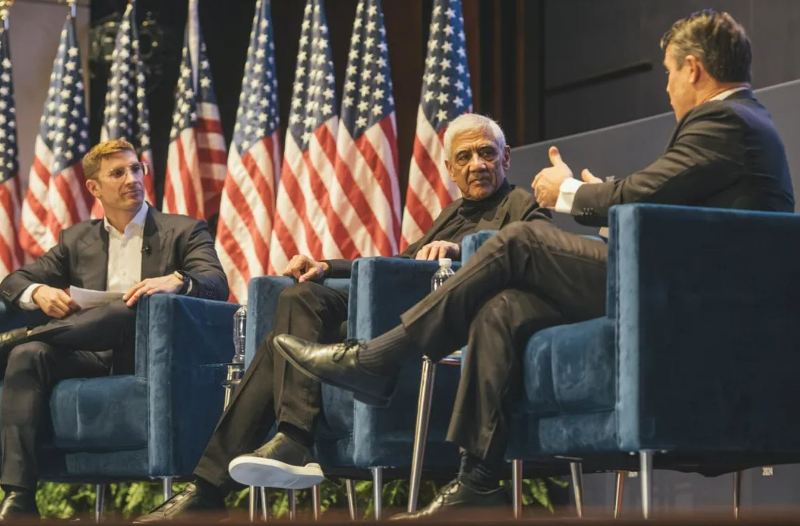
Vinod Khosla at a Capitol Hill forum in Washington on 1 May 2024, shortly after hosting President Joe Biden during a Silicon Valley fundraising visit
- Vinod Khosla has served as honorary chair of the DonorsChoose San Francisco Bay Area advisory board.
- He has served on the board of trustees for the Blum Center for Developing Economies at UC Berkeley.
- Vinod also serves on the Board of Trustees at Carnegie Mellon University.
- Khosla is one of the founders of TiE (The Indus Entrepreneurs) and has guest-edited a special issue of The Economic Times in India.
- He supports microfinancing initiatives for small businesses in developing countries and has collaborated with Muhammad Yunus on multiple for-profit and non-profit projects.
- In 2023, he joined over 170 global figures in signing a letter calling to end of the persecution of Muhammad Yunus.
 Elon Musk Age, Wife, Girlfriend, Children, Family, Biography
 Ratan Tata Age, Death, Girlfriend, Wife, Children, Family, Biography
 Bill Gates Height, Age, Wife, Children, Family, Biography
 Gautam Adani Age, Wife, Children, Family, Biography
 Greg Abel Age, Wife, Children, Family, Biography
 Azim Premji Age, Wife, Children, Family, Biography
 Johny Srouji (Apple) Height, Age, Family, Biography
 Jeff Bezos Height, Age, Wife, Children, Family, Biography
References/Sources: