
Nawaf Salam Age, Wife, Children, Family, Biography
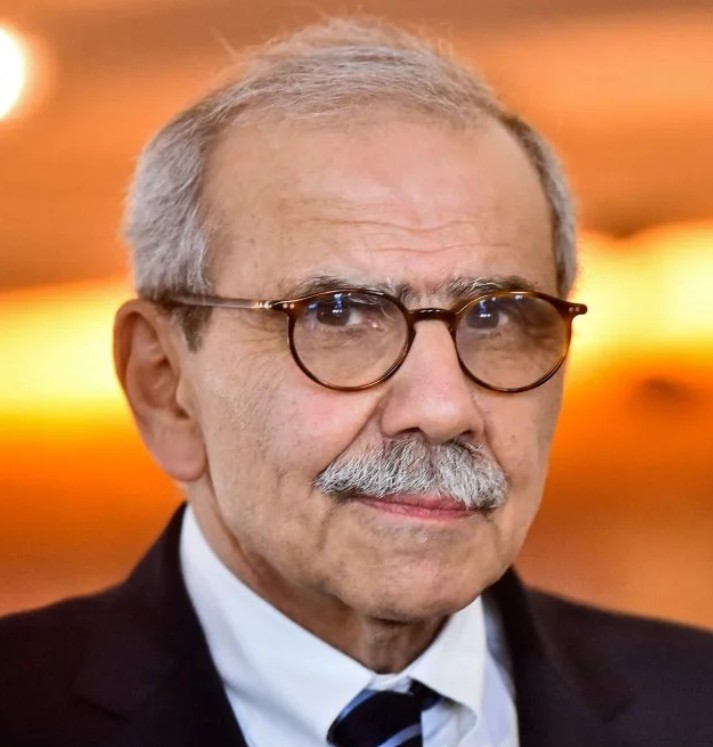
| Bio/Wiki | |
|---|---|
| Full Name | Nawaf Abdallah Salim Salam |
| Profession(s) | • Politician • International Judge • Diplomat • Academic |
| Known for | Being the 53rd Prime Minister of Lebanon |
| Physical Stats | |
| Eye Colour | Black |
| Hair Colour | Salt & Pepper |
| Politics | |
| Political Party | Independent |
| Political Journey | • 13 July 2007-15 December 2017: Permanent representative of Lebanon to the United Nations • 1 May 2010-31 May 2010 and 1 September 2011-30 September 2011: President of the United Nations Security Council • 1 September 2012-31 August 2013: Vice President of the United Nations General Assembly • 6 February 2018-14 January 2025: Judge of the International Court of Justice • 6 February 2024-14 January 2025: President of the International Court of Justice • 8 February 2025: 53rd Prime Minister of Lebanon |
| Award | French Legion of Honour (Légion d'honneur) by then-President Nicolas Sarkozy (2012) |
| Personal Life | |
| Date of Birth | 15 December 1953 (Tuesday) |
| Age (as of 2025) | 72 Years |
| Birthplace | Beirut, Lebanon |
| Zodiac sign | Sagittarius |
| Signature | 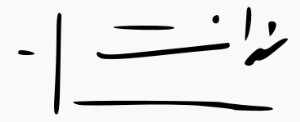 |
| Nationality | Lebanese |
| Hometown | Beirut, Lebanon |
| College/University | • Harvard University, Cambridge, Massachusetts • Paris Institute of Political Studies, Paris, France • Sorbonne University, Paris, France |
| Educational Qualification(s) | • Master of Laws (LL.M.) from Harvard University, Cambridge, Massachusetts (1991) • PhD in in Political Science from Paris Institute of Political Studies, Paris, France (1992) • PhD in History from Sorbonne University, Paris, France (1979) |
| Religion | Islam |
| Sect | Sunni |
| Food Habit | Non-vegetarian |
| Social Media | • Instagram |
| Relationships & More | |
| Marital Status | Married |
| Family | |
| Wife/Spouse | Sahar Baassiri (Lebanese diplomat, journalist, Ambassador, Permanent Representative of Lebanon to UNESCO in Paris)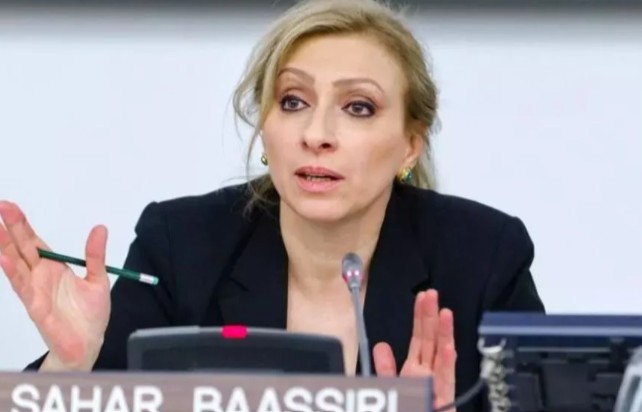 |
| Children | Son(s)- 2 • Abdullah Salam • Marwan Salam |
| Parents | Father- Abdullah Salam (businessman) Mother- Reckat Beyhum |
| Other Relative(s) | Grandfather- Salim Ali Salam (the leader of the "Beirut Reform Movement") Uncle- Saeb Salam (former Prime Minister of Lebanon) Aunt- Anbara Salam Khalidi Cousins • Tammam Salam (former Prime Minister of Lebanon) • Walid Khalidi • Tarif Khalidi • Usama Khalidi |
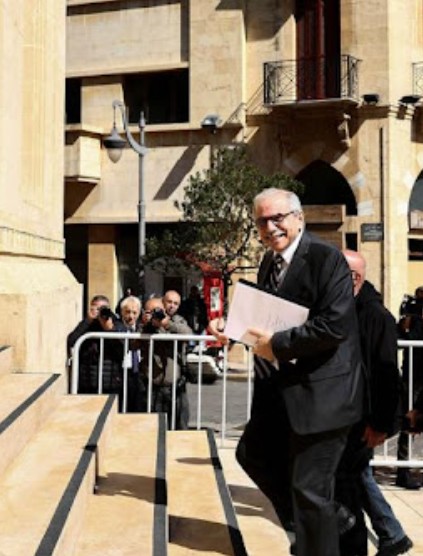
Some Lesser Known Facts About Nawaf Salam
- In 1979, Nawaf Salam started working as a professor at Sorbonne University in Paris, France. He taught the subject Contemporary History of the Middle East. He served in the position till 1981.
- In 1981, he moved from Paris to United States, where he joined Harvard University’s the Weatherhead Center for International Affairs as a visiting scholar. He served in the position till 1982.
- Nawaf Salam served as a lecturer at the American University of Beirut from 1985 to 1989.
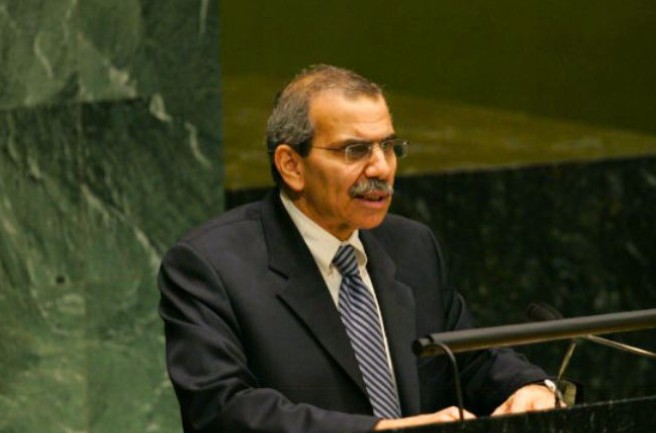
Nawaf Salam while serving as a lecturer
- During this period, he joined Takla Law Firm as an associate to practise law.
- In 1989, Nawaf Salam started working as a visiting researcher at Harvard Law School. He served in the position till 1990.
- From 1989 to 1992, he served as a foreign legal consultant at Edwards and Angell company.
- In 1992, he rejoined the Takla Law Firm.
- During the same period, he rejoined the American University of Beirut to teach International Law and International Relations.
- In 2003, Nawaf Salam was appointed as a visiting associate professor of political science.
- In 2005, he was promoted as an associate professor of political science.
- He served as a Chairman of the Political Studies and Public Administration Department of the American University of Beirut from 2005 to 2007.
- In 1999, Nawaf Salam was designated as a member of the Executive Bureau of the Economic and Social Council of Lebanon. He served in the position till 2002.
- In 2000, he was appointed as a member of the Lebanese National Commission of UNESCO. He served in the position 2004.
- In 2005, he was appointed as a member and secretary general of The National Commission on Electoral Reform. The commission was set up to prepare a draft on a new election law in Lebanon. He served in the position till 2006.
- Nawaf Salam once served as the board of trustees of the Lebanese Center for Policy Studies (LCPS), an independently managed and non-biased organisation set up to improve the administration of Lebanon and Arab nations.
- In July 2007, he was appointed as an ambassador and permanent representative of Lebanon to the United Nations. He served in the position till December 2017.
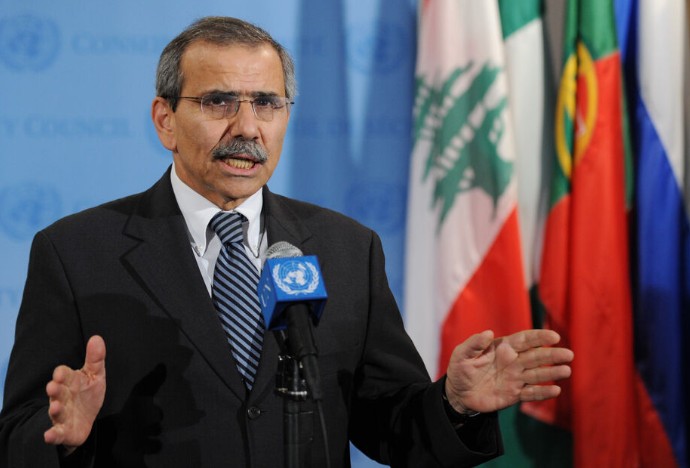
Nawaf Salam while representing Lebanon at the United Nations Security Council (UNSC)
- During this period, Nawaf Salam repeatedly demanded safety and peace in South Lebanon at the United Nations Security Council (UNSC) by fully enforcing of UN Resolution 1701.
- He supported the formation of an independent security force to protect Lebanese civilians. He also supported the policy of Lebanon to stay away from the Syrian conflict.
- After that, Nawaf Salam worked to set up a Special Tribunal, which works to end impunity in Lebanon.
- This special tribunal handled the murder case of Rafic Hariri, the former Prime Minister of Lebanon. The permission was granted under UN Resolution 1757.
- In 2010 and 2011, he represented Lebanon at the United Nations Security Council (UNSC). During this period, he was not a permanent member of the organisation.
- Nawaf Salam served in the rotating Presidency of the Security Council in May 2010 and September 2011.
- In September 2012, he was appointed as the vice-president of the 67th session of the General Assembly of the United Nations. He served in the position till 2013.
- In July 2013, he worked as an acting president of the General Assembly of the United Nations.
- On 9 September 2017, the International Court of Justice (ICJ) appointed him as its judge. He received 135 votes in the United Nations General Assembly and 12 votes in the Security Council.
- Nawaf Salam then became the second person from Lebanon to be appointed as a judge of the International Court of Justice (ICJ) after Fouad Ammoun.
- The International Court of Justice (ICJ) then appointed him as its president on 6 February 2024.
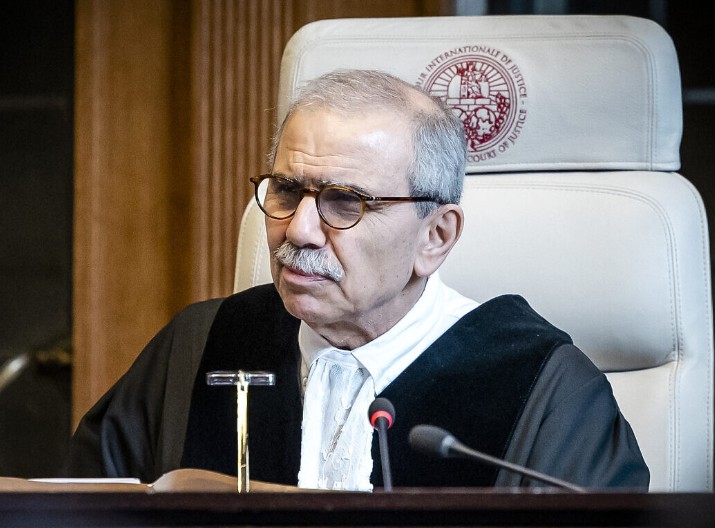
Nawaf Salam while serving as the judge of International Court of Justice (ICJ)
- After Nawaf Salam was appointed as the president of ICJ, his first case was a lawsuit by South Africa against Israel on a genocide that happened in January 2024.
- In 2022, he contested elections for the position of prime minister, when the term of previous president, Michel Aoun, ended in Lebanon.
- He ran against Najib Mikati and lost. Mikati won with 54 votes and Nawaf Salam received 28.
- On 23 June 2022, Mikati was designated as the prime minister of Lebanon and formed a new cabinet under Michel Aoun’s presidential rule.
- On 9 January 2025, Joseph Aoun was elected as the president of Lebanon, and Nawaf Salam was nominated as prime minister by many opposition MPs.
- He received much support from various Western and Arab countries as compared to Najib Mikati.
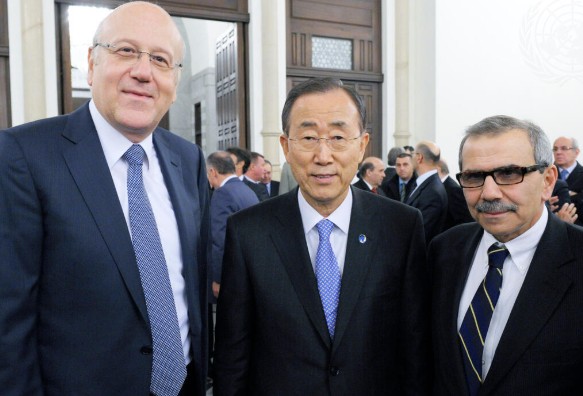
Secretary-General Ban Ki-moon (centre) with Najib Mikati (left), Prime Minister of Lebanon, and Nawaf Salam, Lebanon’s Permanent Representative to the UN, at an official dinner hosted by Mikati in honour of the participants of the High-Level Meeting on Reform and Transitions to Democracy, in Beirut.
- On 13 January 2025, Nawaf Salam was nominated as prime minister by 84 out of total 128 MPs. He was then appointed as a designate Prime Minister of Lebanon.
- On the same day, he left his job as a judge at the International Court of Justice. He then moved from The Hague, the Netherlands, to Lebanon.
- After that, Mohammad Raad, a Hezbollah leader, stated that they helped Aoun to win in the 2025 elections, but it was later cut off.
- Raad also blamed the opposition for dividing power in Lebanon.
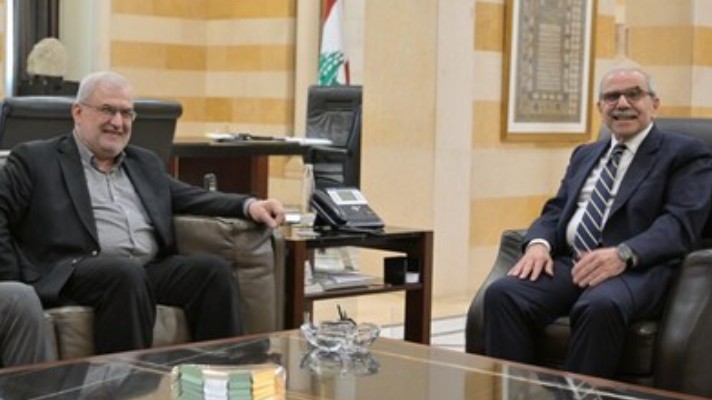
Nawaf Salam (right) in a meeting with Mohammad Raad, a Hezbollah leader, (left)
- Nawaf Salam then stated in a media talk that he wanted to unite all the political parties in Lebanon and would not exclude anyone.
- He promised that he would work on spreading Lebanon rules and authority everywhere. While following UN Resolution 1701, he vowed that he would start an investigation into the Beirut port blast with the help of global partners.
- On 16 January 2025, an investigation begun into the Beirut port blast case.
- On 8 February 2025, Lebanese President Joseph Aoun approved his cabinet.
- In an interview with a television channel, Nawaf Salam stated that he would introduce big changes in the system to rebuild trust in the country.
- He wanted to fix the banking system to attract more investments and save deposits. According to him, strong banks are important in the growth of a country.
- He claimed that the freedom, rights, and investments of Lebanese civilians could not be safe without an independent judiciary. According to him, it is a base to fix monetary and political issues.
- Nawaf Salam supported the Taif Agreement and urged that good governance could be achieved by allocating power to local areas. He warned that delays had worsened crises.
- He repeated his pledge for UN Resolution 1701 that only the state controls the weapons and security systems in a country.
- While talking about financial crisis, Nawaf Salam stated that the money of the depositors should be protected in the banks, and should not be cleaned.
- He claimed that he would work with international organisations to change and recover the Lebanese banking system.
- On 26 February 2025, his government passed a confidence vote in parliament.
- Nawaf Salam then delivered a speech on the 50th anniversary of the Lebanese Civil War. He requested everyone to start fresh and work together to build one united state.
- He then posted a message on Twitter. He wrote,
All sides lost in the war.”
- He pointed that weakness was a main cause of division in the country.
- According to him, the Taif Agreement and its rules would solve wrong uses and close gaps.
- Nawaf Salam stated that only the official army officers should keep weapons with them.
- He also requested the state to seriously handle the cases of missing and kidnapped people.
- On 13 April 2025, he called for a nationwide minute of silence at noon. The slogan of his campaign was,
We remember together to rebuild together.”
- In 2025, when Ali Larijani, the Supreme National Security Council secretary of Iran, visited Lebanon, during a media conference, Nawaf Salam stated that the views of Iranian officials Abbas Araghchi and Ali Akbar Velayati disrespected the independence of Lebanon and broke basic diplomatic rules.
- On 15 August 2025, Naim Qassem, a Lebanese Shia cleric and politician, stated in the media that only a single government was directing and controlling Lebanon. He added that a state was not able to fully control all arms.
- After that, Nawaf Salam described Naim Qassem’s statement as a threat of civil war in a media conversation. Salam replied,
The implicit or direct threat of civil war, I believe that none of the Lebanese today, … none of the Lebanese, young and old, men and women, in the south or in the north, wherever they are, none of them wants to return to civil war today.”
- On 5 September 2025, he announced that Hezbollah would not get access to arms and weapons in Lebanon. He added that the government welcomed the plan of army that the weapons should be in control of state only.
- After two months, he stated that Lebanon was ready to have discussions with Israel to solve the border land disputes. He also stated that Israel left the areas, which it captured in 2024 during its war with Hezbollah.
- In 2026, Nawaf Salam announced restrictions on its army and war policies during the Israel-United States war with Iran. He claimed that Lebanon would not get indulged in this regional war and would protect its security and stability.
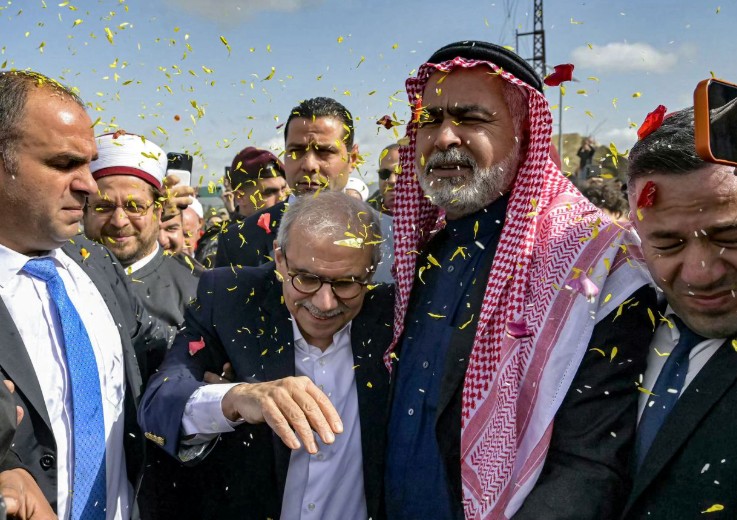
Nawaf Salam during a tour in the village of Dhayra near the border with Israel
- On 2 March 2026, Nawaf Salam announced that the Lebanese government banned the military activities of Hezbollah in the country.
- On 5 March 2026, it was reported that the Iranian IRGC and its activities were banned in Lebanon.
- It was also announced that all Iranians must present visa while entering Lebanon.
- In a 2026 interview with an Arabic international newspaper named Asharq Al-Awsat, Nawaf Salam talked about the Lebanon war in 2026. He said,
We could have avoided being impacted by the conflict were it not for the strategic error committed by Hezbollah by being dragged us into it.”
- In an another interview with L’Orient-Le Jour, Nawaf Salam said that the Lebanese government was ready to have discussions on negotiations with Israel.
- In March 2026, during a conversation with a media outlet, he stated that he was ready for immediate and direct negotiations with Israel to end the war in Lebanon.
- After that, during an interview on Al-Hadath, a Saudi Arabian news channel, Nawaf Salam blamed Iranian IRGC for controlling and directing Hezbollah for its war with Israel.
- He added that this was a forced war in Lebanon. He said,
These were the Revolutionary Guards, who are present and, unfortunately, managing military operations in Lebanon …These people have fake passports and entered the country illegally.”
- Nawaf Salam claimed that the government banned Hezbolla’s military actions in Lebanon, they disarmed them, and their weapons were seized and handed over to the state.
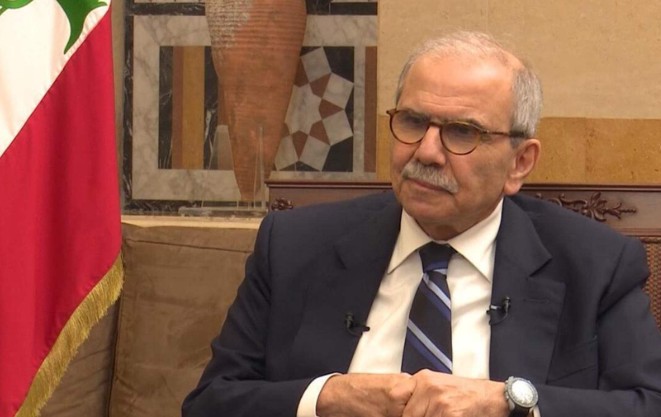
Nawaf Salam during an interview on Al-Hadath, a Saudi Arabian news channel
- On 26 March 2026, he had a conversation with António Guterres, the UN Secretary-General. They talked about the expansion of Israel’s attacks and operations in Southern Lebanon.
- Nawaf Salam criticised Israel for threatening the sovereignty of Lebanon and violating international law and the UN Charter by their ground operations.
- He added that the Lebanese government would lodge a formal complaint against Israel in the UN Security Council.
- After that, Nawaf Salam warned United Nations that Israel could capture the south territory of Litani River in Lebanon.
- On 12 April 2026, at the 1975 Civil war ceremony, in a speech to the country, he stated that all the citizens of Lebanon should remain united and not get trapped in civil war again.
- He added that the nation should support President Aoun’s initiative to start peace talks with Israel according to the the Taif agreement.
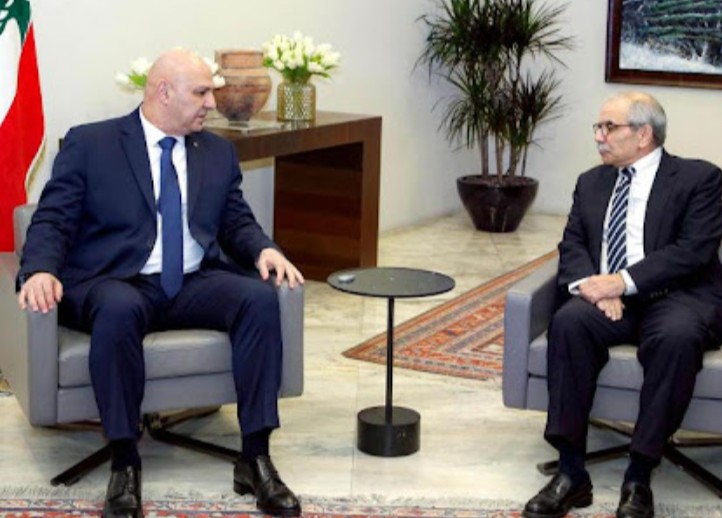
Nawaf Salam (right) with Joseph Aoun (left)
- Reportedly, he belongs to a noted Sunni Muslim family in Beirut. The Prime Minister of Lebanon is always chosen from the Sunni community as per the 1943 National Pact.
- Nawaf Salam is fluent in Arabic, English, and French.
- He is an aviation enthusiast. He likes flying planes in his free time and holds a private pilot license.
- Apart from being a politician, Nawaf Salam is also a fine writer. He often write articles on political, constitutional, election laws reforms.
- He has published books on overcoming sectarianism, fighting against corruption, strengthening the rule of law, and the independence of the judiciary.
- Nawaf Salam has also written books on the issue of citizenship and civil society in the Arab world as well as on the development of international law.
- Some of his books included “Prospects for Lebanon. An Essay on Political Opportunities and Constraints” (1987), A Century in Pictures (Trilingual English-French-Arabic), Dar An-Nahar, Beirut (2003), and Le Moyen-Orient à l’Epreuve de l’Irak, Actes-Sud/Sindbad, Paris (2005).
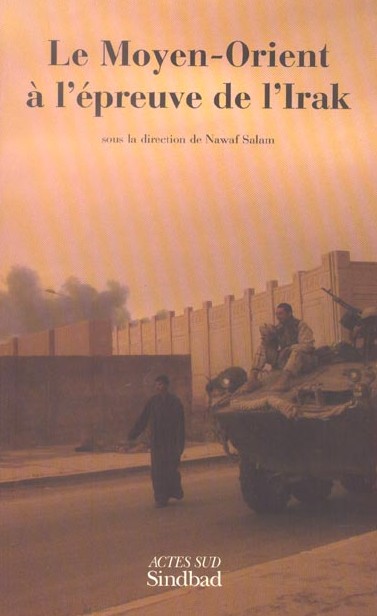
The cover of the book Le Moyen-Orient à l’Epreuve de l’Irak, Actes-SudSindbad, Paris (2005)
 Ali Khamenei Age, Death, Wife, Children, Family, Biography
 Hassan Rouhani Age, Wife, Children, Family, Biography & More
 Xi Jinping Height, Age, Wife, Children, Family, Biography
 Barack Obama Height, Age, Wife, Children, Family, Biography & More
 John Key Age, Wife, Children, Family, Biography
 Donald Trump Height, Age, Wife, Children, Family, Biography
 Benjamin Netanyahu Age, Wife, Children, Family, Biography
 Vladimir Putin Height, Age, Girlfriend, Wife, Children, Family, Biography