
Subodh Gupta (Artist) Age, Wife, Children, Family, Biography
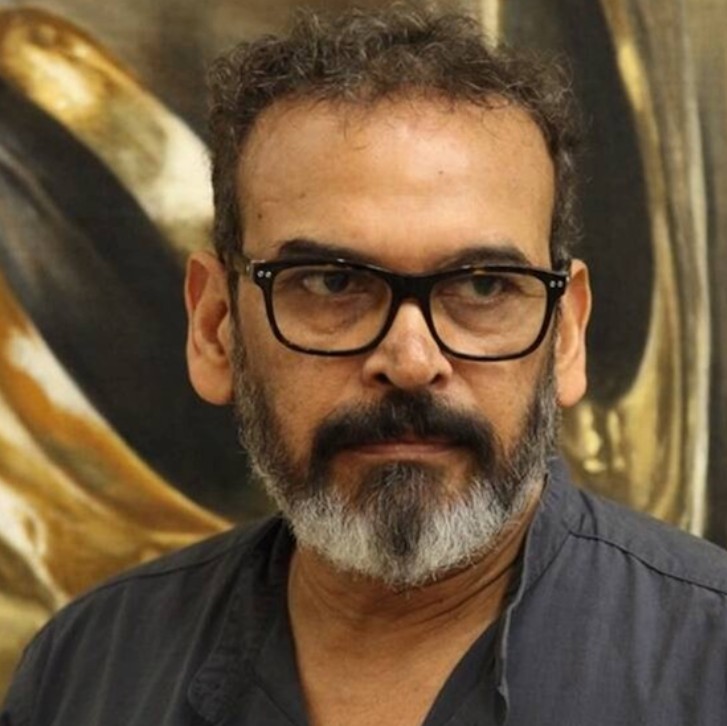
| Bio/Wiki | |
|---|---|
| Profession | Artist |
| Known for | Sculptures, Installations, and Paintings |
| Physical Stats | |
| Eye Colour | Black |
| Hair Colour | Salt & Pepper |
| Personal Life | |
| Date of Birth | January 1964 |
| Age (as of 2026) | 62 Years |
| Birthplace | Khagaul, Bihar, India |
| Nationality | Indian |
| Hometown | Khagaul, Bihar |
| College/University | College of Arts and Crafts, Patna, Bihar |
| Educational Qualification | Graduation in Fine Arts (B.F.A.) (1988) |
| Religion | Hinduism |
| Social Media | • Instagram |
| Relationships & More | |
| Marital Status | Married |
| Family | |
| Wife/Spouse | Bharti Kher (contemporary artist)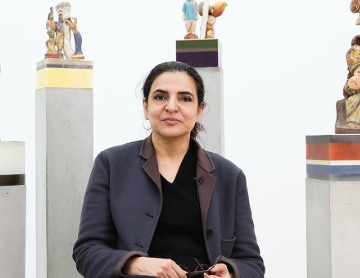 |
| Children | Son- Omi Gupta Daughter- Lola Gupta |
| Parents | Father- (deceased) Mother- (deceased) 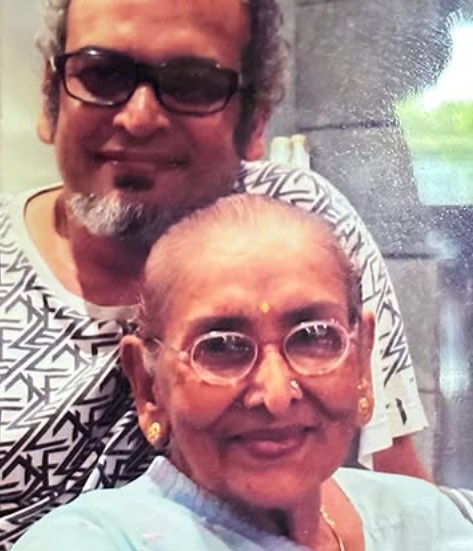 |
| Siblings | Brother- 1 Sisters- 3 • Mira • Gita • Rekha 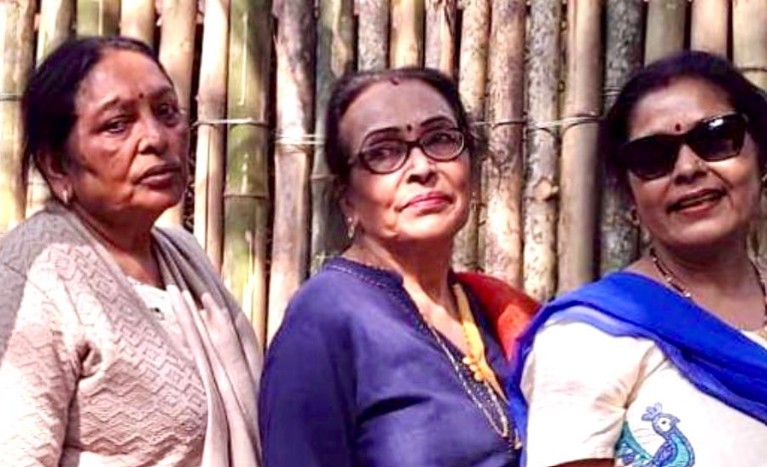 |
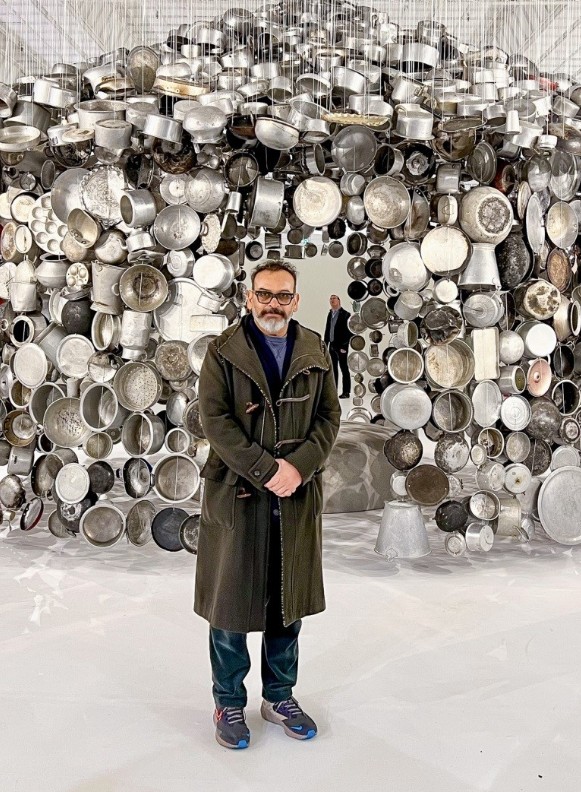
Some Lesser Known Facts About Subodh GuptaSubodh Gupta
-
When he was a child, his father, who worked as guard in Indian Railways, passed away in his early forties.
- His mother worked as a farmer in fields.
- When Subodh Gupta was twelve years old, he left his mother’s house and went to live with his elder brother in a remote village, where he completed his school education.
- Once, during a media conversation, he narrated the atmosphere and conditions of his early childhood.
- Subodh Gupta said that no child in his school had shoes to wear, and there was no road connectivity to the school. He said,
Sometimes we stopped in the field and we sat down and ate green chickpeas before we went to school.”
- After completing his schooling, he started working as an actor in a small theatre in his village Khagaul.
- In his free time, he used to draw and paint the advertisement posters of theatre plays. He got featured in these plays.
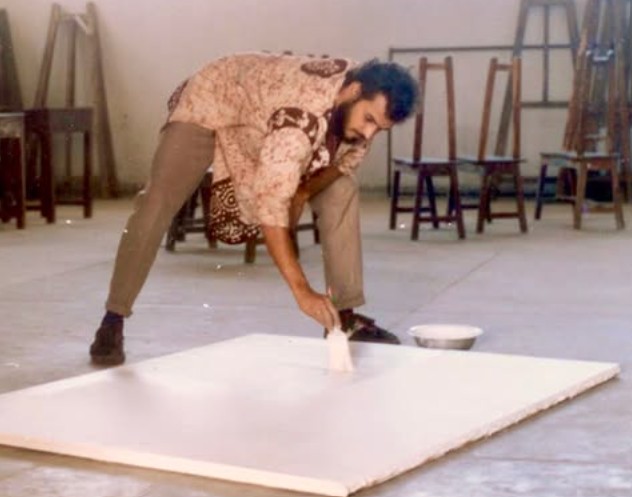
Subodh Gupta in 1984
- During this period, he started thinking about a career as an artist.
- In 1983, he was enrolled in an art and craft college in Patna, Bihar. He studied there till 1988
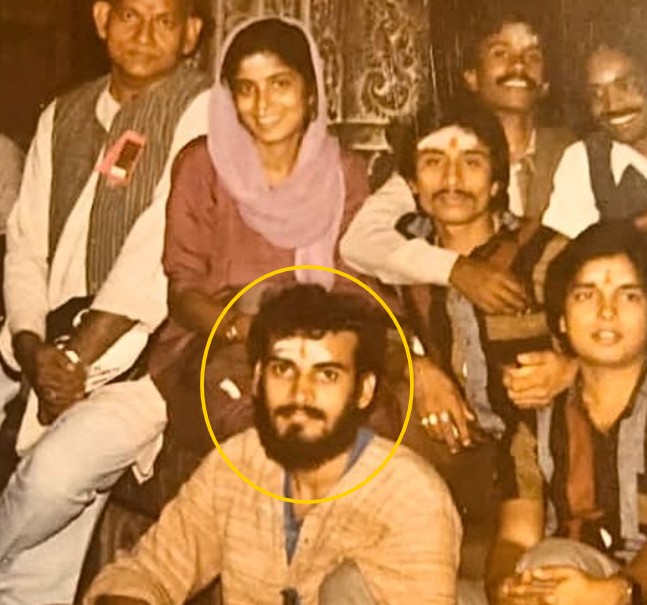
Subodh Gupta during his college days
- During the same time, he joined a newspaper as an illustrator.
- Once, during a media talk, he claimed that the library of his college always remained locked, and he felt lost after completing his formal education.
- Subodh Gupta said that if the college had provided proper facilities and infrastructure at that time, he would not have experienced a lot of struggle after passing from college.
- After completing his formal education, he worked in many odd jobs.
- In 1997, he made the structure “My Mother and Me.” He used organic materials such as cow dung to build this structure, which represents the culture of India.
- It was ten feet high and cylindrical in shape. The outer and inner walls of this structure were made of cow dung and the floor was made of a layer of ash.
- He built this structure when the Khoj Studios organised a workshop in Modinagar, Delhi, India.
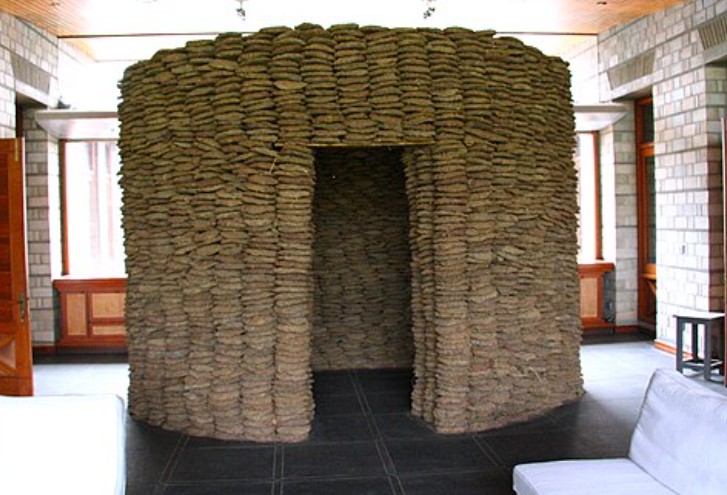
Subodh Gupta’s structure ‘My Mother and Me’ in 1997
- He first received recognition for his work when he showcased his art at the Fukuoka Asian Art Triennale, which was organised at the Fukuoka Art Museum, Japan, in 1999.
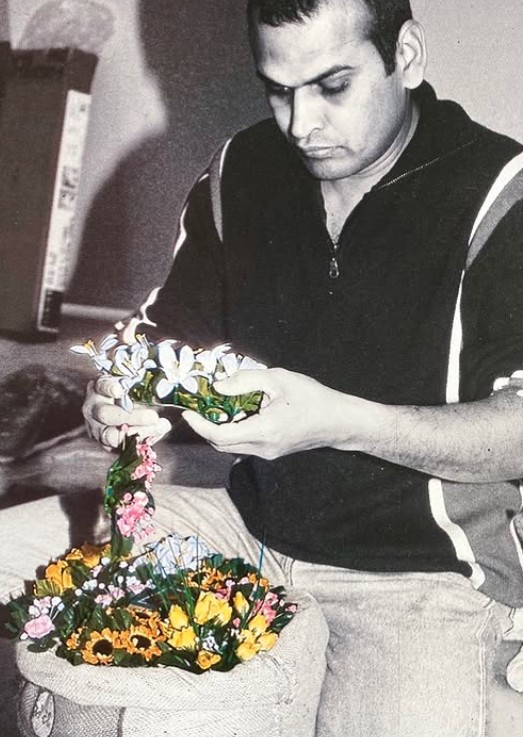
An old picture of Subodh Gupta during his tour to Fukuoka Asian Art Museum in Japan in 1999
- In 1999, Subodh Gupta build an art titled “Bihari.” In this art, he showcased his own identity and rural background. He painted his portrait in cow dung and lighted it with a word ‘Bihari’ written in Devanagiri, using an LED.
- It meant that the portrait belongs to a person from Bihar, India, where the word Bihari is often used as an insulting remark. It symbolised that due to poverty in the state, people of Bihar often migrates to other states of India to earn money.
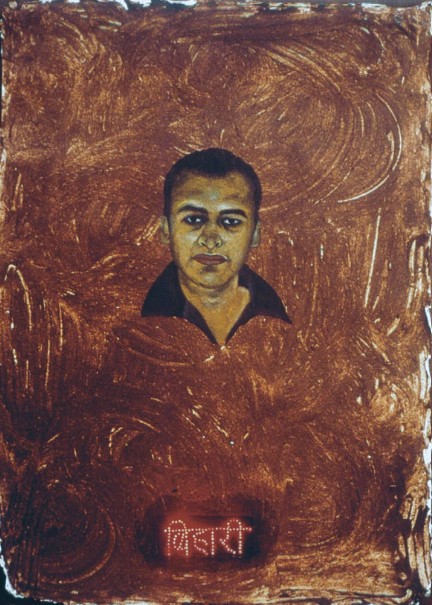
Subodh Gupta’s Bihari
- The following year, he exhibited his work at the Gwangju Biennale.
- During this period, Subodh Gupta joined the Khoj Studios in Delhi. This venture helps in promoting budding artists and their unique work. His association with this organisation gave a direction to his career.
- After that, his work was labelled in the category of Marcel Duchamp, a French surrealist.
- In 2002, Subodh Gupta exhibited his work at he Armory Show in New York. He was not popular at that time. During this exhibition, his gallerist claimed,
Nobody was impressed, nobody was looking at the work.”
- In 2003, he appeared in a small role in the Hindi film Haasil alongside late actor Irrfan Khan.
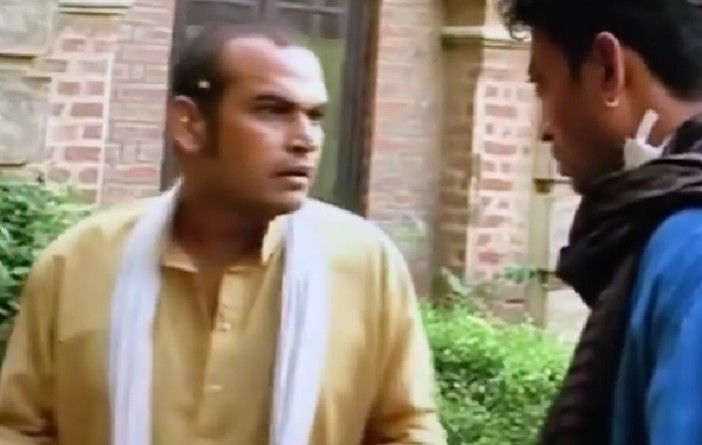
Subodh Gupta in the film Haasil with Irrfan Khan in 2003
- In 2005, he exhibited his work at Frieze.
- After that, he appeared at Art Basel in 2006.
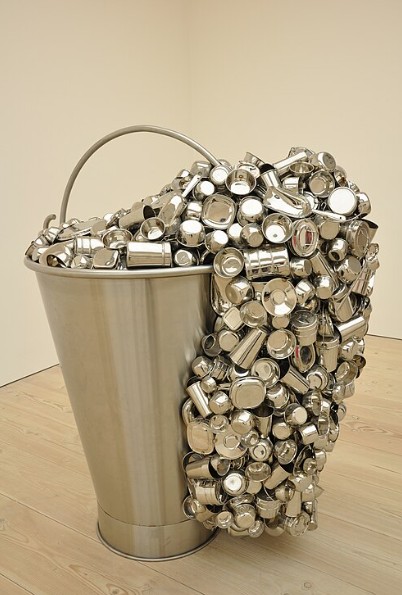
Subodh Gupta’s structure ‘Spill’ in 2007
- In 2006, Subodh Gupta made a structure called “Very Hungry God.” It was huge skull made of kitchen objects.
- ‘Very Hungry God’ was bought by François Pinault, a French businessman and art collector. The sculpture was a huge skull designed from kitchen utensils and was weighted more than 1000 kgs.
- In 2007, Very Hungry God was exhibited outside Palazzo Grassi, an art museum in Italy, during the Venice Biennale event.
- After the completion of the event, an Indian art critic, Girish Shahane, wrote an appreciation article about Subodh’s art at the Venice Biennale. Girish wrote,
Subodh managed to take a ubiquitous symbol and make it meaningful anew, an enormously difficult task that could only have been accomplished by a consummate artist.”
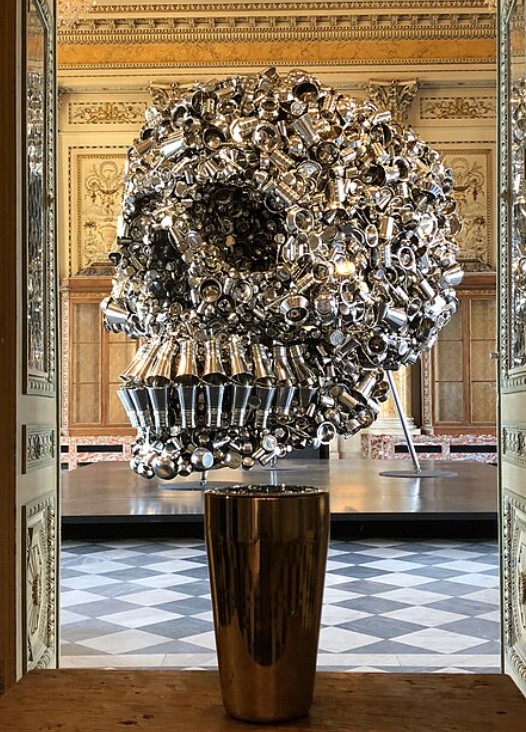
Subodh Gupta’s structure ‘Very Hungry God’ in 2009
- In 2008, he made a sculpture titled “Saat Samundar Paar” with oil on canvas and displayed it at Saffronart auction. It was sold for Rs. 34 million. The money was later donated to the flood victims of Bihar, his home town.
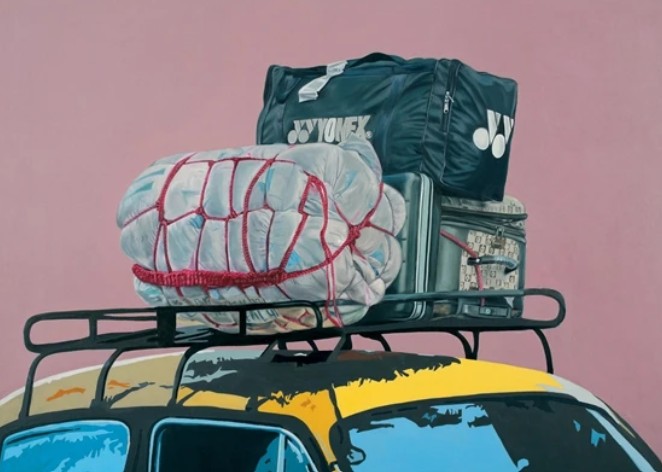
Subodh Gupta’s ‘Saat Samundar Paar’ with oil on canvas
- He is considered as one of the valuable artists in India. He often features as most expensive contemporary artist in various lists.
- Subodh Gupta regularly receives appreciation for his work across the world. However, he is often criticised for exhibiting repetitive work.
- Nature Morte and Hauser & Wirth are the two art galleries which represents his work.
- He is known for using easily available and daily use objects in his sculptures. The objects includes steel tiffin boxes, thali, plates, bicycles, milk buckets. etc. These objects are used by millions of Indians everyday.
- His art and sculptures show the economic and social transformation of his hometown. He uses ordinary things which were a part of his life when he was a child.
- Subodh Gupta once described his art in a media talk. He said,
All these things were part of the way I grew up. They were used in the rituals and ceremonies that were part of my childhood. Indians either remember them from their youth, or they want to remember them.”
He described the Hindu ritual elements and symbols in his art in the same conversation. He said,
I am the idol thief. I steal from the drama of Hindu life. And from the kitchen – these pots, they are like stolen gods, smuggled out of the country. Hindu kitchens are as important as prayer rooms.”
- Many of his artworks are often showcased at public museums. In 2008, he created “Line of Control,” a mushroom like structure made of pans and pots only. In 2009, it was exhibited at the Tate Triennial, an exhibition series organised at Tate Britain, London, UK.
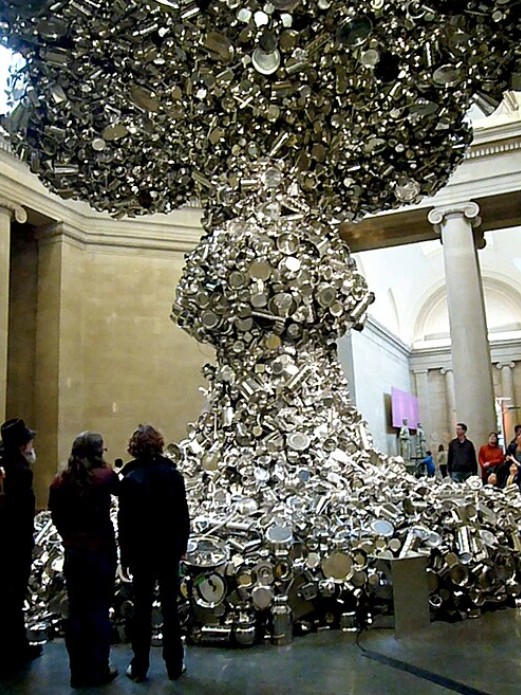
Subodh Gupta’s Line of Control, 2008
- After that, it was exhibited at the Kiran Nadar Museum of Art in Delhi.
- In 2012, Subodh Gupta created “What does the vessel contain, that the river does not.” He initially build this structure for the Kochi-Muziris international contemporary art exhibition. It was a boat which was 21.35 m (70.0 ft) long, 3.15 m (10.3 ft) wide, and 11 m (36 ft) deep.
- The boat was filled with the things which are usually fell accidently into the sea, such as old chairs, beds, nets, window frames, etc. during migration, displacement, and movement of the people of Bihar from one place to another.
- The structure showed the emotions of Biharis. He chose the title of this art from the book “The Sufi Path of Love” by Rumi, a poet from Persia. The lines in the book read as,
What does the vat contain that is not in the river? / What does the room encompass that is not in the city? / This world is the vat, and the heart the running stream, / this world the room, and the heart the city of wonders.”
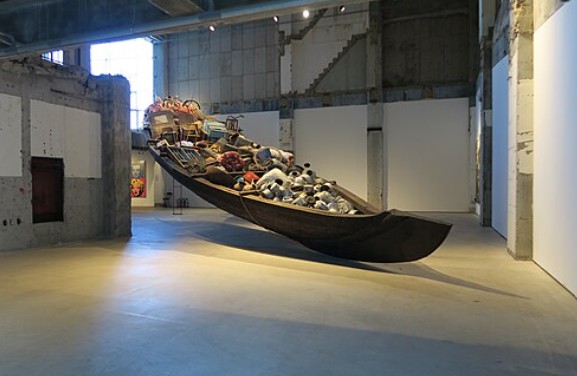
Subodh Gupta, What Does the Vessel Contain, That the River Does Not, 2012
- In 2013, he participated in the Performa Biennial and performed live.
- He prepared “Celebration” for the biennial. It was a communal Indian feast organised inside a sculpture, which was filled with light. He prepared five dishes for sixty people in six days.
- In 2014, Subodh Gupta constructed a Banyan Tree, a huge structure made of stainless steel objects. This structure was later permanently placed at the National Gallery of Modern Art in New Delhi, India.
- In 2014, the National Gallery of Modern Art, New Delhi, displayed his structure “My Mother an Me” for sale.
- In 2015, he constructed “When Soak Becomes Spill” in India and London. That same year, it was exhibited at the Victoria and Albert Museum in London.
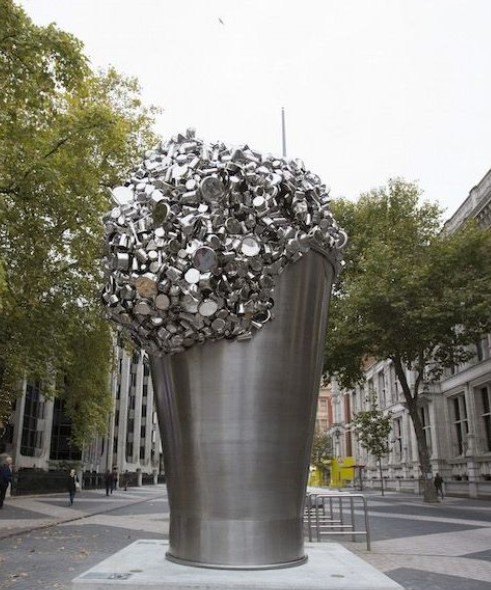
Subodh Gupta’s structure When Soak Becomes Spill
- In 2018, Subodh Gupta exhibited all of his works in his first retrospective exhibition titled Adda/Rendez-vous, which was organised in Monnaie de Paris, France.
- Once, an unknown Instagram user accused him of sexual misconduct through a post. After that, he filed a defamation case against this user.
- In February 2020, this Instagram user said sorry to him publicly and deleted the defamatory content from Instagram.
- In 2026, he made headlines for designing a clutch which was a hand-painted bronze sculpture of a mango for Isha Ambani. He created this piece in 2006 and named it “Aam Aadmi.”

Isha Ambani at MET GALA 2026 while holding a mango clutch designed by Subodh Gupta
- He also designed a custom metallic face mask for Ananya Birla, an Indian entrepreneur.

Ananya Birla while earing a custom metallic face mask
- Subodh Gupta has been featured on the covers of many noted magazines.
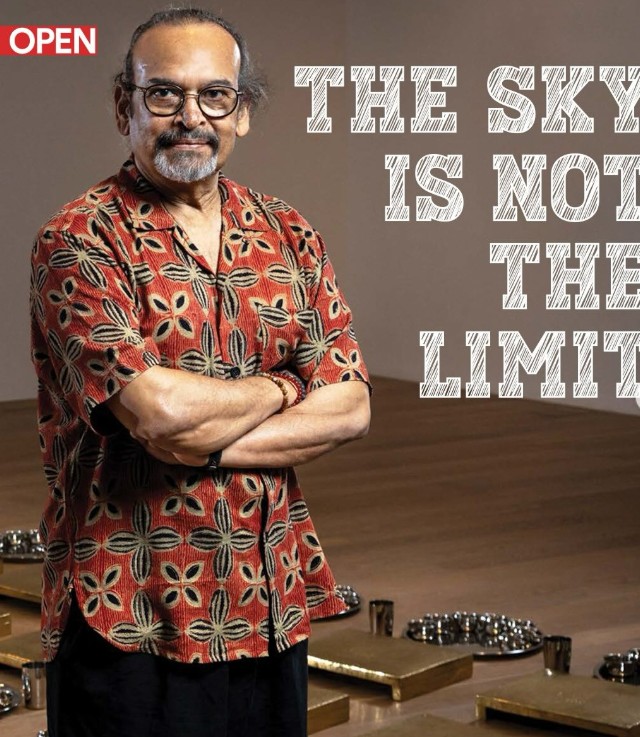
Subodh Gupta on the cover of a magazine
- He likes travelling to distant places and cooking food in his free time.
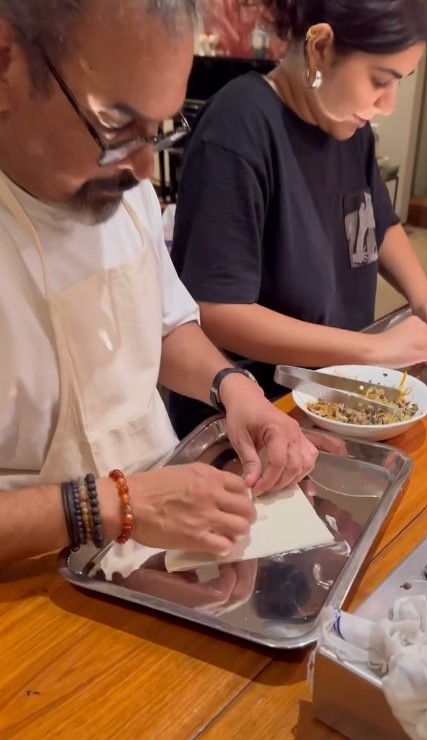
Subodh Gupta while cooking food
 Sheetal Sharma (Costume Designer) Height, Age, Wife, Children, Family, Biography
 Amrita Sher-Gil Age, Death, Boyfriend, Husband, Family, Biography & More
 Bharti Kher, Age, Husband, Family, Biography & More
 Bhagyalakshmi Age, Husband, Children, Family, Biography & More
 Ananya Birla Age, Family, Biography
 Isha Ambani Height, Age, Husband, Children, Family, Biography
 Stephen Graham Height, Age, Wife, Children, Family, Biography
 Ram Veerapaneni Age, Wife, Family, Biography & More