
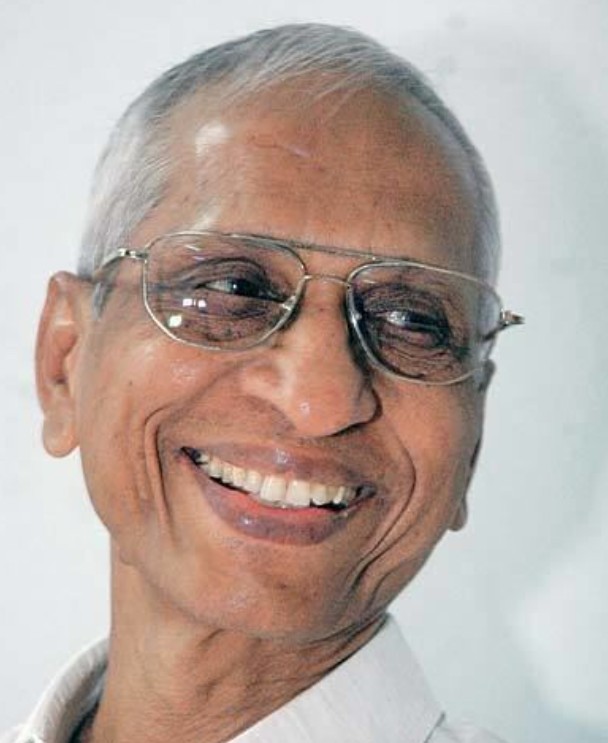
G. R. Khairnar Age, Wife, Children, Family, Biography
Quick Info→
Hometown: Nasik, Maharashtra
Age: 84 Years
Wife: Ashalata Khairnar
| Bio/Wiki | |
|---|---|
| Full Name | Govind Ragho Khairnar |
| Earned Names | Demolition Man, Bombay Bulldozer |
| Profession | Former Deputy Commissioner, Brihanmumbai Municipal Corporation |
| Known for | His fight against corruption and illegal buildings in Mumbai |
| Physical Stats | |
| Eye Colour | Black |
| Hair Colour | Grey |
| Personal Life | |
| Date of Birth | 14 April 1942 (Tuesday) |
| Age (as of 2026) | 84 Years |
| Birthplace | Pimpalgaon (w), Nasik, Maharashtra, India |
| Zodiac sign | Aries |
| Nationality | Indian |
| Hometown | Nasik, Maharashtra |
| College/University | Bhikusa Yamasa Kshatriya College of Commerce, Nasik, Maharashtra |
| Educational Qualification | Graduation (Honours) |
| Religion | Hinduism |
| Relationships & More | |
| Marital Status | Married |
| Family | |
| Wife/Spouse | Ashalata Khairnar |
| Children | Son- 1 Daughter- Sangita Khairnar (a superintendent (accounts) in the finance department of Indian Airlines)  |
| Parents | Father- Ragho Khairnar |
| Siblings | Elder Brother(s)- 2 (twins) |
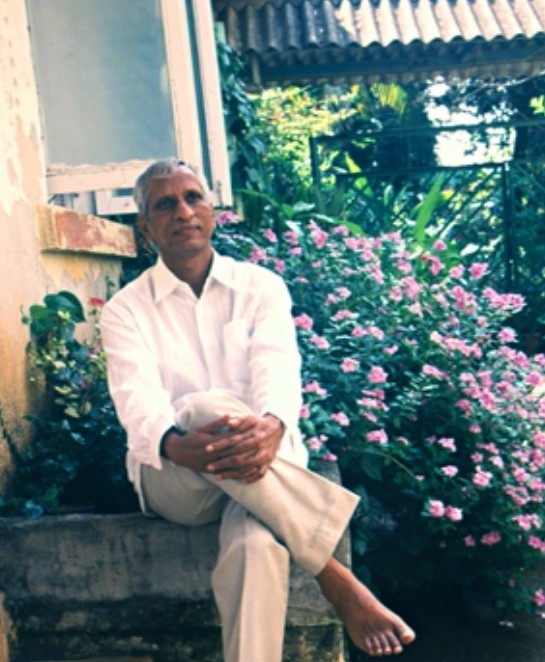
Some Lesser Known Facts About G. R. Khairnar
- G. R. Khairnar grew up in a poor farming family.
- His family had no highly educated members.
- He had two elder twin brothers, who had worked on the family farm.
- His father worked as a middleman for local farm products.
- G. R. Khairnar completed his education in Marathi medium.
- During his college days at Bhikusa Yamasa Kshatriya College of Commerce, Nashik, he received an “Ideal Student” award.
- During college, he joined the National Cadet Corps (NCC).
- In 1964, he cleared the state services examination and appointed as a Upper Division Clerk in Maharashtra government service.
- In 1974, he joined the Brihanmumbai Municipal Corporation (BMC), where he worked as an accounts officer.
- In 1985, G. R. Khairnar became a ward officer.
- During this period, he made headlines when he demolished part of a hotel named Step In, which was linked to Chandrakant Patil, the son of then Maharashtra Chief Minister Vasantdada Patil.
- After that, he became widely known for taking action even against powerful people.
- In 1988, he was appointed as the Deputy Commissioner of the BMC.
- After that, G. R. Khairnar started taking strong action against illegal buildings and land encroachments. He also demolished some illegal religious structures built on public land.
- His work often put him into conflict with politicians and powerful people.
- During the 1990s, he also took action against illegal buildings linked to underworld don Dawood Ibrahim.
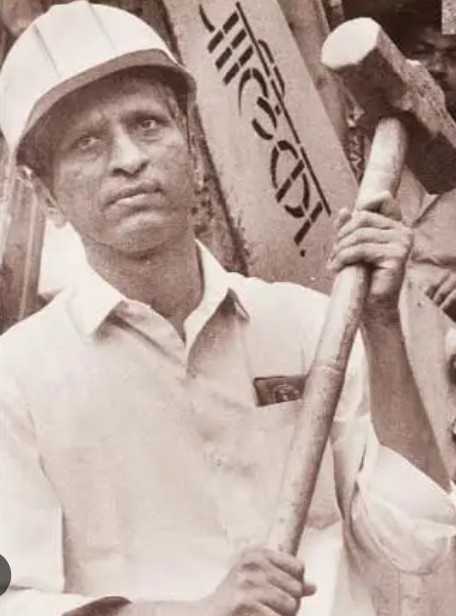
An old picture of G. R. Khairnar on a demolition site
- One of Dawood’s properties on G. R. Khairnar’s list was “Mehjabeen” on Pakmodia Street, Bhendi Bazaar in South Mumbai.
- Reportedly, Dawood had built this large house in his wife’s name. The building had glass walls, a swimming pool, Italian marble floors, and many other costly facilities. It looked like a five-star hotel.
- He reached the property with a bulldozer and BMC workers, and continued the demolition for the whole day.
- At the end of the day, he turned the luxury building into debris.
- The property became known as Dawood’s “Sheesh Mahal,” or palace of glass.
- G. R. Khairnar then became famous as an officer who was ready to fight the underworld.
- During the demolition, Salim Talwar, a Dawood associate, confronted him. The incident was described as an attempted attack on Khairnar.
- After that, in a media talk he stated that it was the duty of the police to give him protection. He said,
I am continuing with my drive against unauthorised structures and it is job of the city police to give me protection if they feel so. I am hesitant to ask any such facilities, it is they (police) who have to decide about the security of the people who take up such risks in cleaning the city.”
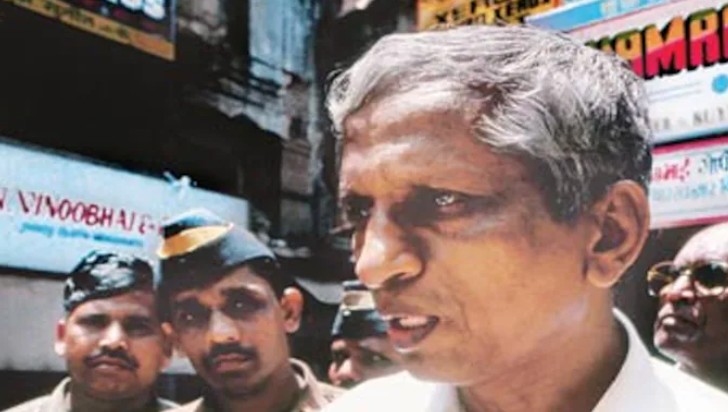
An old picture of G. R. Khairnar while speaking to the media on a demolition site
- Reportedly, G. R. Khairnar planned to demolish around 200 illegal buildings linked to Dawood, but he could demolished only about 30 as he faced pressure to stop the action.
- Later, he demolished another luxury property in Zaveri Bazaar, which was belonged to Tiger Memon, who was accused in the Mumbai blasts. Reportedly, Memon had used the building as his office while he was in India.
- In 1993, G. R. Khairnar accused then Maharashtra Chief Minister Sharad Pawar of corruption. He also accused Pawar of protecting people behind illegal construction.
- After that, his allegations created a major political controversy, and his actions made him very popular among ordinary people.
- His critics, however, stated that some of his actions were too harsh.
- In 1994, he was suspended from the BMC. An inquiry headed by a High Court judge found him guilty of several charges.
- He was charged with overstepping his authority and making deliberate false statements.
- His supporters said in the media that he was being punished because he had taken actions on powerful people.
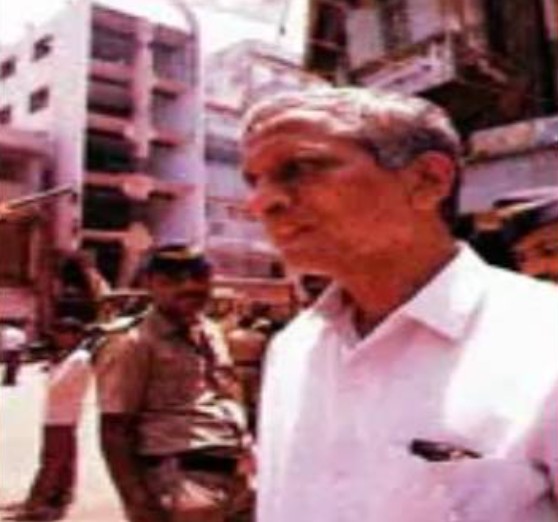
An old picture of G. R. Khairnar while on duty at a demolition site
- During his suspension, G. R. Khairnar travelled across Maharashtra and held many public campaigns against corruption. He spoke to people at rallies in different parts of the state.
- During one of his rallies, he claimed that he had many evidence which links Sharad Pawar with Dawood Ibrahim. However, he never showed the evidence publicly.
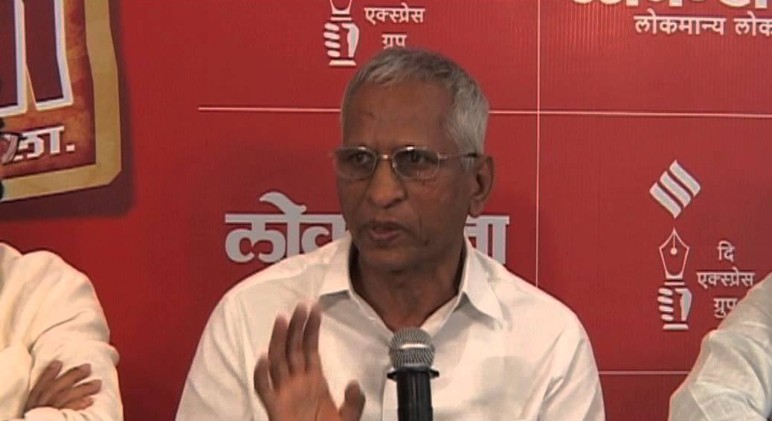
G. R. Khairnar speaking during a public campaigns against corruption
- In 1995, during the Maharashtra elections the Bhartiya Janta Party (BJP) and Shiv Sena supported his actions and cause. The Indian National Congress suffered a major defeat in these elections.
- Later, the High Court ordered that G. R. Khairnar should be reinstated with full benefits. However, the government did not immediately follow the order.
- Apart from being a former government official, he is also a writer. In 1995, during his suspension, he wrote his Marathi autobiography “Ekaki Zunj,” which means “The Lonely Fight.”
- The book described his childhood, struggles, and experiences in government service.
- In his autobiography, G. R. Khairnar wrote that the election meetings of Pawar in some areas of south Mumbai were sponsored by Dawood Ibrahim. However, Pawar denied the allegations.
- After that, he worked with social activist Anna Hazare for some time. He then decided to work independently.
- He has also worked against human trafficking and prostitution. Reportedly, he helped in rescuing minor girls from the Kamathipura area of Mumbai.
- In 2000, G. R. Khairnar was reinstated as a BMC Deputy Commissioner. He again worked against illegal construction and encroachments.
- He also took action against illegal religious structures.
- Reportedly, he spoke to people first and tried to convince them to remove illegal structures themselves.
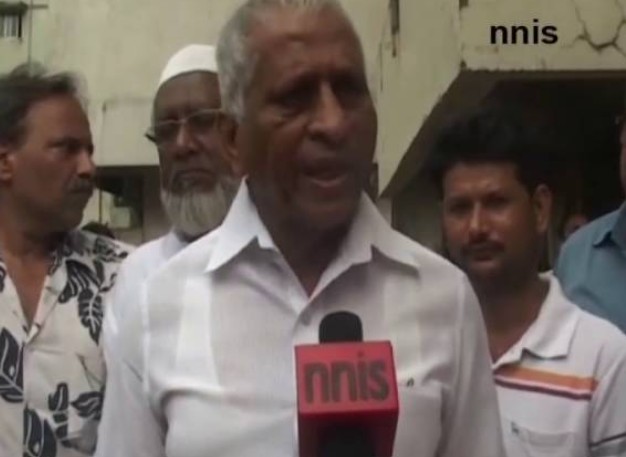
An old picture of G. R. Khairnar while addressing media
- G. R. Khairnar was also accused of targeting areas which belonged to one particular community, more than others.
- Once, during a demolition of an illegal bookstall on Mohammed Ali Road, a copy of the Quran fell on the ground, which caused a major controversy.
- In January 2001, he started working as an Officer on Special Duty with the City and Industrial Development Corporation of Maharashtra (CIDCO).
- He was given the responsibility to remove encroachments and improve security in Navi Mumbai and Uran.
- During this period, he continued his fight against illegal land occupation.
- In 2002, G. R. Khairnar retired from government service.
- He became known as the “Demolition Man” and “One Man Demolition Army” of Mumbai.
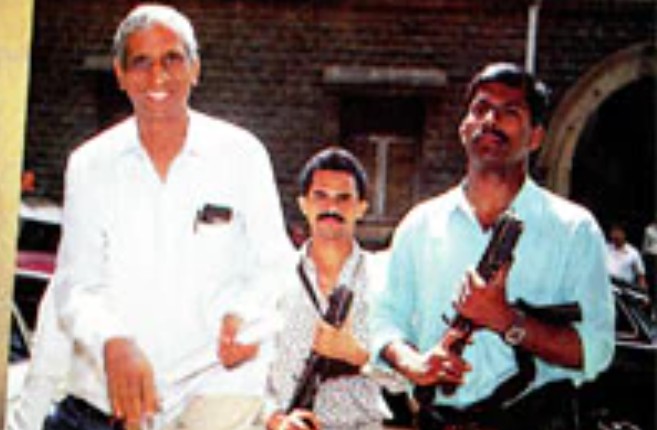
An old picture of G. R. Khairnar
- In 2013, when he was 72 years old, he requested the Mumbai municipal commissioner to give him another chance to work against illegal construction. He offered to work either free of cost or for a small payment.
- G. R. Khairnar once stated in a media talk that he was shocked by the spread of illegal buildings in Mumbai.
- In 2018, his character was shown in the television series Home, which was produced by ALTBalaji. The show was based on the story of a middle-class family and showed their emotional struggle to save their home.

The poster of the television series Home, produced by ALTBalaji
 Yusuf Hamied Age, Wife, Children, Family, Biography & More
 Dina Powell Height, Age, Husband, Children, Family, Biography
 Harini Logan Age, Boyfriend, Family, Biography & More
 Manish Chowdhary Age, Wife, Family, Biography & More
 Vinny Arora Height, Age, Boyfriend, Husband, Children, Family, Biography & More
 Ravi Katpadi (Social Worker) Age, Wife, Biography & More
 Javagal Srinath Height, Age, Wife, Children, Family, Biography & More
 Chris Taylor Height, Age, Family, Biography