
Dr Nisha Verma Age, Biography
Quick Info→
Religion: Hinduism
Hometown: Greensboro, North Carolina
Age: 36 Years
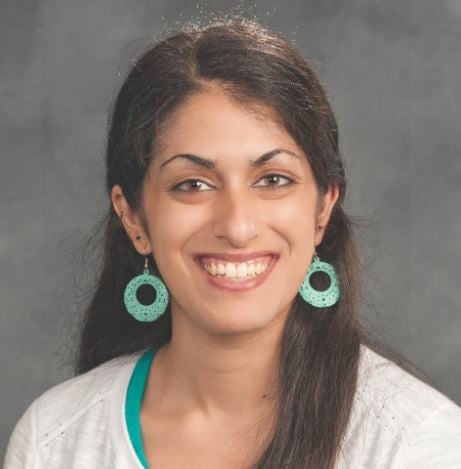
| Bio/Wiki | |
|---|---|
| Profession | Oobstetrician, Gynecologist |
| Known For | Being an Indian-origin obstetrician and gynaecologist, went viral for her response to whether men can become pregnant |
| Physical Stats | |
| Eye Colour | Light Brown |
| Hair Colour | Medium Ash Brown |
| Career | |
| Personal Life | |
| Date of Birth | Year, 1989 |
| Age (as of 2025) | 36 Years |
| Birthplace | Greensboro, North Carolina, USA |
| Nationality | American |
| Hometown | Greensboro, North Carolina |
| College/University | • University of North Carolina, North Carolina • Beth Israel Deaconess Medical Center, Boston • Emory University, Atlanta |
| Educational Qualification(s) | • A bachelor’s degree in Biology and Anthropology from University of North Carolina, North Carolina • Medical degree from University of North Carolina • Obstetrics and Gynecology residency from Beth Israel Deaconess Medical Center • Complex Family Planning Fellowship and a master’s degree in Public Health from Emory University |
| Religion | Hinduism |
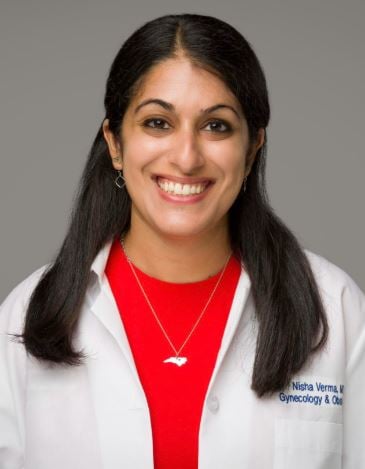
Some Lesser Known Facts About Dr Nisha Verma
- Dr Nisha Verma was born and grew up in Greensboro, North Carolina, USA, to Indian immigrant parents.
- Since childhood, Nisha has excelled in her academics.
- Nisha obtained her Bachelor of Arts degree in Biology and Anthropology from the University of North Carolina at Chapel Hill, where she also earned her medical degree in 2015.
- After that, Nisha completed her obstetrics and gynecology residency at Beth Israel Deaconess Medical Center and then obtained specialized training through a Complex Family Planning Fellowship at Emory University, where she also earned her Master of Public Health degree.
- Dr Nisha is a double board-certified obstetrician-gynecologist with additional subspecialty expertise in complex family planning and has more than 10 years of experience in the medical field.
- She provides services in both Georgia and Massachusetts and is associated with multiple hospitals, including Emory University Hospital Midtown and Grady Memorial Hospital, Atlanta.
- During the 2021-2022 term, Dr. Verma has served as the Darney/Landy Fellow at the American College of Obstetricians and Gynecologists, where she was actively involved in abortion-related policy and advocacy work.
- Since July 2021, she has been serving as an Adjunct Assistant Professor in the Department of Gynecology and Obstetrics at Emory University School of Medicine.
- Over time, Nisha has published multiple articles on various topics, including medication abortion through telehealth, self-managed abortion, and the impact of abortion restrictions on maternal health.
- At the American College of Obstetricians and Gynecologists (ACOG), Nisha serves as a senior advisor for Reproductive Health Policy & Advocacy.
- As a fellow with physician for Reproductive Health, Dr. Verma has spoken before the U.S. Congress several times, including a House Oversight Committee hearing in September 2022 and Senate Judiciary Committee hearings in 2023 and 2025.
- On 14 January 2026, during a U.S. Senate hearing on abortion pill safety, Republican Senators Josh Hawley and Ashley Moody repeatedly asked if men can get pregnant.” Instead of giving a yes or no answer, Dr. Nisha said,
I hesitated there… of how the conversation was going or what the goal was,” adding, “I do take care of patients with different identities.”
Sen. Hawley: “Can men get pregnant?”
Dr. Nisha Verma: “I'm not really sure what the goal of the question is.”
Sen. Hawley: “The goal is just to establish a biological reality…Can men get pregnant?”
— America (@america) January 14, 2026
- To this, Hawley responded,
The goal is to establish a biological reality. This is about science and evidence. This is not a hypothetical question. You are called by the other side as an expert, and you are a doctor and you follow the science and evidence. Just want to know based on the evidence. Can men get pregnant? That’s a yes or no question,”
- Her discussion with senators went viral and sparked a heated debate on social media, in which critics said she failed to answer basic biology, and her supporter saying the question was a political tool.
 Raiza Dhillon Age, Family, Biography
 Mickey Rourke Age, Girlfriend, Wife, Children, Family, Biography
 Han Kang Height, Age, Husband, Children, Family, Biography
 Sri Sri Ravi Shankar Age, Wife, Family, Biography, Controversy, Facts & More
 Sana Dua Height, Weight, Age, Affairs, Biography & More
 Nandita Swetha Height, Weight, Age, Boyfriend, Husband, Biography & More
 Rakeysh Omprakash Mehra Height, Weight, Age, Wife, Children, Biography & More
 Queen Elizabeth II Age, Death, Husband, Children, Family, Biography & More