
Khaleda Zia Age, Death, Controversies, Husband, Children, Family, Biography
Quick Info→
Husband: Ziaur Rahman
Death Cause: Prolonged Illness
Age: 80 Years
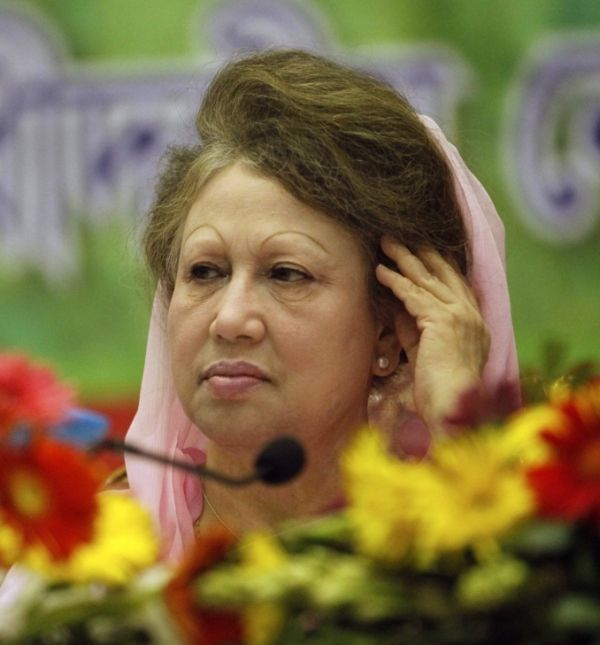
| Bio | |
|---|---|
| Real Name | Khaleda Majumder |
| Profession | Politician |
| Political Party | Bangladesh Nationalist Party (1979–present) |
| Political Journey | 1984: In August, elected chairperson of the BNP 1991: In February, won an election for the first time 1991-1996: Served as the Prime Minister of Bangladesh in her First Term 1996-2001: Served as the Leader of the Opposition 2001-2006: Served as the Prime Minister of Bangladesh in her Second Term 2008-2014: Served as the Leader of the Opposition for the 2nd time |
| Biggest Rival | Sheikh Hasina |
| Physical Stats & More | |
| Height (approx.) | in centimeters- 170 cm in meters- 1.70 m in feet inches- 5’ 7” |
| Weight (approx.) | in kilograms- 60 kg in pounds- 132 lbs |
| Eye Colour | Dark Brown |
| Hair Colour | Salt & Pepper |
| Personal Life | |
| Date of Birth | 9 August 1945 (according to her matriculation examination certificate) 5 September 1945 (according to her marriage certificate) 19 August 1945 (according to her passport) 15 August 1945 (she claims) |
| Birthplace | Dinajpur, Bengal Presidency, British India |
| Date of Death | 30 December 2025 (Tuesday) |
| Place of Death | Dhaka, Bangladesh |
| Age (at the time of death) | 80 Years |
| Death Cause | Prolonged Illness |
| Nationality | Bangladeshi |
| Hometown | Dinajpur, Bangladesh |
| School | Not Known |
| College | Not Known |
| Educational Qualification | Not Known |
| Family | Father- Iskandar Majumder (Businessman) Mother- Taiyaba Majumder Brother- Sayeed Iskander Sister- Khurshid Jahan |
| Religion | Islam |
| Hobbies | Travelling, Listening to Music |
| Controversies | • Her birthday is quite controversial; as there are different birth dates on her different documents- 9 August 1945 (according to her matriculation examination certificate), 5 September 1945 (according to her marriage certificate), 19 August 1945 (according to her passport), and 15 August 1945 (she claims). The High Court filed a petition against Khaleda Zia on this issue. • In February 2018, she was jailed for five years in a corruption case. She was convicted of embezzling some USD 250,000 in donations meant for an orphanage trust, established in her late husband Ziaur Rahman's memory. • On 29 October 2018, a special court in Dhaka sentenced her to seven years in jail involving a charity fund named after her late husband. She was found guilty of misuse of power as prime minister in collecting $375,000 for the Zia Charitable Trust Fund from unknown sources. |
| Boys, Affairs and More | |
| Marital Status (at the time of death) | Widow |
| Affairs/Boyfriends | Not Known |
| Husband/Spouse | General Ziaur Rahman (7th President of Bangladesh)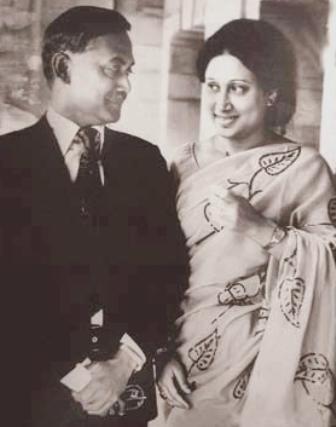 |
| Marriage Date | Year, 1960 |
| Children | Sons- Tarique, Arafat Daughter- Not Known |
| Money Factor |
|
| Net Worth | Not Known |
Some Lesser Known Facts About Khaleda Zia
- Did Khaleda Zia smoke?: Not Known
- Did Khaleda Zia drink alcohol?: Not Known
- She was born into a family of businessmen in Dinajpur District in Bengal, British India (now in north-western Bangladesh).
- In 1960, she married Ziaur Rahman, who went on to become the 7th President of Bangladesh in 1977.
- Her husband, Ziaur Rahman, ruled until 1981, when in a military coup, he was assassinated.
- After her husband’s demise, Khaleda Zia became head of the Bangladesh Nationalist Party, which was founded by Ziaur Rahman in 1970.
- Khaleda Zia, along with her supporters, had fiercely opposed the autocratic rule of Hussain Muhammad Ershad and was detained more than 7 times because of her protests against Ershad.
- Soon, the Bangladesh Nationalist Party formed a 7-party alliance.
- She served Bangladesh as its Prime Minister three times.
- By serving 10 years as the Prime Minister of Bangladesh, Khaleda Zia was considered the longest-serving Prime Minister of Bangladesh.
- On 20 March 1991, Khaleda Zia was sworn in as Bangladesh’s first female prime minister. Shahabuddin Ahmed (the then-acting President of Bangladesh) had granted her nearly all of the powers that were vested in the president at the time, and thus, Bangladesh effectively returned to a parliamentary system in September 1991.
- In the June 1996 elections, Khaleda Zia led the BNP lost Sheikh Hasina’s Awami League. However, with 116 seats, BNP emerged as the largest opposition party in Bangladesh’s parliamentary history.
- On 6 January 1999, the BNP formed a four-party alliance (including Jamaat-e-Islami Bangladesh) to increase its chances of returning to power.
- Khaleda Zia was heavily criticised for allying with Jamaat-e-Islami Bangladesh, as it had opposed the independence of Bangladesh in 1971.
- In the October 2001 general elections, the BNP won two-thirds of the seats in parliament, and Khaleda Zia was sworn in as the Prime Minister of Bangladesh.
- During her third term as the Prime Minister of Bangladesh, the country’s domestic share in economic development grew, and Bangladesh started attracting international investments.
- On 29 October 2006, her term in the Prime Minister’s Office ended.
- In May 2017, she revealed BNP’s Vision 2030 to obtain public support for the next general elections. However, the ruling Awami League government accused the BNP’s vision as an act of plagiarism. It renewed tension between the Awami League and the BNP.
- During her Prime Ministership, Khaleda Zia had made some high-profile foreign visits, including Saudi Arabia, the People’s Republic of China, and India.
- Khaleda Zia’s visit to India was notable as the BNP had been considered to have been anti-India compared to its rival Awami League.
- On 24 May 2011, she was honoured as a “Fighter for Democracy” by the New Jersey State Senate.
- Since 2021, Zia had been battling multiple serious health issues, including chronic kidney disease, decompensated liver disease, unstable haemoglobin levels, diabetes, rheumatoid arthritis, and other age-related complications.
- Zia received treatment at Evercare Hospital in Dhaka from 27 April to 19 June 2021. She was hospitalised there again from 12 October to 3 November 2021 and returned for further care starting on 14 November 2021.
- On 28 November 2021, a medical board overseeing her care confirmed that she was suffering from liver cirrhosis.
- On 9 January 2022, after a period in intensive cardiac care, Zia was transferred out of the coronary care unit (CCU).
- In August 2024, after Sheikh Hasina, the Prime Minister of Bangladesh, resigned from office and went to India, news began circulating that Khaleda would be released from prison.
- On 7 January 2025, Zia was flown to London for advanced medical treatment in a special air ambulance sent by the Emir of Qatar, Sheikh Tamim bin Hamad Al Thani.
- On 8 January 2025, she was admitted to The London Clinic, where she continued her treatment.
- On 23 November 2025, Zia was hospitalised in a very critical condition and was shifted to Evercare Hospital in Dhaka.
- On 1 December 2025, the government declared her a VVIP and deployed the Special Security Force to ensure her security.
- On 30 December 2025, Zia passed away. The Bangladesh Nationalist Party (BNP) announced that she died at Evercare Hospital in Dhaka after a prolonged illness.
 Sirf Ek Bandaa Kaafi Hai Actors, Cast & Crew
 Haseeb Hameed Height, Weight, Age, Affairs, Biography & More
 Gashmeer Mahajani Height, Age, Wife, Children, Family, Biography & More
 Swati Kumari (News Anchor) Age, Boyfriend, Husband, Family, Biography & More
 Anjali Krishna Height, Age, Family, Biography
 Dhruv Jurel Height, Age, Girlfriend, Family, Biography & More
 Paolo Macchiarini Age, Girlfriend, Wife, Family, Biography & More
 Virat Kohli’s House – Photos, Price, Interior, Address & More