
Shrinivas Kulkarni (Astronomer) Age, Wife, Children, Family, Biography
Quick Info→
Wife: Hiromi Komiya
Age: 69 Years
Hometown: Kurundwad, Maharashtra
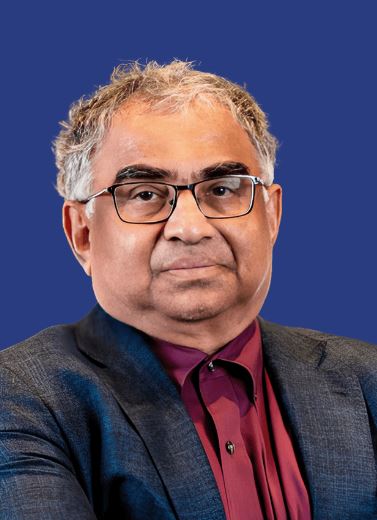
| Bio/Wiki | |
|---|---|
| Full Name | Prof. Shrinivas Ramchandra Kulkarni |
| Profession | Astronomer |
| Known For | Winning the Royal Astronomical Society’s Gold Medal (2026), one of the world’s most prestigious science honours |
| Physical Stats | |
| Eye Colour | Light Brown |
| Hair Colour | Salt and Pepper |
| Career | |
| Awards, Honours, Achievements | • Helen B. Warner Prize (1991) in Astronomy • Alan T. Waterman Award (National Science Foundation Waterman Prize) (1992) • Fellow of the Royal Society (FRS) (2001) • Karl G. Jansky Lectureship (commonly known as the Jansky Prize) (2002) • Member of the United States National Academy of Sciences (US NAS) (2003) • Fellow of the Indian Academy of Sciences (2012) • Member of the Royal Netherlands Academy of Arts and Sciences (2016) • Dan David Prize (2017) • Shaw Prize (Astronomy) (2024) |
| Personal Life | |
| Date of Birth | 4 October 1956 (Thursday) |
| Age (as of 2025) | 69 Years |
| Birthplace | Kurundwad, Maharashtra, India |
| Zodiac sign | Libra |
| Nationality | American |
| Hometown | Kurundwad, Maharashtra |
| College/University | • Indian Institute of Technology, Delhi • University of California, Berkeley |
| Educational Qualification(s) | • A master's of science in Applied Physics (1978) • A doctor of philosophy from the University of California, Berkeley (1983) |
| Religion | Hinduism |
| Relationships & More | |
| Marital Status | Married |
| Family | |
| Wife/Spouse | Hiromi Komiya (Astronomer)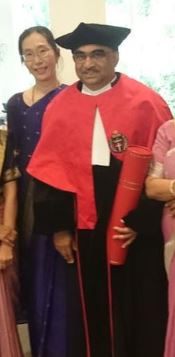 |
| Parents | Father- Dr. R. H. Kulkarni (surgeon) Mother- Vimala Kulkarni |
| Children | Son- None Daughter(s)- 2 • Anju • Maya |
| Siblings | Brother- None Sister(s)- 3 • Sunanda Kulkarni (gynecologist) • Sudha Murthy (educator, author, philanthropist) • Jaishree Deshpande (engineer) |
| Other Relative | Brother-in-law- N R Narayana Murthy (Infosys Founder)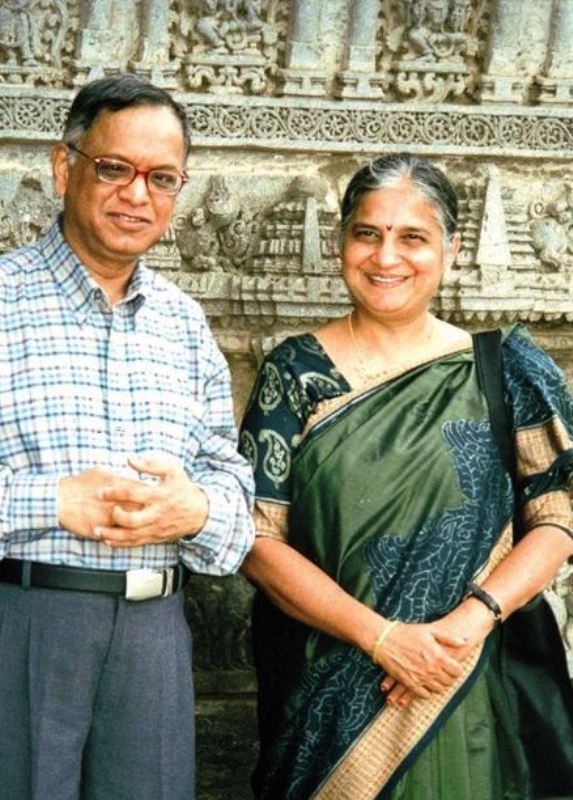 |
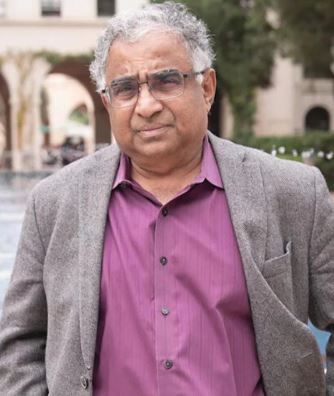
Some Lesser Known Facts About Shrinivas Kulkarni
- Shrinivas Kulkarni was born in Kurundwad, a small town in Maharashtra.
- He was raised in a well-educated family. He is the youngest of all his siblings.
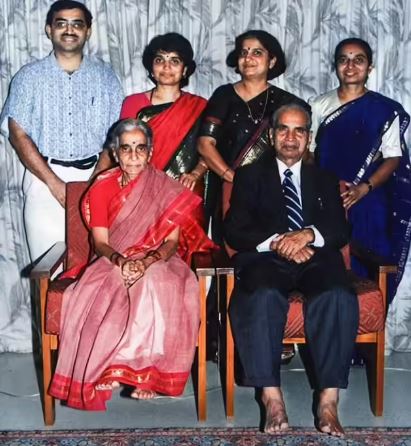
Shrinivas Kulkarni with his family
- Kulkarni and his sisters grew up in Hubballi, Karnataka, and attended local schools there.
- After completing his integrated BSc and MSc in Applied Physics, Kulkarni moved to the United States for doctoral studies and earned his PhD in astronomy from the University of California, Berkeley in 1983, specializing in radio astronomy.
- During his PhD, he co-discovered the first millisecond pulsar, PSR B1937+21, which rotates hundreds of times per second, a discovery that transformed understanding of neutron stars.
- While pursuing his PhD, he met his future wife, Hiromi Komiya, who was also a doctoral student from Japan. In an interview, Kulkarni mentioned that he learnt Japanese in just two weeks, and then they got married.
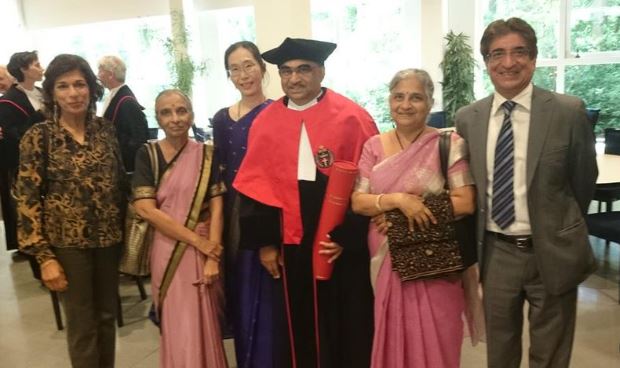
Shrinivas Kulkarni with his wife, sisters and other family members
- After his doctorate, Shrinivas Kulkarni joined the faculty at the California Institute of Technology (Caltech) in 1987 and started his career as a radio astronomer.
- He then served at various positions, starting as an assistant professor of astronomy and eventually becoming an associate professor, a full professor, and then the MacArthur Professor. After that, he held the title of George Ellery Hale Professor of Astronomy and Planetary Science.
- In addition to his teaching roles, he served as the executive officer for astronomy and the director of the Caltech Optical Observatories. He was responsible for overseeing the Palomar and Keck telescopes, which are among the most valuable instruments in the international astronomy community.
- In 1994, he was part of the team that identified the first irrefutable brown dwarf, an object between planets and stars in size, expanding the types of known celestial bodies.
- In 1997, his team demonstrated that gamma-ray bursts originate outside our galaxy, reshaping high-energy astrophysics.
- He has been deeply involved in instrumentation, believing scientific discovery follows from building new tools; over his career, he has helped construct around 10 astronomical instruments for observing transient phenomena.
- Kulkarni led the development of the Palomar Transient Factory (2009) and its successor, the Zwicky Transient Facility (2017), surveys that scan the night sky every few nights and have captured thousands of exploding stars and other transient events.
- He was director of Caltech Optical Observatories from 2006 to 2018, overseeing major telescopes including Palomar and Keck.
- Since 2009, he has been serving as the Jury Chair for the Infosys Prize for the discipline of Physical Sciences.
- In 2020, he co-developed the STARE2 instrument that helped identify a fast radio burst (FRB) from a magnetar in our galaxy.
- Some of his other notable achievements include identifying the host galaxies and supernovae associated with gamma-ray bursts, associating soft gamma-ray repeaters with neutron stars, and conducting detailed studies of the full range of supernovae, binary and millisecond pulsars, and magnetars.
- In addition to his academic and research career, Kulkarni is a member of four national academies. He was elected a Fellow of the Royal Society in London in 2001, became a member of the United States National Academy of Sciences in 2003, was designated an honorary fellow of the Indian Academy of Sciences in 2012, and was appointed a foreign member of the Royal Netherlands Academy of Arts and Sciences on 12 September 2016.
- In January 2026, Shrinivas Kulkarni was announced as the recipient of the Royal Astronomical Society Gold Medal, one of the highest honors in astronomy. He was awarded this award for his significant contributions to the study of explosive and rapidly changing cosmic phenomena. The formal presentation of the Royal Astronomical Society Gold Medal is scheduled to take place in London in May 2026.
 N. R. Narayana Murthy Age, Wife, Children, Biography & More
 Sudha Murthy Age, Husband, Children, Family, Biography & More
 Rishi Sunak Height, Age, Wife, Children, Family, Biography
 Dr. APJ Abdul Kalam Age, Biography, Wife, Death Cause, Facts & More
 M Sankaran (ISRO) Age, Wife, Family, Biography & More
 K. Sivan (ISRO Chief) Age, Wife, Family, Biography & More
 Dr Sankarasubramanian K Age, Wife, Family, Biography & More
 Rakesh Verma (IAS) Age, Wife, Children, Family, Biography & More