
Reza Pahlavi (Crown Prince of Iran) Age, Girlfriend, Wife, Children, Family, Biography
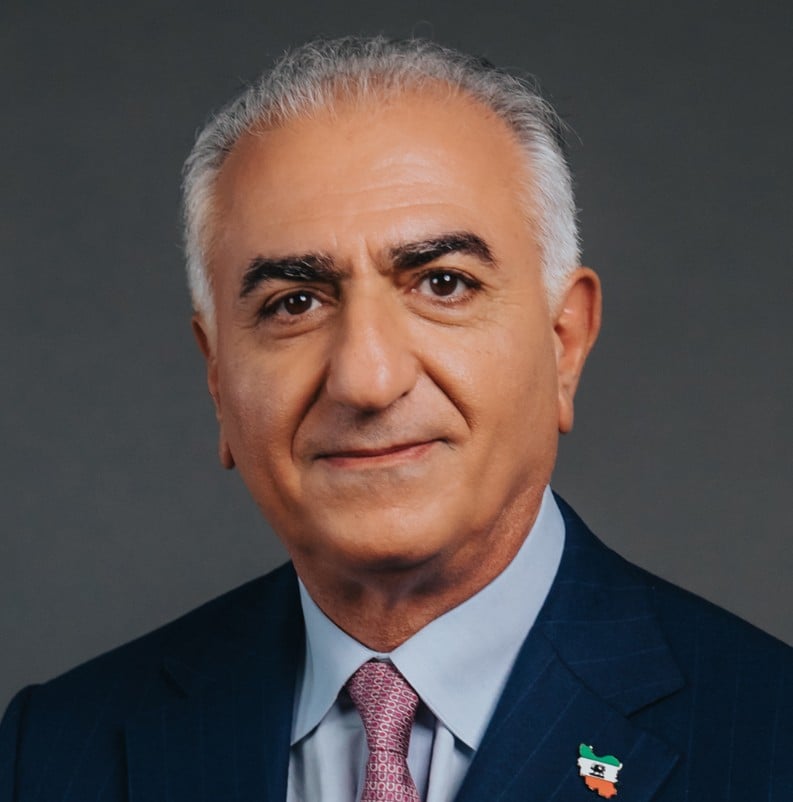
| Bio/Wiki | |
|---|---|
| Profession | Politician |
| Known for | Being officially named crown prince of Iran at the time of his father's coronation in 1967 |
| Physical Stats | |
| Height (approx.) | 6' (183 cm) |
| Eye Colour | Black |
| Hair Colour | Salt & Pepper |
| Career | |
| Political Party | 2013-2017: Iran National Council |
| Designation | 31 October 1980: Head of the House of Pahlavi |
| Honours | • Sovereign and Grand Collar of the Order of Pahlavi • Mohammad Rezā Shāh Pahlavi Coronation Medal • 25th Centennial Anniversary Medal • Persepolis Medal • Knight of the Royal Order of the Seraphim • Knight Grand Cross of the Order of Merit of the Italian Republic • Knight of the Collar of the Royal Order of Isabella the Catholic • Grand Cross of the National Order of the Legion of Honour • Grand Star of the Decoration of Honour for Services to the Republic of Austria • Grand Collar of the Royal Order of the Drum • Knight of the Supreme Order of the Most Holy Annunciation • Radio Farda's Person of The Year online poll • Key to the City of Beverly Hills (Los Angeles, California) |
| Personal Life | |
| Date of Birth | 31 October 1960 (Monday) |
| Age (as of 2025) | 65 Years |
| Birthplace | Tehran, Iran |
| Zodiac sign | Scorpio |
| Signature |  |
| Nationality | Iranian |
| Hometown | Tehran, Iran |
| School | Reza Pahlavi School, a private school located in the royal palace |
| College/University | • Williams College, Massachusetts • American University, Cairo • University of Southern California, United States |
| Educational Qualification | B.Sc. in Political Science (correspondence) from the University of Southern California (1985) |
| Religion | Shia Islam |
| Food Habit | Non-vegetarian |
| Controversies | • In 1990, Pahlavi and his financial advisor, Ahmad Ali Massoud Ansari, sued each other. Pahlavi accused Ansari of $24 million for the misappropriation of funds. Ansari claimed $1.7 million in security against Pahlavi. Pahlavi's lawyer said Pahlavi trusted Ansari due to political duties, and no one replaced Ansari in trust; however, Ansari betrayed him and became an Islamic Republic agent. Ansari denied the accusations and blamed Pahlavi for his luxurious lifestyle. In 1996, the court ruled that Ansari would pay $7.3 million to Pahlavi and $2 million fine. • In 1990, his former Imperial Guard, Ali Haydar Shahbazi, sued Pahlavi in a court in Alexandria, Virginia. He accused Pahlavi of breach of promise for financial care as per Iranian tradition. Shahbazi claimed that he once left a property worth $400,000 after Pahlavi promised full support better than his father. He said that he was fired in 1989 with a handshake and $9,000. Shahbadi demanded $30,000 and retirement pay. Pahlavi's lawyer stated in court that Shahbazi got thousands in gifts and luxury living in the Great Falls house. He was fired due to a money shortage. Pahlavi called him a loyal friend and offered him help. • In 1991, Judge Albert Vickers Bryan Jr. announced that Pahlavi was aware of the spending in the estate, and he was not liable for the deals made by servants. When the case was dismissed, Pahlavi cried in court. |
| Social Media | • Instagram • YouTube • Website |
| Relationships & More | |
| Marital Status | Married |
| Girlfriends/Affairs | Yasmine Etemad-Amini (1985) |
| Marriage Date | 12 June 1986 |
| Family | |
| Wife/Spouse | Yasmine Etemad-Amini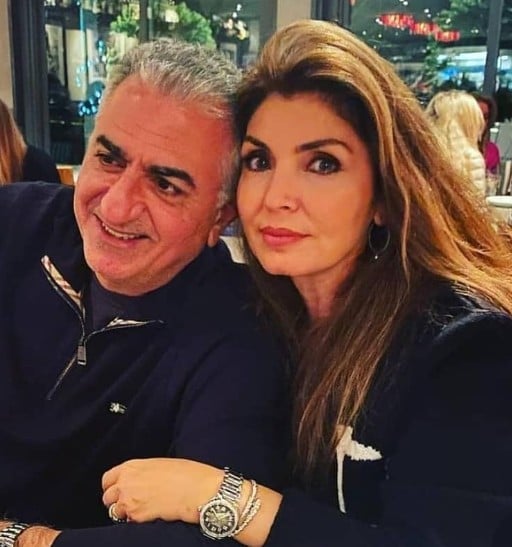 |
| Children | Daughter(s)- 3 • Noor Pahlavi (born on 3 April 1992)  • Iman Pahlavi (born on 12 September 1993) 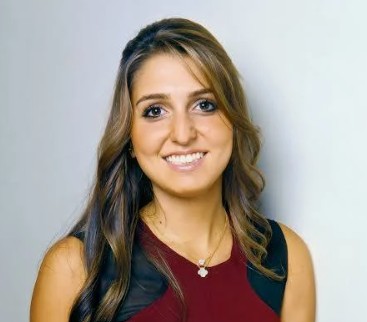 • Princess Farah Pahlavi (born on 17 January 2004) 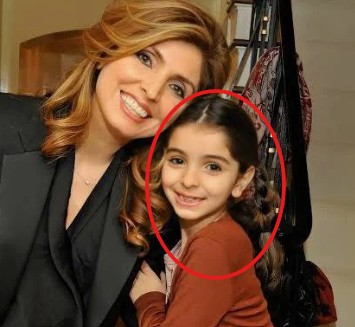 |
| Parents | Father- Mohammad Reza Pahlavi (was the Shah of Iran from 1941 to 1979)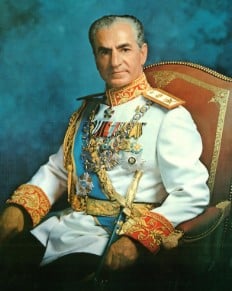 Mother- Farah Diba (the former Queen and last Empress of Iran and is the third wife and widow of the last Shah of Iran, Mohammad Reza Pahlavi) 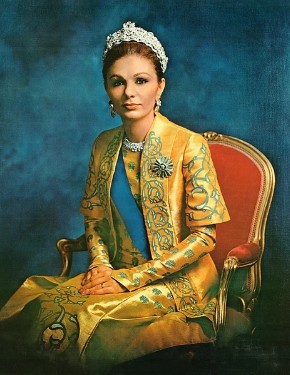 |
| Siblings | Brother- Ali Reza (deceased)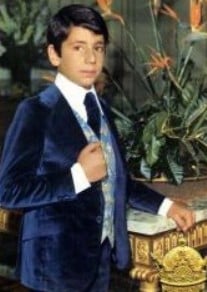 Sister(s)- 2 • Farahnaz Pahlavi 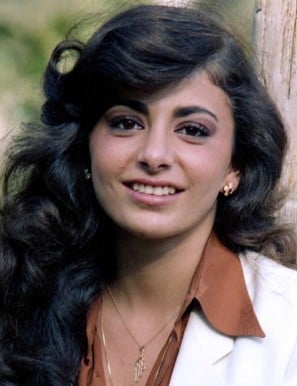 • Leila Pahlavi (deceased)  Half-sister- Shahnaz Pahlavi 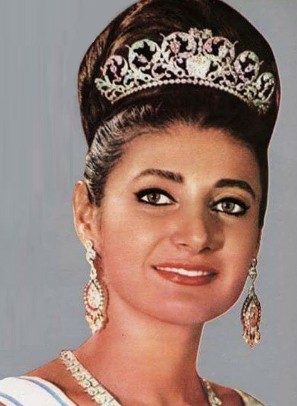 |
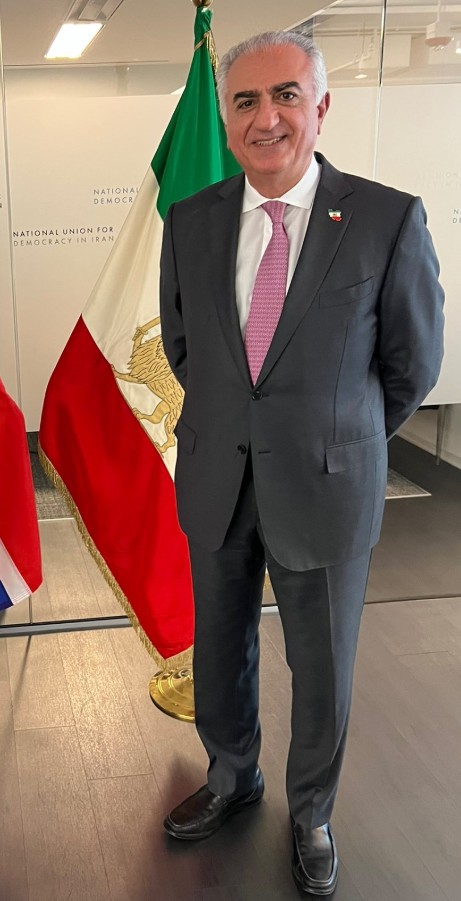
Some Lesser Known Facts About Reza Pahlavi
-
When Reza Pahlavi was born, his father, Mohammad Reza Pahlavi, released 98 political prisoners from Iranian jails, and the government announced a 20% cut in income tax.
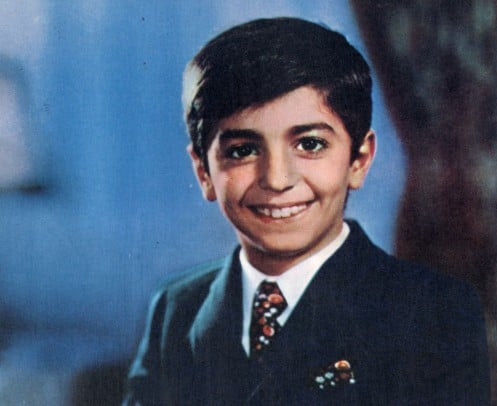
A childhood picture of Reza Pahlavi
-
As a kid, he was trained as a pilot. When he was eleven years old, he took his first solo flight and received his license when he was twelve years old.
-
When he was young, he loved playing and watching football. He supported the Esteghlal club in the capital, then called Taj or ‘Crown.’
-
He once supported the team on national television. The club organises rallies for him on his birthdays as he belongs to the Pahlavi regime. He also supports the Taj Abadan club.
-
In 1973, Reza Pahlavi joined the Imperial Iranian Air Force as a cadet.

Reza Pahlavi during his pilot training
-
In August 1978, he moved to the United States from Iran for pilot training. There, he joined a one-year program at Reese Air Force Base in Texas with 43 other cadets and flew Cessna T-37 Tweet and Northrop T-38 Talon planes.
-
He left the base in March 1979, four months before the completion of the program, due to the announcement of the Iranian Revolution.
-
In 1978, a media article reported that Pahlavi dated a blond, blue-eyed Swedish model whom he met in Rome. It added that he lived with his girlfriend in Lubbock, Texas.
-
In September 1979, he started studying at Williams College but dropped out in 1980.
-
He then enrolled at the American University in Cairo to study political science, but his attendance was irregular there. In 1981, he reportedly dropped out.
-
After that, he began studying Persian culture, history, philosophy, and oil in Iran under the guidance of Iranian professors.
-
In March 1980, Reza Pahlavi shifted to Cairo, Egypt, from Iran with his family.
-
When his father, Mohammad Reza Pahlavi, was sick and on his deathbed, some monarchists told the Shah to dismiss Reza as heir.
-
They advised him to announce his younger son, Ali Reza, as heir. Ali Reza was thirteen years old at that time. They suggested a regency council.
-
The monarchists claimed that Reza had no background, training, or interest in public affairs to succeed as a Prince. However, Shah rejected the idea.
-
He announced the decision in favour of his elder son.
- By 1980, he dated an Egyptian girl, who used to study at the American University, Cairo, and was often guarded by bodyguards.
-
On 27 July 1980, when his father died, Princess Farah Pahlavi, his sister, started calling herself a regent, who handles the office of a monarch.
-
Reza Pahlavi II stood first to succeed his late father.
-
His younger brother Ali-Reza Pahlavi II was second in line until he committed suicide in 2011.
-
Before Reza’s birth, his cousin Patrick Ali Pahlavi was the expected heir.
-
On 31 October 1980, when Reza Pahlavi turned twenty years old, he declared himself the new king of Iran, Reza Shah II, on his birthday.
-
He claimed that he was the rightful successor to the Pahlavi throne.
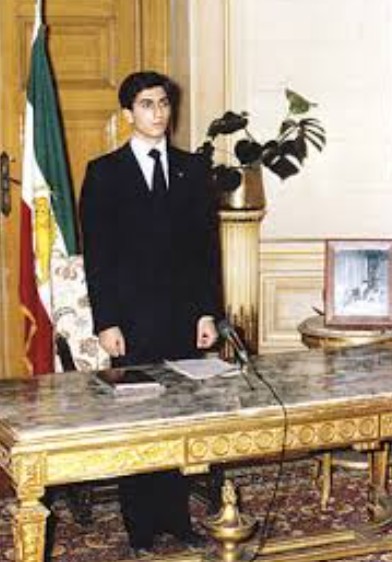
Reza Pahlavi’s swearing in as the new king of Iran on 31 October 1980 at Koubbeh Palace, Cairo
-
Soon after his statement, U.S. State Department spokesman John Trattner stated in a media conference that the U.S. did not support Reza Pahlavi.
-
The U.S. recognised the new post-revolutionary Iranian government.
-
In 1981, Pahlavi began living at Koubbeh Palace and started focusing on building his relationships with pro-monarchy groups.
-
During this period, other opposition groups, such as the left-wing, rejected him.
-
In March 1981, on the Persian New Year, he issued a statement in which he requested all the opponents of the Iranian government to unite and oppose the existing Iranian government.
-
In June 1981, the Iranian President Abolhassan Banisadr was removed from his position, and many officials were assassinated, including Chief Justice Mohammad Beheshti.
-
Reza Pahlavi stayed silent on the situation and issued no statement.
- In August 1981, Pahlavi said in a speech that he had secretly planned to destroy the Iranian government. He stated,
So far I have been unwilling to unveil the existence of the concerted plans for I do not wish to jeopardize the lives of some of our best children… many of our actions have been unknown to you, but I want to assure you that the necessary steps are being taken in the best orderly way to save Iran.”
-
In 1982, Yaakov Nimrodi, an Israeli businessman and intelligence officer, stated in a media conversation that he had worked with Adolph Schwimmer and Adnan Khashoggi, and they were planning to overpower the Iranian government with the support of Pahlavi and Gen. Said Razvani.
-
The goal of this planning was to make Pahlavi the ruler of Iran.
-
After that, Samuel Segev, an Israeli journalist, stated in the media that the CIA, along with the Israeli cabinet, had approved the plan.
-
The planning ended when Israeli Prime Minister Menachem Begin resigned in 1983, and the new leader, Yitzhak Shamir, thought Israel was interfering in the internal matters of Iran.
-
On 1 May 1986, Pahlavi claimed that he had formed a government-in-exile, which aimed to bring back a constitutional monarchy in Iran.
-
Pahlavi used his connections abroad to promote human rights, democracy, and unity among Iranians inside and outside Iran.
-
On his website, he posted that he would separate religion and state in Iran as he wanted free and fair elections for all freedom-loving people and political groups.
-
He requested all democratic groups to unite for a democratic and secular Iranian government.
-
In 2004, Pahlavi became an ‘unofficial godfather’ to Princess Louise of Belgium.
-
In 2009, in a media interview, he stated that he is a Shia Muslim by education and conviction.
- In 2009, a media report stated that Pahlavi had no organised followers inside Iran, and there was no real monarchist movement going on in Iran as Pahlavi was not in contact with any reformist intellectuals or students.
- Bob Woodward and others then reported that the CIA provided financial help to Pahlavi and Iranian exiles in the 1980s under Reagan. They pirated Iranian television for his ‘I will return’ speech.
- That same year, Pahlavi denied the claims but said that in 2017 accepted help from the US, Saudis, or Israelis to free Iran.
- In November 2014, Pahlavi launched a television channel and a radio network named Ofogh Iran TV.
-
In December 2018, he delivered a speech at the Washington Institute for Near East Policy, where he requested non-military help for the Iranians as he wanted to replace the Islamist regime with secular democracy.
-
Reportedly, he did not openly call for restoring the Peacock Throne, but he saw himself more as a symbol than a politician. He once said in a speech that he was ready to serve his country.
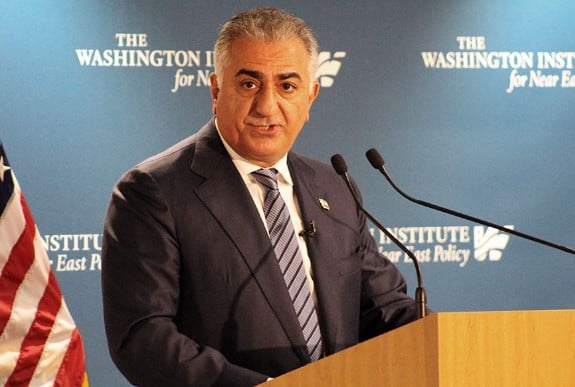
Reza Pahlavi while speaking at the Washington Institute for Near East Policy, in 2018
- In February 2019, Reza started the Phoenix Project of Iran. A media outlet claimed that the project aimed to unite opposition groups toward a shared plan for Iran.
-
In 2022, after the Abadan building collapse, several anti-government protests started in Iran, and Pahlavi predicted that the Islamist regime would soon fall.
-
He claimed in the media that several events showed the mismanagement of the Iranian government, including the shooting down of Ukraine International Airlines Flight 752, bans on foreign COVID-19 vaccines and tests, which caused many deaths, and raised food prices.
-
He advised the Iranian armed forces to work peacefully against the Islamic Republic and called for unity against the Islamic regime.
- Many protesters organised rallies and demanded the monarchical regime in Iran. While acknowledging their support, he claimed in the media,
The most important thing I do in response to the Iranian people’s trust is to reinforce their voices. I don’t tell them what to do. I’m not a political leader.”
-
In January 2023, New York-based Iranian scholar Arash Azizi stated that many young Iranians supported Pahlavi on social media and at protests. He had the societal backing through opposition leaders and celebrities against the regime.
-
In 2023, an article by the University of Navarra claimed that he had internal support in Iran.
-
In February 2023, Pahlavi requested in a media conversation that the British and European governments should ban the Islamic Revolutionary Guard Corps (IRGC).
-
After that, many Iranian reformists raised their voices to remove the Islamic regime fully, and not just change it. Many opposition leaders chose him to lead a new government.
-
He often claims in his public speeches that only Iranians would decide on the monarchical regime, and he would not fight to occupy office if the regime fell.
-
Pahlavi once stated in a media interview that the only challenge for a new secular and liberal democratic Iran would be to control the military and fight for justice against regime officials.
-
He said that the top Islamic regime members would be given harsh punishments for human rights abuses, and the lower-ranking officials would be pardoned so that they could rejoin society.
-
He gave an example of the Nuremberg trials, where the top Nazi officials were arrested, and the lower-ranked officials rejoined Germany.
-
He mentioned the set-up of the Truth and Reconciliation Commission in South Africa after the end of apartheid.
-
In March 2023, Pahlavi toured the UK and delivered a lecture at the Oxford Union, where he said that secularism comes first before democracy, and Islamic regimes fail because they reject freedom of religion.
-
He demanded to restore Internet access in Iran so that the opposition groups could link. He requested non-violent ways to demolish the Iranian regime.
-
After that, a big crowd protested in his support and called for him to return as leader.
-
On 11 February 2023, Pahlavi requested that all Iranians across the globe protest on the 44th anniversary of the Islamic Republic. Consequently, several rallies happened in many cities in the US, Europe, Australia, and Canada.
-
Pahlavi joined a rally organised in Los Angeles with more than 80,000 people.
-
On 17 April 2023, he and his wife, Yasmine, toured Israel to rebuild old relations between Iran and Israel. There, he visited the Western Wall and Yad Vashem for Yom HaShoah.
-
He met President Isaac Herzog and Prime Minister Benjamin Netanyahu of Israel.
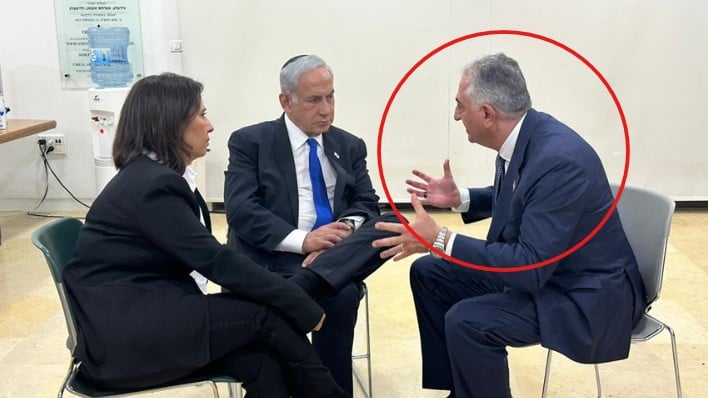
Reza Pahlavi, during his visit to Israel, while talking to Benjamin Netanyahu
-
He then visited the Dee family in Efrat, West Bank, to offer condolences after a terror attack killed sisters Maia and Rina and their mother Lucy during Passover.
- He attended a ceremony at the National Holocaust Memorial and Museum with Israel’s President and Prime Minister.
-
A media outlet reported that the Iranian monarchy movement had an open partnership with Israel.
-
In 2023, a petition by Change.org received more than 460,000 signatures to declare Reza Pahlavi as a transition representative.
- On 6 April 2024, Pahlavi and his wife, Yasmine, visited the Bhandara Atash Kadeh Zoroastrian temple in Houston. He stated Zoroastrianism had a connection to Iranian history.
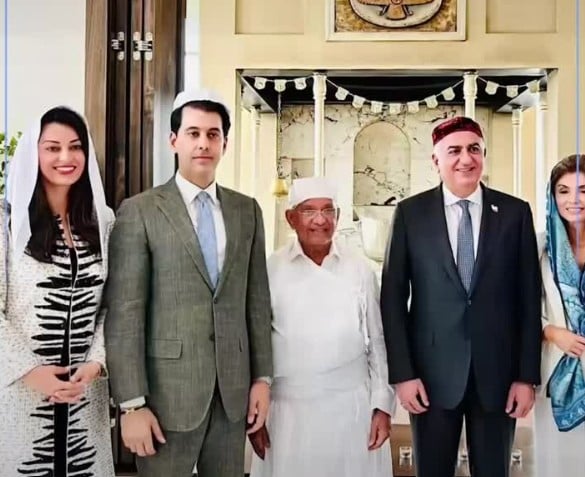
Reza Pahlavi at the Bhandara Atash Kadeh Zoroastrian temple
-
In July 2024, he delivered a speech at the National Conservatism Conference in Washington, D.C., where he blamed the Iranian regime for spreading radical Islam after the revolution in the Middle East and West.
-
He stated that Masoud Pezeshkian was no longer liberal due to his connections with Hezbollah.
-
He warned the US for its military action against the Iranian regime and demanded no interference in Iran’s internal matters, seeking US partnership and friendship, not patronage or funding.
-
During a media interview, he once urged the UK to announce the IRGC a terror group for supporting Hezbollah, Hamas, Houthis, and destroying Zan Zendegi Azadi.
-
In 2024, a poll by the American Institute showed that about 80% of Iranians prefer Pahlavi over the Islamic Republic leaders.
-
In January 2025, he asked US President Donald Trump to avoid a nuclear deal with the regime.
-
During the 2025 Iran-Israel war, when Iran’s internet was temporarily cut, Pahlavi called it the panic of Israel, not strength. He claimed that the destruction of Iranian airbases and jets was a huge loss.
-
In February 2025, during a media conversation, he urged Europe and the US to prepare for the collapse of the Tehran regime.
-
That same month, the Munich Security Conference invited Pahlavi; however, it withdrew the invitation after pressure from the Islamic Republic.
-
When a second invite also got cancelled, then Pahlavi called it a betrayal of the democratic values of the Iranians and Germans.
-
On 18 February 2025, he attended the Munich Convergence Summit with Iranian opposition groups. He said that the goal of attending the summit was to attain Iran’s salvation and future free elections.
- Pahlavi spoke about Iran’s inequalities, energy crises, drying rivers, and air pollution.
-
After that, Pahlavi supporters held a protest at the Munich conference and chanted against the EU’s soft corner for Iran. The protesters chanted,
This is the last battle, Pahlavi will return.”
- At that time, Tehran neighbourhoods started protests and chanted,
Death to the dictator!” and “Death to the Islamic Republic!”
-
These protests gathered thousands of people, after which the communication system of Iran was cut off.
-
He then claimed in the media that Iranians would pick any rule type, such as monarchy or republic, through a referendum. He said that the separation of religion and state would lead to democracy in Iran.
-
A poll by GAMAAN from 158,000 Iranians found that 80% wanted a democratic government over the Islamic Republic. The poll showed that Pahlavi was a top transition council candidate with 32-40% support out of 34.
-
He told European MPs that after the abolition of the regime in Iran, it would ally with Europe and the West.
-
During the post-regime chaos, Pahlavi stated that Iran is an ancient civilisation, not Iraq or Afghanistan.
-
In June 2025, in a media interview, he promised a lawful transition with equal rights for all Iranians, regardless of religion, ethnicity, or belief.
-
On 17 June 2025, during the Iran-Israel war, Pahlavi stated that the Islamic Republic would fall soon, as there were internal splits and defections in the regime.
-
He added that the Iranians would soon win freedom. He requested the Iranian military to join the people’s change movement.
-
He then received criticism for calling Israeli attacks an opportunity from other opposition figures and Iranian political prisoners.
- The investigations by Haaretz and Citizen Lab once claimed that some Israeli networks use AI, fake accounts, and PR to promote Pahlavi as post-regime leader.
 Sampoornesh Babu (Actor) Height, Weight, Age, Girlfriend, Wife, Daughters, Biography & More
 Ranneeti: Balakot & Beyond Actors, Cast & Crew
 Ishita Kishore (UPSC Topper) Age, Caste, Boyfriend, Family, Biography & More
 Jag Bains (Big Brother Season 25) Height, Age, Family, Biography
 Meena Rana Age, Husband, Family, Chidren, Biography & More
 Jeremiah Brown (Love Island USA) Height, Age, Family, Biography
 Subir Gokarn Age, Biography, Wife & More
 Raj Chakraborty (Actor) Height, Weight, Age, Girlfriend, Wife, Biography & More