
Biren Kumar Basak Age, Wife, Children, Family, Biography
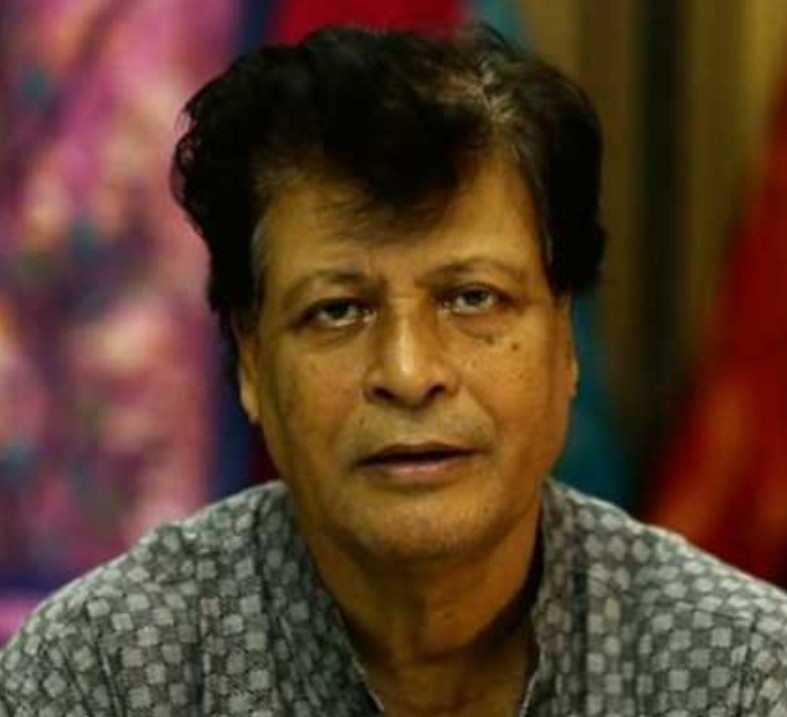
| Bio/Wiki | |
|---|---|
| Profession | Handloom Weaver |
| Known for | Making the world's longest saree (3726 meters long) for which he won the Guinness book of world records |
| Physical Stats | |
| Eye Colour | Black |
| Hair Colour | Salt & Pepper |
| Career | |
| Award(s) | • Padma Shri (2021) • Shanta Prasad Award for Excellence in Textile Crafts (2019) • Sant Kabir Award by the Union Ministry of Textiles (2013) 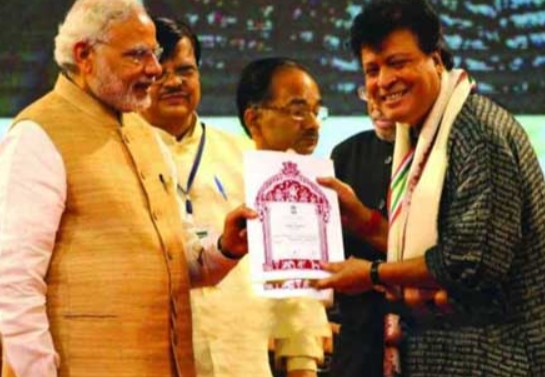 • National Award For Design Development • National Award For Market Development |
| Personal Life | |
| Date of Birth | 16 May 1951 (Wednesday) |
| Age (as of 2026) | 75 Years |
| Birthplace | Tangail, East Pakistan (now Bangladesh) |
| Zodiac sign | Taurus |
| Nationality | Indian |
| Hometown | Nadia, West Bengal |
| School | Shibnath High School, Tangail, Bangladesh (upto class 6th) (1961) |
| Religion | Hinduism |
| Food Habit | Non-vegetarian |
| Social Media | • Instagram |
| Relationships & More | |
| Marital Status | Married |
| Marriage Date | Year, 1977 |
| Family | |
| Wife/Spouse | Bani Basak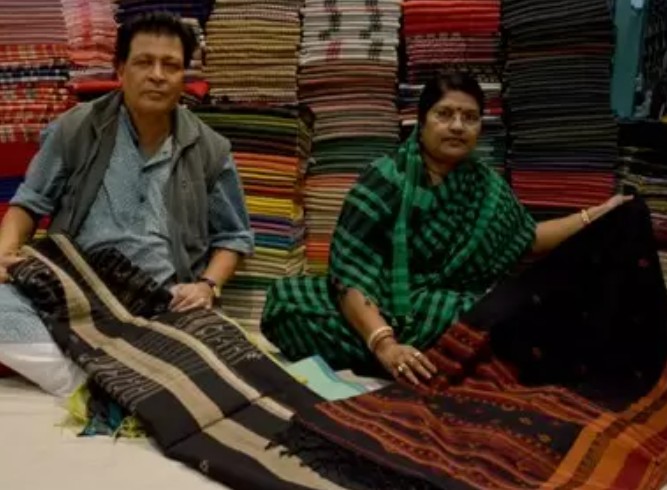 |
| Children | Son- Abhinaba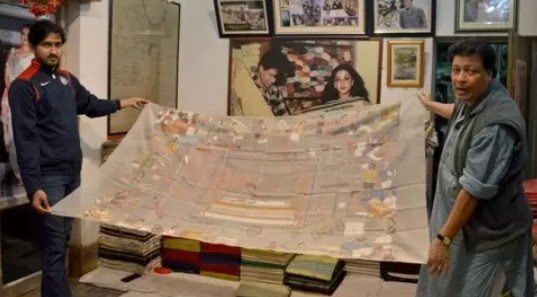 |
| Parents | Father- Banko Bihari Basak (weaver of Tangail and Jamdani sarees, poet) Mother-(homemaker) 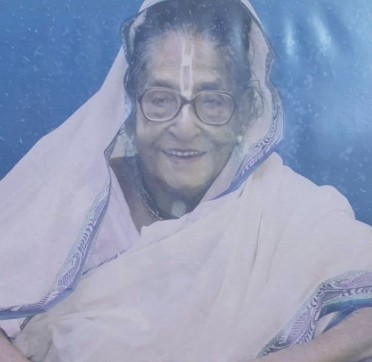 |
| Siblings | Brother(s)- 3 Dhiren Kumar Basak (businessman) Sister(s)- 2 |
| Style Quotient | |
| Car Collection | Toyota Etios |
| Money Factor | |
| Net Worth (approx.) | Rs. 50 Crore (as of 2021) |
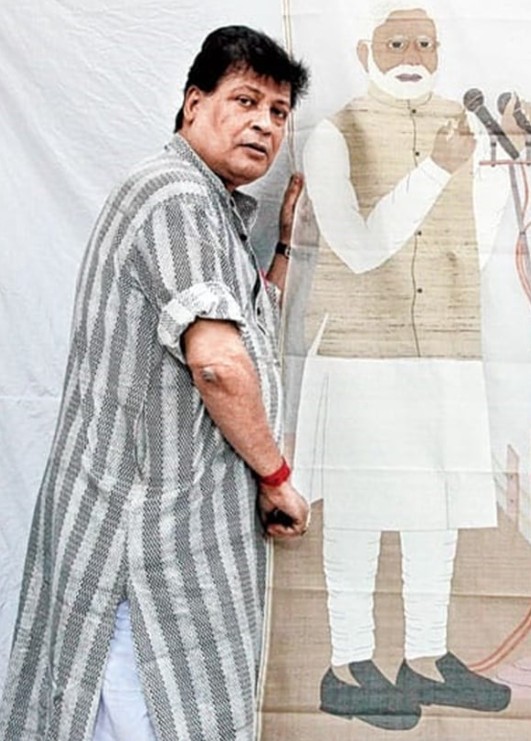
Some Lesser Known Facts About Biren Kumar Basak
- His father was a poet, who earned Rs. 10 for a session, which was not enough for his family. It was very difficult for his father to arrange food for his family.
- However, they had a small piece of land where his family used to produce agricultural grains.
- As a child, Biren Kumar Basak learnt hymns from a local priest during his school days. He had a spiritual interest from an early age.
- When he was eight years old, he started learning weaving cotton yarn on a pick- loom.
- In 1962, his family moved from Tangail, Bangladesh, to West Bengal, India, during community riots as it became risky for his family to survive in Tangail during day time.
- When they reached Alipurduar in North Bengal after crossing the border, his father had no money left with him.
- His father then sold Biren Kumar’s gold chain so that they could buy food to eat.
- After that, they had no money to buy the tickets of the train, so they travelled to Phulia, West Bengal, by sitting on the floor of the train.
- In Phulia, his family lived a poor life; therefore, he quit his studies.
- After that, Biren Kumar Basak started working as a sari weaver at a local factory when he was 13 years old. During this time, he used to earn Rs. 2.50 per day.
- He worked as a weaver in the same unit for eight years and supported his family with his income.
- In 1970, he took a loan of Rs. 10000 to start his own business. He mortgaged the house of one of his brothers, who had bought it in 1968.
- After that, Biren Kumar Basak, along with his elder brother, Dhiren Kumar Basak, started buying saris from local vendors to sell them in Kolkata.
- They travelled everyday by train for their business.
- In Kolkata, they walked door-to door for several kilometres, carrying approximately 80-90 kgs of saris.
- They worked day and night, sold good quality saris for less prices to attract customers.
- He once stated in a medial talk that he and his brother used to sell saris door-to-door for Rs. 15 to Rs. 35 each. Biren Kumar Basak said,
We used to take a train to Kolkata early morning every day. In the city, I and my brother used to walk down the streets carrying bundles of sarees, knocking on door to door to sell them. Gradually we developed a huge clientele.”
- In 1978, they started earning more than Rs. 50,000 as profits.
- In 1981, they bought a shop worth Rs. 5 Lakh in South Kolkata.
- In 1985, they began selling saris in that shop and named it Dhiren and Biren Basak and Company.
- Within a year, in 1986, they earned a turnover of Rs. One Crore.
- Soon, they decided to work separately. In 1987, Biren moved to Phulia from Kolkata with a savings of Rs. 80 Lakhs.
- Once, during a media conversation, Biren Kumar Basak said that he returned to his village as he liked rural life. He said,
I returned to my village because I loved rural life and lived in Kolkata only for livelihood. After ending my association with my brother, I decided to return to my roots.”
- In his village, he started learning singing devotional songs and opened a wholesale sari shop named Biren Basak and Company at his house in 1987.
- Biren Kumar Basak started designing and manufacturing his own saris with his eight employees.
- Reportedly, nearly 800 weavers started working with him. He contacted several sari dealers across India and marketed his new venture.
- In 1995, he studied the book Ramayan (Krittibasi) and picked some scenes from it to weave first Dakai sari.
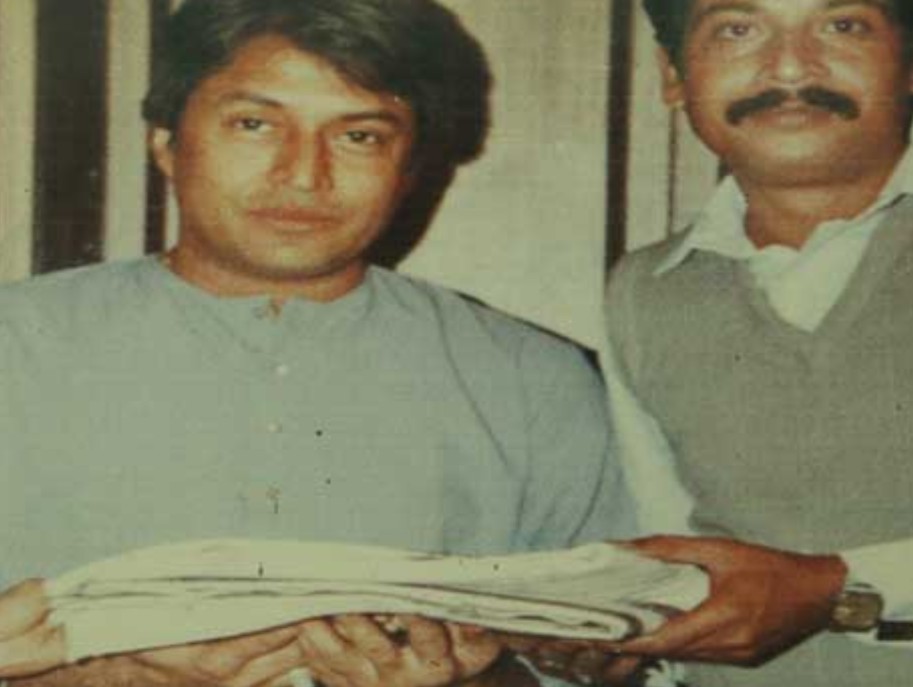
An old picture of Biren Kumar Basak (left) with his saris
- He used muslin kora for the warp and tussar silk for the weft.
- In 1998, Biren Kumar Basak completed the sari after 2.5 years. His name was then entered in the Limca Book of Records.
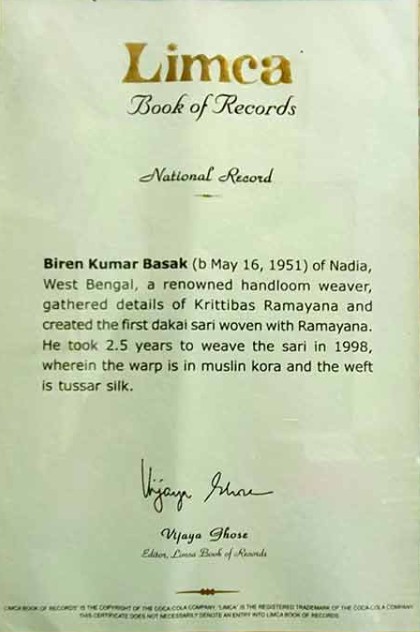
Biren Kumar Basak’s certificate for Limca Book of Records
- In 2009, he received a certificate of merit for developing a Jamdani Shree craft.
- According to him, his designed more creative saris than his brother, Dhiren. So, several customers preferred Biren’s saris, and stopped purchasing from Dhiren, whose sales declined.
- In 2013, Biren Kumar Basak received the fourth highest civilian award of India, Padma Shri, for his artistic work.
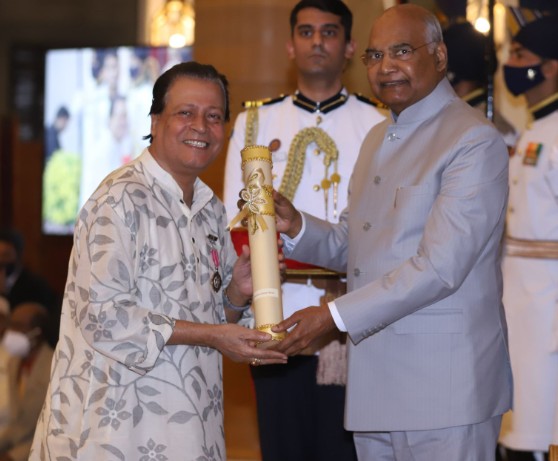
Biren Kumar Basak while receiving Padma Shri Award
- Many noted Indian celebrities get their clothes from him. These celebrities included Satyajit Ray, Hemanta Mukhopadhyay, Mamata Banerjee, Sourav Ganguly, Amjad Ali Khan, Lata Mangeshkar, and Asha Bhosle.
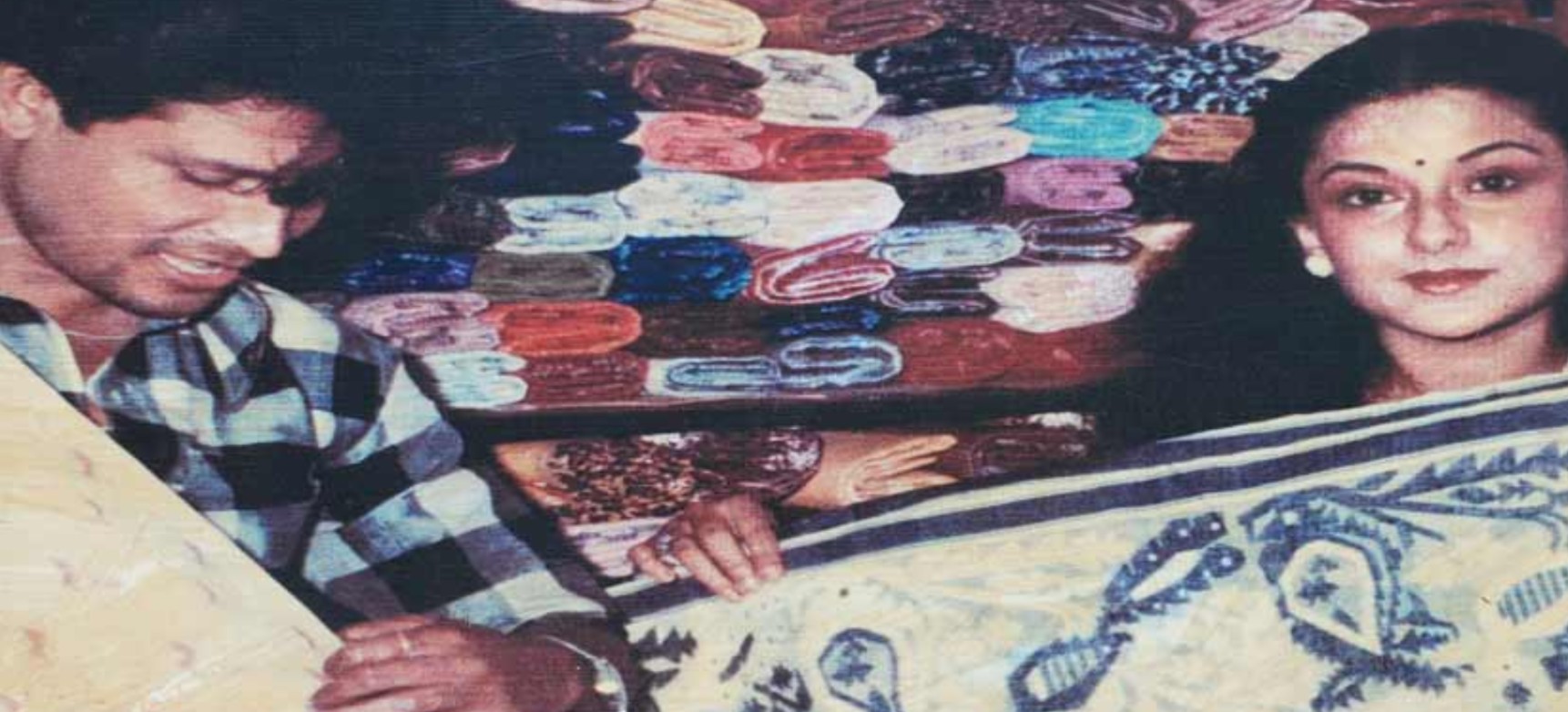
An old picture of Biren Kumar Basak while showing saris to a celebrity
- In 2014, Biren Kumar Basak made a sari with tussar and muga silk threads. It showed different moods of Lord Ganesha with Jamdani work.
- He used green, rust, pink, black, and yellow colors to make this sari. He completed the sari in 1.2 years.
- After that, his name was entered in the India Book of Records.
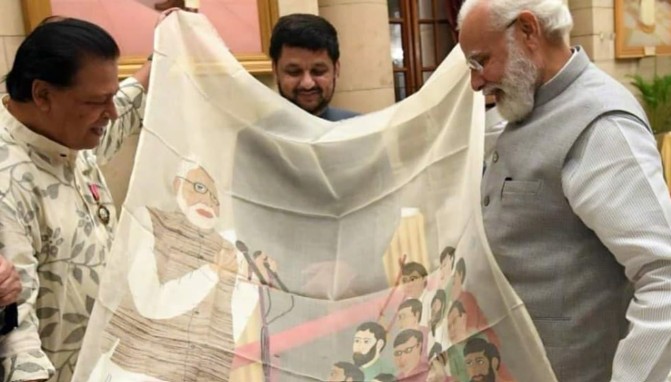
Biren Kumar Basak while gifting a shawl to Prime Minister Narendra Modi
- In 2016-2017, reportedly, his turnover was approximately Rs. 50 Crores.
- In 2018, Biren Kumar Basak made a guiness book record by making a 3726.43 m long sari.
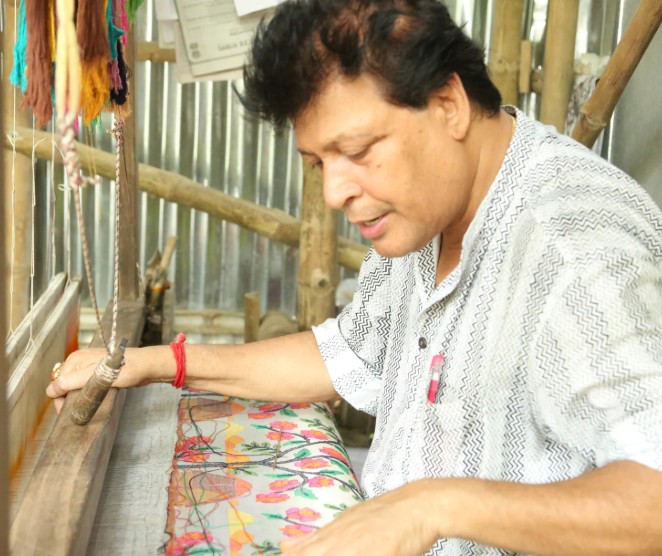
Biren Kumar Basak while weaving a sari
- Once, during a media talk, he stated that his son started a small thread business on his own. Biren did not allow his son to enter his business, as he wanted him to learn the value of hard work and money. Biren said,
The motive is to teach him how tough it is to earn money in life. He will enter my business once he realises the importance of money, as only then can he hope to succeed.”
- In April 2026, Biren Kumar Basak made headlines when Nita Ambani wore his Jamdani sari worth Rs 11 Lakhs at TIME 100 Summit, which was organised in New York.

Nita Ambani while wearing the Jamdani sari at TIME 100 Summit
 Rajesh Agarwal (Micromax) Age, Wife, Family, Biography & More
 Jay Mehta (Businessman) Age, Family, Wife, Biography & More
 Nita Ambani Height, Age, Husband, Children, Family, Biography
 Rizwan Sajan Age, Wife, Children, Family, Biography
 Ness Wadia Age, Wife, Girlfriend, Family, Biography
 Dorabji Tata Age, Death, Caste, Wife, Children, Family, Biography & More
 Mukesh Ambani Net Worth: Assets, Income, Houses, Cars, Jet Planes
 Anil Ambani’s House – Photos, Area, Interior, Address & More