
Ali Khamenei Age, Death, Wife, Children, Family, Biography
Quick Info→
Death Cause: Assassination (Airstrike)
Age: 86 Years
Wife: Mansoureh Khojasteh Bagherzadeh
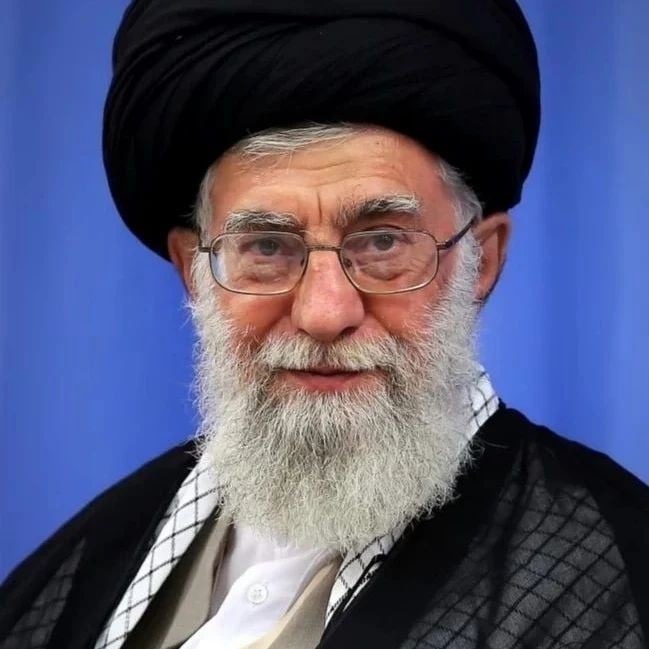
| Bio/Wiki | |
|---|---|
| Full Name(s) | • Ali Hosseini Khamenei • Ayatollah Ali Khamenei |
| Other Name | Sayyid Ali Khamenei |
| Profession(s) | • Politician • Islamic Clergy |
| Famous for | Being the 2nd Supreme Leader of Iran |
| Physical Stats | |
| Height (approx.) | 5' 9" (175 cm) |
| Eye Colour | Black |
| Hair Colour | Gray |
| Politics | |
| Political Party | • 1979-1987: Islamic Republican Party • 1977–1989: Combatant Clergy Association • Since 1989: Independent |
| Political Journey | • July - 6 November 1979: Vice minister of National Defence • 28 May 1980 – 13 October 1981: Member of the Islamic Consultative Assembly • 15 August 1983 – 4 June 1989: Member of the Assembly of Experts • 7 February 1988 – 4 June 1989: 1st Chairman of the Expediency Discernment Council • 9 October 1981 – 16 August 1989: 3rd President of Iran • 6 August 1989 - present: 2nd Supreme Leader of Iran |
| Military service | |
| Country | Islamic Republic of Iran |
| Branch/service | • 1979–1980: Islamic Revolutionary Guard Corps • 1980–1981: Irregular Warfare Headquarters |
| Commands | Revolutionary Guards |
| Battles/wars | Operation Samen-ol-A'emeh in the Iran–Iraq War |
| Personal Life | |
| Date of Birth | Actual date: 19 April 1939 (Wednesday) Certificate date: 16 July 1939 (Sunday) |
| Birthplace | Mashhad, Khorasan, Imperial State of Iran |
| Date of Death | 28 February 2026 |
| Place of Death | Tehran, Iran |
| Age (at the time of death) | 86 Years |
| Death Cause | Assassination by airstrike |
| Zodiac sign | As per actual date: Aries As per certificate date: Cancer |
| Signature |  |
| Nationality | Iranian |
| Hometown | Mashhad |
| Education | • Hawza of Mashhad • Khorasan Seminary • Najaf Seminary • Qom Seminary |
| Educational Qualification | Islamic Clergy |
| Religion/Religious Views | Islam |
| Denomination | Twelver Shiʿa |
| Jurisprudence | Ja'fari |
| Creed | Usuli |
| Food Habit | Non-vegetarian |
| Social Media | |
| Relationships & More | |
| Marital Status (at the time of death) | Married |
| Marriage Date | Year, 1964 |
| Family | |
| Wife/Spouse | Mansoureh Khojasteh Bagherzadeh (deceased) |
| Children | Son(s)- 4 • Meysam • Masoud • Mostafa 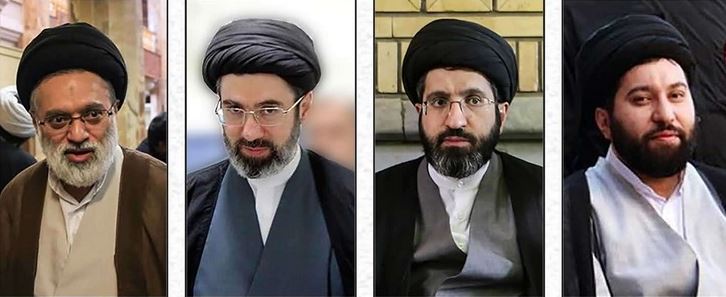 • Mojtaba 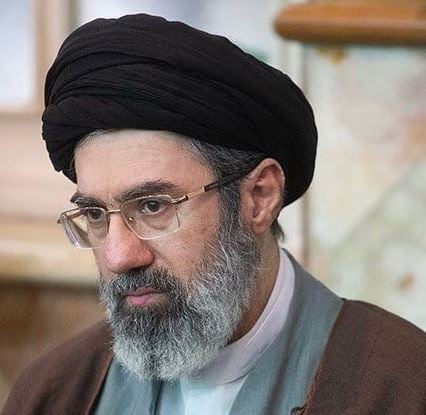 Daughter(s)- 2 • Boshra • Hoda |
| Parents | Father- Seyed Javad Khamenei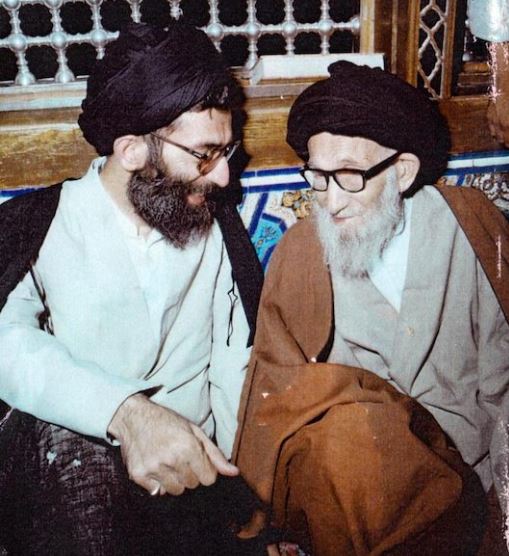 Mother- Khadijeh Mirdamadi |
| Siblings | Brother(s)- 3 • Mohammad (elder) • Hadi Khamenei (younger) Sister-4 • Fatemeh Hosseini Khamenei (elder) • Badri Hosseini Khamenei Note: He was the second son of the family. |
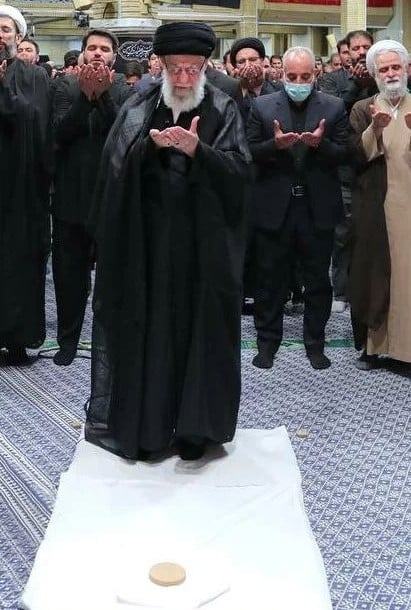
Some Lesser Known Facts About Ali Khamenei
- Ali Khamenei was born into a religious family. His father was an Alim. Their house was in a poor neighbourhood and measured only 65 square meters.
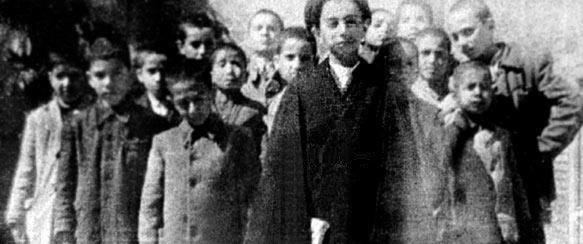
A childhood photo of Ali Khamenei
- He was a cleric then but had more interest in politics than religion.
- When he was 13 years old, he met famous Islamic revolutionary Sayyid Mojtaba Navab Safavi (Mirlohi) in Mashhad which made him interested in revolution.
- In 1957, he went to Najaf, Iraq, to study. When he heard the news that his father had lost vision in one eye and couldn’t study properly, he returned to Mashhad.
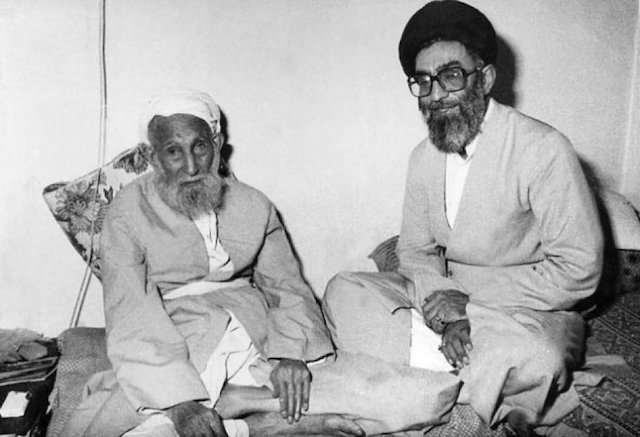
Ali Khamenei with his father after returning to Mashhad
- In January 1964, Khamenei was arrested first time by SAVAK, then Iran’s intelligence agency, and taken to Theran where he was in solitary confinement for 2 months.
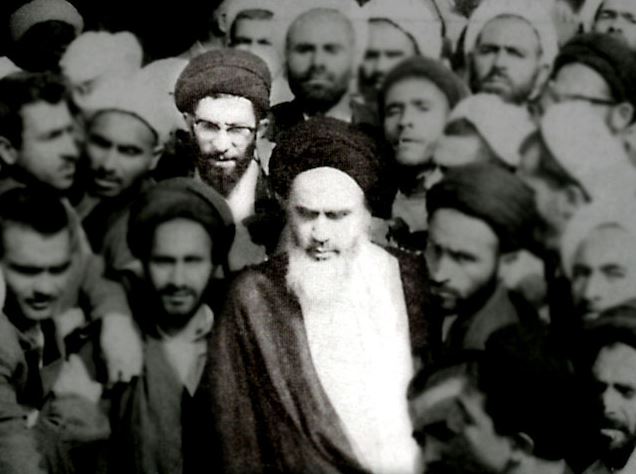
Ali Khamenei after his release from his first jail time
- In 1975, SAVAK arrested him for the 6th and final time and confiscated his books and notes. He was freed months later.
- In 1976, he was sentenced to exile for 3 years but returned to Iran in 1978.
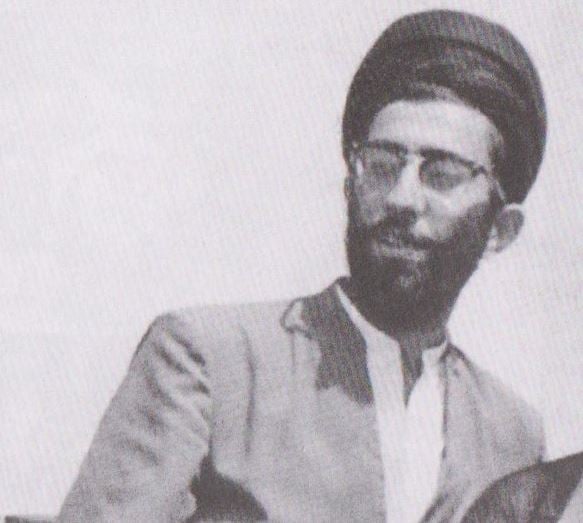
Ali Khamenei during his early 20s
- Khamenei led the 1979 Iranian Revolution that ended by overthrowing Mohammad Reza Pahlavi, the Shah of Iran.
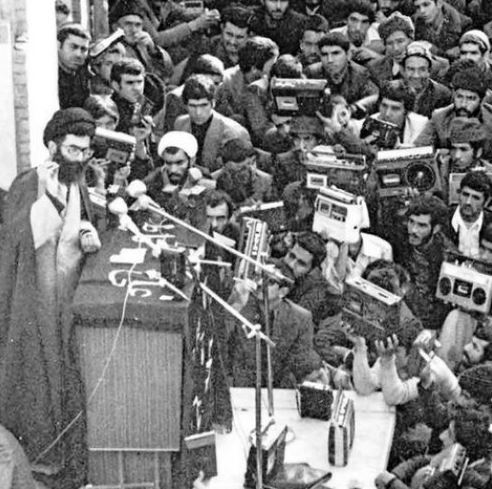
Ali Khamenei giving a speech during the Iranian Revolution
- Since 14 April 1979, he has been the head of servants of Astan Quds Razavi.
- On 27 June 1981, he survived an assassination attempt by Mujahedin-e Khalq. It was Saturday, and he had gone to Aboozar Mosque. After giving his lecture to young people, he asked them to write their questions on paper and put them on a table.
- One person kept a tape recorder on the table which made a whistling sound for a few seconds and then exploded. Inside the recorder, a message ‘A gift of Furqan Group to the Islamic Republic’ was pasted.
- His arms, lungs, and vocal cords were seriously injured. He was immediately rushed to a hospital where he was treated for several months. But his right arm didn’t recover and became useless for him. Due to this, he uses his left arm for everything.
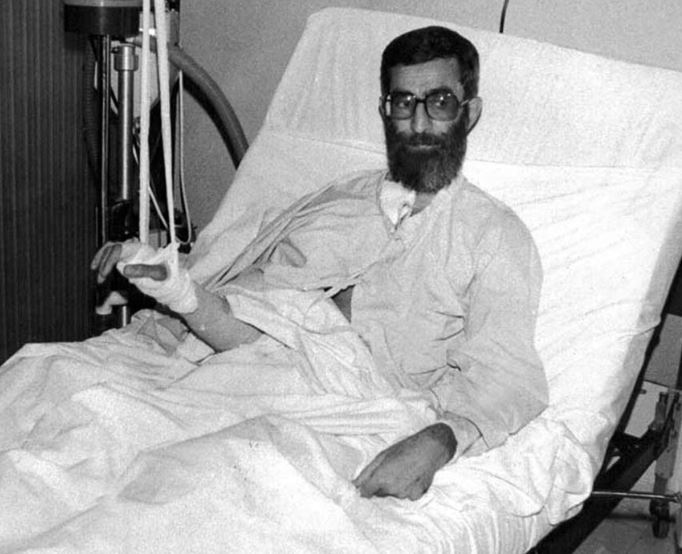
Ali Khamenei in hospital after assassination attempt
- In October 1981, he became the President of Iran for the first time with a 97% vote in his favour. He was the first cleric to reach the position.
- He had a liking for poetry and literature. When he lived in Mashhad during his early years, he often used to visit the literary meetings and used to criticise the poems being recited.
- In his first Presidential address, he said that he would eliminate liberalism and American leftists from the country.
- On 4 June 1989, he succeeded Ayatollah Khomeini as the Supreme Leader of Iran. Though many grand ayatollahs opposed his appointment as he was not a marja or ayatollah, the assembly of experts altered their constitution for him.
- The Society of Seminary Teachers of Qom made him the new marja in 1994.
- Over time, he became a key figure in all important Iranian organisations, governmental or private.
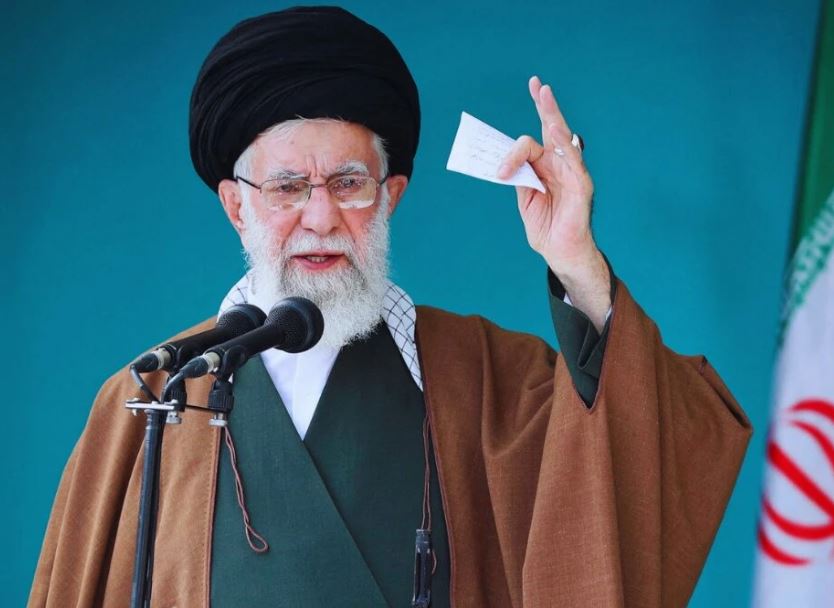
Ali Khamenei, during a public address as the Supreme Leader of Iran
- In 1996, he issued a fatwa to ban teaching music in the state-run schools, claiming it was against Islam.
- In 1999, he permitted the use of third parties (donor sperm, ova or surrogacy) in fertility treatments and issued a fatwa. He ruled in 2002 that Islam allows stem cell research for creating body parts unless a full body is made using it.
- In 2005, he made headlines all over the world when he issued a fatwa against nuclear weapons, forbidding their production, stockpiling, and use. In 2010, the fatwa was updated and titled ‘Prohibition of Weapons of Mass Destruction.’
- However, he did mention that Iran was free and willing to develop nuclear technology for civil purposes, as the country cannot depend on oil forever.
- In 2007, he started a privatisation drive for all state-run companies, which included 3 banks, 1 telecommunications company, and many oil and petrochemical organisations.
- There have been many controversies regarding Khamenei’s net worth. In 2013, the British news agency Reuters claimed that he controlled a US $95 billion fund of ‘Headquarters for Executing the Order of the Imam’ or ‘Setad’ for his expenses.
- According to Reuters, he used the money for his Beit Rahbari compound, which has more than 500 stewards.
- The Iranian officials claim those claims were bogus, and Setad works exclusively for charity in the education, healthcare, and housing sectors.
- On 9 September 2014, he underwent prostate surgery.
- In 2017, he banned women in the country from riding bicycles in public by issuing a fatwa against it.
- Ali Khamenei had very strict rules about Iran’s foreign policy. Anyone who wanted to meet him must travel to Iran; he did not travel outside the country.
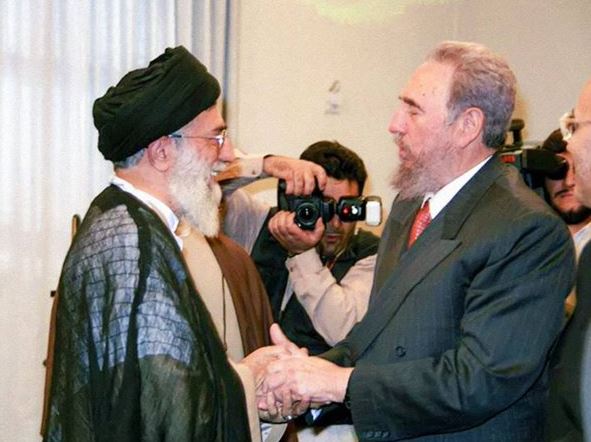
Ali Khamenei meeting Fidel Castro in Tehran
- In September 2022, he underwent surgery for bowel obstruction.
- He was known for writing several open letters to the Iranian people and supporters across the world. On 30 May 2024, he wrote a letter to students across the USA protesting Israel’s military action against Hamas in Palestine and showed solidarity with them.
- Khamenei was accused of orchestrating the killings of more than 160 defectors. He, however, refuted those claims, calling such rumours propaganda against him.
- There had been many protests, including the 1999 Iranian Student protests and 2022 Mahsa Amini protests during his 3-decade-long rule as Supreme Leader of Iran.
- Many people accused of being in the Baháʼí faith had been his opponents, and he had passed legislation against them to lower their influence.
- Several people have been jailed in Iran for criticising Khamenei. In 1996, a journalist named Abbas Maroufi was jailed, banned from working as a news reporter, his literary monthly Gardoon was closed, and sentenced to 35 lashes and 6 months imprisonment.
- He was a vocal critic of LGBTQ+ and had often criticised them.
- He wasknown for his anti-Western and anti-zionist stance, particularly against the USA and Israel.
- Ali Khamenei wrote many books, including The Charter of Freedom and Honest Leader.
- With a 35-year reign as Supreme Leader of Iran, Ali Khamenei became the longest-serving head of state in the Middle East. He was also the commander of the chief of Iran’s armed forces.
- In November 2024, news began circulating that he had fallen severely ill, amidst the Iran-Israel conflict, and that the Iranian government’s senior leaders had selected a candidate suitable to replace him. The reports also claimed that he had slipped into a coma.
- During the 2025-2026 nationwide protests in Iran, which were driven by economic hardship, rising inflation, and the collapse of the rial, Khamenei became the main focus of public anger.
- During the 2025-2026 protests, the government shut down the internet to curb coordination and coverage. Security forces killed at least 500 protesters, possibly over 2,000, and Iran International reported the crackdown followed his direct orders.
- On 17 January 2026, Khamenei admitted that several thousand people had died in the unrest. He, however, blamed the United States and Israel for the protests and for supplying weapons. Reportedly, he had a backup plan to flee to Moscow if his rule collapsed.
- On 28 February 2026, the United States and Israel launched joint missile strikes on Iran under Operation Epic Fury (by the U.S.) and Operation Roaring Lion (by Israel) to weaken its military and leadership amid rising tensions over its nuclear and missile activities.
- On 28 February 2026, Foreign Minister Abbas Araghchi stated that Khamenei was alive. However, later that same day, an Israeli official claimed his body had been found. Soon after, United States President Donald Trump publicly announced that he had been killed.
- On 1 March 2026, Iranian state television confirmed that Ali Khamenei died around 5 a.m. IRST in his office, and that his daughter, son-in-law, daughter-in-law, and grandchild were also killed. The government then declared 40 days of national mourning.
 Donald Trump Height, Age, Wife, Children, Family, Biography
 Barack Obama Height, Age, Wife, Children, Family, Biography & More
 Kamala Harris Height, Age, Husband, Children, Family, Biography
 Joe Biden Age, Wife, Children, Family, Biography
 Benjamin Netanyahu Age, Wife, Children, Family, Biography
 Narendra Modi Height, Age, Caste, Wife, Family, Biography
 Vladimir Putin Height, Age, Wife, Children, Family, Biography
 Justin Trudeau Height, Age, Wife, Children, Family, Biography & More