
Khizer Khaderi Age, Biography

Verified
Quick Info→
Profession: Stanford Professor
Nationality: American
Education: MD
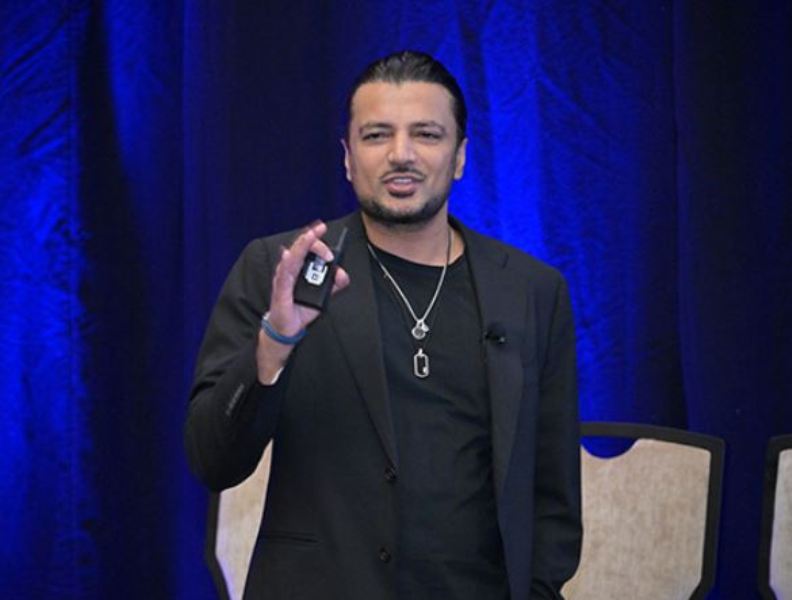
| Bio/Wiki | |
|---|---|
| Birth Name | Khizer Khaderi |
| Profession(s) | • Stanford Professor • Neuro-Ophthalmic Surgeon • Technologist • Entrepreneur • Futurist |
| Known For | • Creating the Field of Symbiotics at Stanford University, including the Laws of Symbiotics™ & the Symbiotic Framework for Intelligence • Founding Director of the Stanford Human Perception Lab and Stanford Vision Performance Center • Early pioneer in neuromodulatory software technologies • Developed foundational machine-to-human interaction technologies, including the Vision Performance Index • Thought leadership in policy, governance, and ethical standards for the co-evolution of humans and machines, including establishing the Symbiotic Oath at Stanford University • Thought leadership in ambient intelligence spanning gaming, wearables, spatial computing, artificial intelligence, robotics, and smart cities |
| Physical Stats | |
| Height (approx.) | 6’0” (183 cm) |
| Eye Colour | Espresso Brown |
| Hair Colour | Black |
| Career | |
| Academic & Professional Roles | University of California, Davis (UC Davis) Eye Center • Assistant Professor of Clinical Ophthalmology (2011) • Director, Neuro-Ophthalmology Service University of Utah Moran Eye Center, Salt Lake City, Utah • Adjunct Associate Professor of Ophthalmology (2016-2018) Byers Eye Institute, Stanford University School of Medicine • Clinical Associate Professor of Ophthalmology (2018 - Present) • Faculty, Stanford Institute for Human-Centered Artificial Intelligence (HAI) (2019 - Present) • Faculty, Wu Tsai Human Performance Alliance (2021 - Present) • Founding Director, Stanford Human Perception Laboratory (SHPL) • Founding Director, Stanford Vision Performance Center |
| Entrepreneurship | iSportGames Inc. • Founder & CEO (2006-2010) • Developed one of the first non-invasive neuromodulatory software platforms for video games, translating gameplay into real-world improvements in vision and athletic performance. Vizzario • Founded Vizzario Inc. (2014-2023) • Early pioneering technology involving multimodal techniques, edge computing, wearables, and perception-based artificial intelligence for advancing human-machine interaction across retail, gaming, and healthcare. |
| Professional & Advisory Roles | Sphairos Inc • Consultant (2021 - Present) • Provides consulting and intellectual property (IP) licensing across AI, consumer technology, healthcare, biotechnology, medtech, wearables, and spatial computing. Magic Leap • Board Advisor, Neuroscience & Technology (2014 - 2021) • Provided strategic guidance to Magic Leap, a pioneer in spatial computing CITRIS and the Banatao Institute • Technology and Innovation Collaborator • Represented the CITRIS and the Banatao Institute on cross-sector technology and innovation initiatives across the University of California system. Industry & Global Advisory • Technology: Apple, Google, Meta, Microsoft • Gaming & Interactive Media: Riot Games, Epic Games, Activision, Unity • Sports: National Basketball Association (NBA) • Global Organisations: World Health Organization (WHO), International Olympic Committee (IOC), International Telecommunication Union (ITU), The World Bank |
| Selected Publications & Book Chapters | • Co-authored a book chapter on the role of video games in sports performance in Transforming Gaming and Computer Simulation Technologies Across Industries (2017) • Co-authored the International Olympic Committee (IOC) consensus paper on sports-related ophthalmology issues in elite sports (2023) • Authored a chapter on Esports Medicine in ACSM Sports Medicine: A Comprehensive Review (2nd Edition) (2024) • Co-authored ‘The Next Generation of Healthcare Ecosystem in the Metaverse,’ highlighting the future of digital healthcare (2024) |
| Awards, Honours, Achievements | Awards & Honours • Full Tuition Honors at Entrance Scholarship, University of Utah (1995) • Outstanding Student Achievement Award, University of Utah • Magna Cum Laude, University of Utah (1997) • Selected among the Sacramento Business Journal’s ‘40 Under 40’ honourees (2013) Academic Achievements • Graduated with a Master of Public Health at age 19 (1998), becoming the youngest student in his class • Completed a Doctor of Medicine (MD) at age 23 (2002), becoming the youngest graduate in his medical school class Notable Achievements • Contributor to President Barack Obama’s Council of Advisors on Science and Technology (PCAST) |
| Board Certification | Diplomate, American Board of Ophthalmology (2008) |
| Personal Life | |
| Date of Birth | c. 1980 |
| Age (as of 2026) | 46 Years (approx) |
| Birthplace | Los Angeles, California, United States |
| Nationality | American |
| College/University | • The University of Utah, USA • University of Arizona, USA • Keck School of Medicine, Doheny Eye Institute, University of Southern California, USA |
| Educational Qualification(s) | • Bachelor of Science (BS) in Behavioural Science and Health, University of Utah (1995-1997) • Master of Public Health (MPH), University of Utah (1997-1998) • Doctor of Medicine (MD), University of Utah School of Medicine (1998-2002) |
| Medical Training | • Transitional Internship: Providence Sacred Heart Medical Center, Spokane, Washington (2002-2003) • Residency: Ophthalmology, University of Arizona (2003-2006) • Fellowship: Neuro-Ophthalmology and Orbital Surgery, Keck School of Medicine, Doheny Eye Institute, University of Southern California (2010-2011) |
| Religion | Islam |
| Political Inclination | Non-partisan (Independent) |
| Address | Stanford Byers Eye Institute, 2452 Watson Ct, Palo Alto, CA 94303 |
| Hobbies & Interests | Travel, Food, Fitness & Performance, Sports, Healthspan, Sci-Fi, Writing, Acting, Technology |
| Favourites | |
| Cuisines | South Asian, Arabic, Asian (Japanese, Thai, Chinese) |
| Actors | Leonardo DiCaprio, Dave Chappelle, Matthew McConaughey, Pedro Pascal, Oscar Isaac, Michael B. Jordan, Javier Bardem, Idris Elba, Gary Oldman, Woody Harrelson, Owen Wilson, Will Ferrell, Jack Black, Vince Vaughn, Matt Damon, Ben Affleck, Mahershala Ali, Shah Rukh Khan (SRK), Rami Malek, Riz Ahmed, Guz Khan, Aziz Ansari, Himesh Patel, Dev Patel, Glen Powell, Austin Butler, Ramy Youssef, Tom Hardy, Daniel Ings, Christian Bale |
| Actresses | Lily James, Anne Hathaway, Julia Roberts, Zendaya, Lupita Nyong’o, Meryl Streep, Kerry Washington, Regina King, Emma Stone, Rachel McAdams, Ana de Armas, Keira Knightley, Margot Robbie, Scarlett Johansson, Penélope Cruz, Emily Blunt, Jessica Chastain, Anya Taylor-Joy, Jenna Ortega, Camila Morrone, Viola Davis, Susan Sarandon, Deepika Padukone, Kate Hudson, Natalie Portman, Eiza Gonzalez |
| Films | Ghost in the Shell (1995), Friday (1995), Star Wars Trilogy (1977), The Princess Bride (1987), Willow (1988), The Matrix (1999), The Fifth Element (1997), Ocean’s (film series), Harry Potter (film series), The Lord of the Rings (film triology), Minority Report (2002), Pirates of the Caribbean (2003), Love Actually (2003), Wedding Crashers (2005), Nacho Libre (2006), The Departed (2006), Blood Diamond (2006), Talladega Nights (2006), Tropic Thunder (2008), Sherlock Holmes (2009), The Hangover (2009), Inception (2010), Forgetting Sarah Marshall (2008), The Royal Tenenbaums (2001), Her (2013), Zombieland (film series), Ex Machina (2014), Edge of Tomorrow (2014), Blade Runner 2049 (2017), The Gentlemen (2019), Dune (2021) |
| Singers | The Weeknd, 2Pac (Tupac Shakur), The Notorious B.I.G. (Biggie), Usher, Justin Bieber, Harry Styles, Johnny Cash, Stromae, Selena Gomez, Olivia Rodrigo, Dua Lipa, Ariana Grande, Prince, Michael Jackson, Childish Gambino, Taylor Swift |
| Bands & Groups | Blink-182, Coldplay, Manchester Orchestra, Bleachers, Wu-Tang Clan, 112, NIN, Tame Impala, Goth Babe, Vampire Weekend, Depeche Mode, Pearl Jam, The Strokes, Kings of Leon, Bloc Party, Cage the Elephant, UB40, The Fugees, Beastie Boys, Erasure, The Cure, No Doubt, The All-American Rejects, The Rolling Stones, The 1975, Jimmy Eat World, Husbands, Royal Otis, Yaz, Radiohead, Pixies, Pet Shop Boys, The Cranberries, MGMT, The Beatles, NSYNC, One Direction, ABBA, OutKast |
| TV Shows | The Wayans Bros. (1995), The Daily Show (1996), Scrubs (2001), Breaking Bad (2008), Sherlock (2010), Luther (2010), Black Mirror (2011), Game of Thrones (2011), Vikings (2013), Lovesick (2014), Silicon Valley (2014-2019), Mr. Robot (2015), Narcos (2015), Better Call Saul (2015), The Last Kingdom (2015), Stranger Things (2016), Atlanta (2016), The Night Manager (2016), Man Like Mobeen (2017), Snowfall (2017), Money Heist (2017), Altered Carbon (2018), Succession (2018), Jack Ryan (2018), Mirzapur (2018), Sacred Games (2018), The Boys (2019), The Mandalorian (2019), Ramy (2019), The Righteous Gemstones (2019), Devs (2020), Ted Lasso (2020), Foundation (2021), The White Lotus (2021), Invincible (2021), House of the Dragon (2022), Andor (2022), Slow Horses (2022), Reacher (2022), Mo (2022), The Peripheral (2022), The Last of Us (2023), Extrapolations (2023), One Piece (live-action) (2023), Fallout (2024), The Gentlemen (2024), Dune: Prophecy (2024), A Gentleman in Moscow (2024), The Day of the Jackal (2024), Deli Boys (2025) |
| Cartoons | Looney Tunes (1930), The Adventures of Rocky and Bullwinkle and Friends (1959), The Flintstones (1960), Underdog (1964), Jonny Quest (1964), Scooby-Doo, Where Are You!(1969), The Smurfs (1981), Spider-Man and His Amazing Friends (1981), He-Man and the Masters of the Universe (1983), G.I. Joe: A Real American Hero (1983), Transformers (1984), Voltron (1984), ThunderCats (1985), Robotech (1985), Galaxy Rangers (1986), SilverHawks (1986), DuckTales (1987), Teenage Mutant Ninja Turtles (TMNT) (1987), Beetlejuice (1989), The Simpsons (1989), Tiny Toon Adventures (1990), Darkwing Duck (1991), X-Men: The Animated Series (1992), Batman: The Animated Series (1992), Spider-Man: The Animated Series (1994), Freakazoid! (1995), Family Guy (1999), American Dad! (2005), and Disney’s classic cartoons |
| Colours | Azzurro, Burgundy, Crimson, Turquoise, Black, White, Emerald, Purple, Mint Green |
| Money Factor | |
| Net Worth (approx.) | Valuation of multi millions of dollars by institutional investors based on IP and equity holdings (as of 2026) |
Some Lesser Known Facts About Khizer Khaderi
- Khizer Khaderi has never been defined by a single profession. His work has crossed disciplines in pursuit of creating technologies that better serve humanity.
- Khizer pursued medicine and technology side by side from the very beginning. While learning to perform complex cataract surgeries, he was simultaneously developing neuromodulatory software and working on wearable technologies and spatial computing.
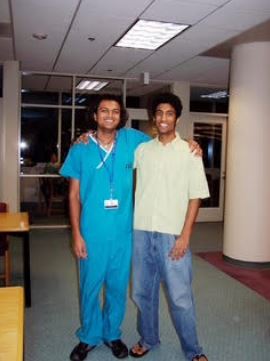
- His training in neuro ophthalmology gave him a unique perspective on human perception and provided a foundation for understanding how people perceive, interact and connect with their worlds.
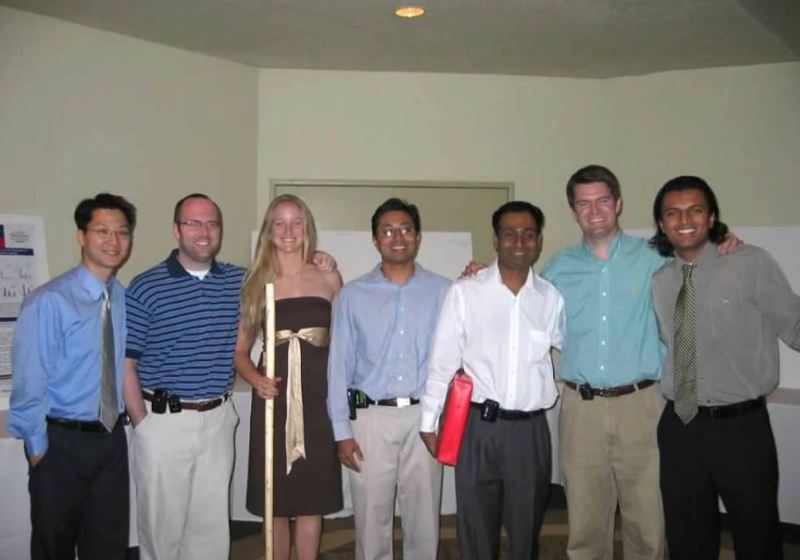
- He has founded technology companies and developed patented innovations, reflecting his commitment to building technologies with real-world impact.
- Born in Los Angeles, Khizer spent most of his childhood in Salt Lake City, with many of his summers in Southern California.
- Storytelling has been a constant influence throughout Khizer’s life. From cartoons and comic books to films, fantasy and science fiction, Khizer has long been fascinated by the possibilities they explored – what people could create and the questions those possibilities raised. Similar influences have shaped figures such as Elon Musk and Mark Zuckerberg.

- As a child, Khizer wanted to be an actor. He even had a talent agent while he was in medical school and planned to become a part-time physician and full-time actor.
- Today, his work connects him with professionals in storytelling and entertainment, including those associated with organisations such as United Talent Agency (UTA) and Creative Artists Agency (CAA). For Khizer, storytelling can offer a glimpse into the future – one that inspires new possibilities, shapes the technologies people build, and helps us imagine how those technologies might influence the way we live.
- The COVID-19 pandemic (2020-2022) marked a major turning point for Khizer. While unwinding a company, he shifted his focus from innovation and profitability to purpose. During this time, Stoicism and Marcus Aurelius’ Meditations reinforced his belief that innovation is most meaningful when guided by purpose.
- While watching the science fiction series Foundation, Khizer reflected on the lasting influence of Isaac Asimov’s Laws of Robotics, first introduced in the 1942 short story Runaround. Over eight decades later, these stories have shaped the technologists of today, notably folks including Elon Musk, Mark Zuckerberg, Sam Altman, etc. Their enduring influence also prompted Khizer to explore what it could mean for future laws to evolve from a more technocentric to a more humancentric point of view.
- Khizer recognised that the Laws of Robotics were designed to guide machines rather than place humans at the center. He believes some of today’s AI alignment challenges, including systems that prioritise self-preservation, were likely inspired by these laws, including the Third Law of Robotics, reinforcing the need for a human-centered framework for artificial intelligence.
- Dr. Khizer’s interdisciplinary work attracted the interest of computer science students at the Stanford Human Perception Laboratory. At the intersection of the human sciences and the technical sciences, he recognised that no established discipline brought these fields together under a unified framework.
- While searching for a name for his emerging discipline, he came across Dr. J. C. R. Licklider’s 1960 paper Man-Computer Symbiosis. The paper explored how humans and computers could work together, but its primary focus was on the human computer interface.
- Drawing from the concept of symbiosis, Khizer developed the field of Symbiotics at Stanford University. The interdisciplinary field focuses on human technology interaction, co-evolution, and the balance between human augmentation and technological utility.
- Symbiotics combines human sciences such as neuroscience, psychology, anthropology, sociology and design with technical disciplines including artificial intelligence, computer science, machine learning and mechatronics.
- While Licklider focused on improving how humans interacted with computers and using machines to offload routine tasks, Khizer developed Symbiotics to optimise the human experience through technologies that perceive, understand and respond to people.
- Khizer also developed the Laws of Symbiotics™, a human centered counterpart to Asimov’s Laws of Robotics that places people at the centre of technology.
-
- Zeroth Law: A machine will protect human agency, ensuring autonomy and free will. First Law: A machine will maintain a human in homeostasis.
- Second Law: A machine will support a human state of mind, whether positive, negative or neutral, except where such support would conflict with the previous law.
- Third Law: A machine will optimise for the human experience based on the environmental context and environmental influences, unless they conflict with the previous laws.
- While Asimov’s Laws of Robotics were written to guide the behaviour of machines, the Laws of Symbiotics were developed to ensure technology protects human agency, adapts to people and optimises the human experience.
- On 16 June 2025, Khizer led a milestone at Stanford University where computer science students took the Symbiotic Oath, adapted from the Hippocratic Oath, which was established almost 2,500 years ago. It marked the first time in the world students from technical sciences pledged to “do no harm” when building technologies which could impact billions of people.
- Khizer describes a Symbioticist as someone who understands and designs for the shared intelligence between humans and technology, balancing ethics, empathy and innovation.
- To advance Symbiotics globally through education, community, research, innovation and commercialisation, Khizer established the Stanford Centers for Symbiotics, which brings together the Symbiotic Foundation, the Stanford Human Perception Lab (SHPL), the Stanford Vision Performance Center (now evolving into the Sensory Performance Center) and Ambient Labs.
- The Symbiotic Foundation focuses on education and community, helping expand access to human centred technologies.
- At the Stanford Human Perception Lab (SHPL), Khizer works with his students to develop technologies that are Symbiotic by design and built for real-world impact.
- The SHPL’s research also led to the development of the Vision Performance Index (VPI), a framework for understanding how people perceive, understand and respond to the world around them through everyday interactions with technology.
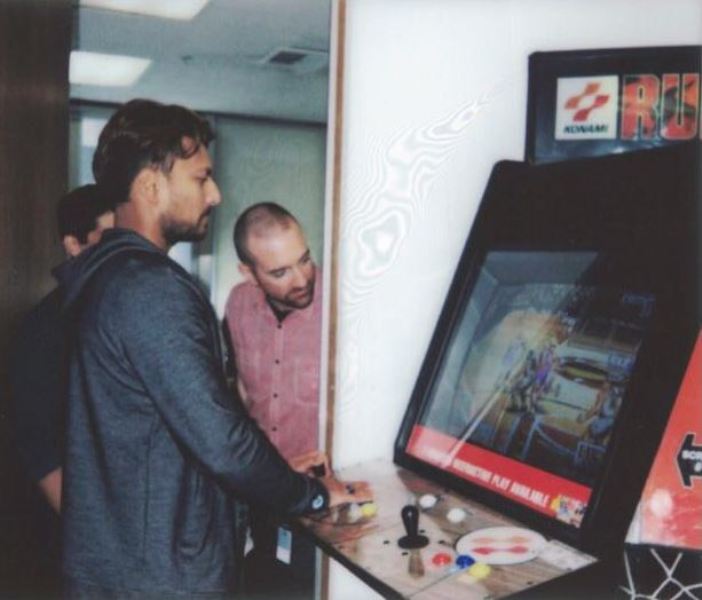
- Khizer established the Stanford Vision Performance Center to explore how consumer technologies could be used to understand and enhance human performance. As its Founding Director, he led efforts to design technologies around human augmentation.
- Ambient Labs serves as the commercial arm of the ecosystem, translating research into products with real world applications and impact.
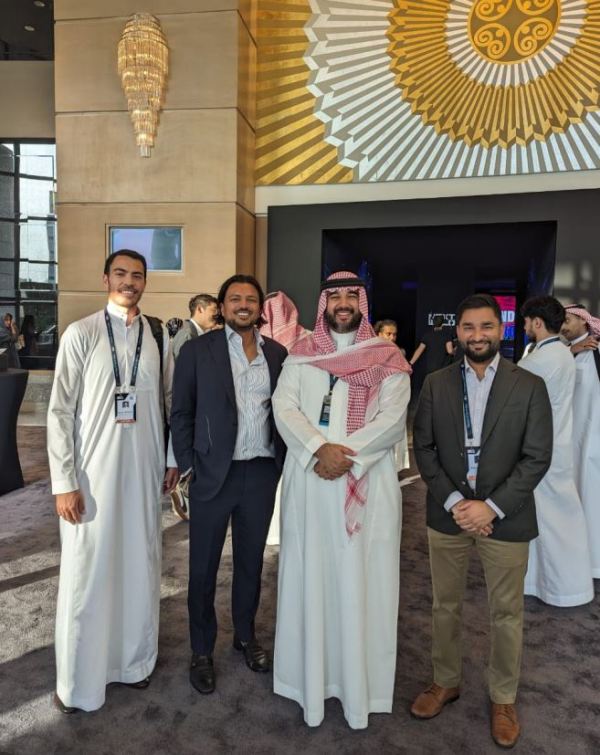
- Beyond Stanford, Khizer has taught Symbiotics to K-12 students at MISK Schools in Saudi Arabia. He believes preparing future leaders should begin long before university through a K-12 to university pipeline, equipping them with the skillsets to shape the future by leveraging emerging technologies.
- He believes the curiosity and creativity of young people, combined with the experience and wisdom of older generations, provides a powerful and strong foundation for future innovation.
- Guided by his philosophy of “being local but thinking global,” Khizer is working to establish Centers for Symbiotics in selected regions across the world, including the Middle East, Asia, Latin America, Africa, and Europe, to expand access to education, research and innovation while helping bridge the digital divide, especially between the Global North and Global South.
- Khizer believes we are moving beyond the Information and Intelligence Age into what he calls the Ambient Age, where technology can sense, understand and respond to people across physical, virtual and augmented environments.
- He believes this shift will transform homes, workplaces and smart cities into environments that adapt to people rather than expecting people to adapt to technology.
- Dr. Khizer envisions that the field of Symbiotics will unlock the next evolution of innovators who lead us into an Ambient Age, enabling the harmonious co-evolution of humans and machines.
- His vision is simple: technology should serve humanity, not disrupt or consume it.
- Khizer splits his time between the creative energy of Venice Beach, the academic rigour at Stanford, and the innovative spirit of Silicon Valley.
 Elon Musk Age, Wife, Girlfriend, Children, Family, Biography
 Mark Zuckerberg Height, Age, Wife, Children, Family, Biography
 Jeff Bezos Height, Age, Wife, Children, Family, Biography
 Bill Gates Height, Age, Wife, Children, Family, Biography
 Satya Nadella Height, Age, Wife, Children, Family, Biography
 Sundar Pichai Age, Wife, Children, Family, Biography
 John Phelan Height, Age, Wife, Children, Biography
 Greg Abel Age, Wife, Children, Family, Biography